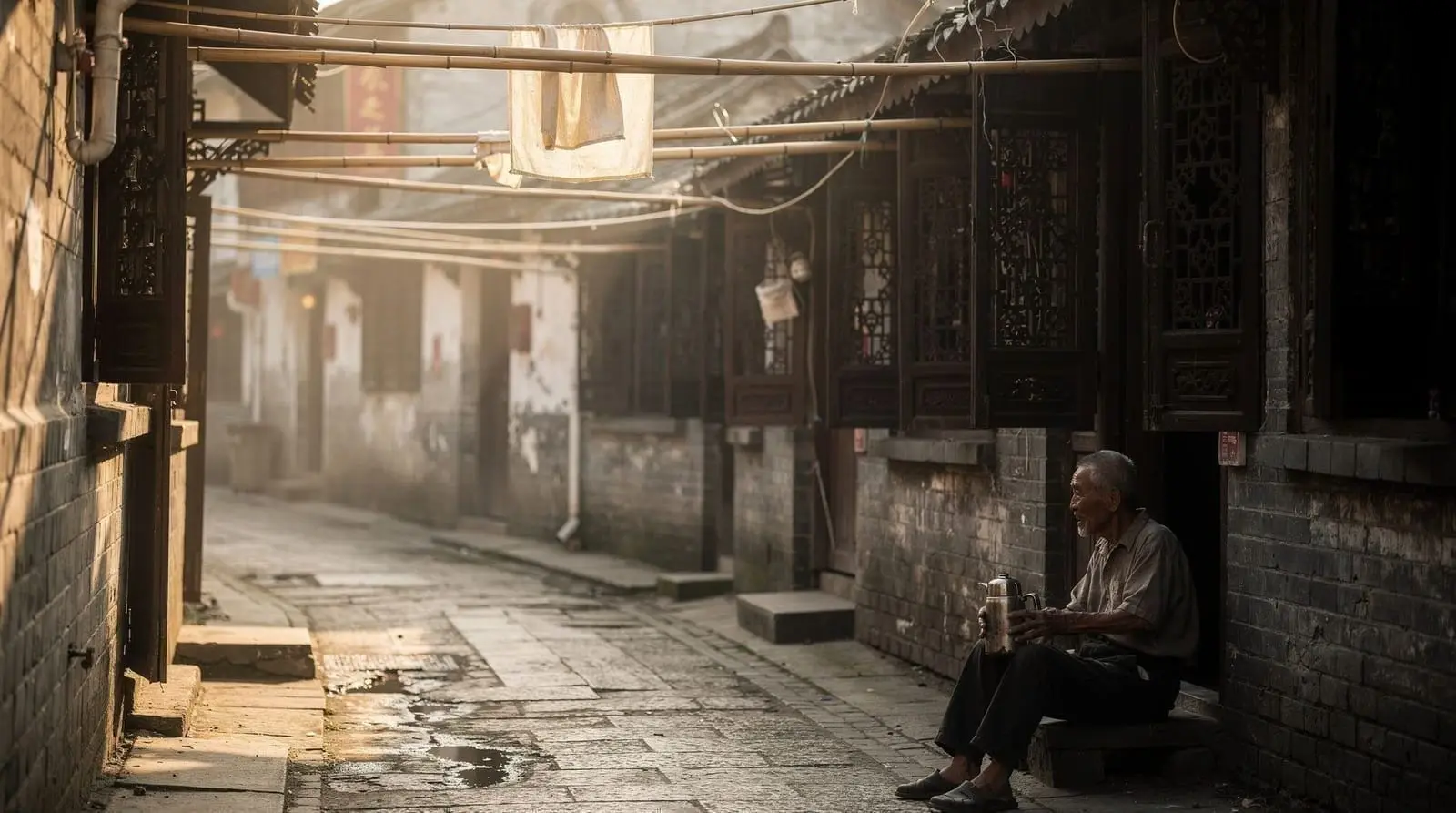
Most visitors to Guangzhou arrive at the ultramodern Guangzhou South HSR station and travel by metro to the center — but the real Guangzhou reveals itself gradually, in the older western districts of Yuexiu and Liwan. Here, Qing-dynasty clan halls sit behind qilou arcades, wet markets fill the laneways before dawn, and tea houses open their doors at 6 a.m. for a clientele that has been coming for decades. This is the source of Cantonese culture that Hong Kong, Singapore, and Chinatowns worldwide all trace back to.
The two key areas are adjacent and easily explored together. Yuexiu District is the administrative and cultural center of old Guangzhou: broad avenues, parks, and major museums. Xiguan (西关) — technically part of Liwan District — is the tighter residential merchant quarter immediately west, with its antique shops, medicinal herb traders, and dim sum institutions that operate with indifference to tourism pressure.
For the broader Guangzhou overview including Canton Tower, Pearl River cruise, and modern city logistics, see Guangzhou. For the modern commercial city, see Tianhe. For the day trip to Foshan by metro (35 minutes), see the Foshan guide. This guide focuses on the historic western quarters.
| Where | Yuexiu + Xiguan (Liwan), old Guangzhou, west of Zhujiang New Town |
| Cost | Chen Clan Academy ¥20 ($2.80); Yuexiu Park and most temples free–¥10 ($1.40) |
| Time needed | Half day to 1 full day |
| Getting there | Metro Line 1 to Chen Clan Academy, or Line 2/1 from Guangzhou South (35–40 min) |
| Best time | Weekday mornings before 10 a.m., October–April |
Chen Clan Academy: Guangzhou’s architectural masterpiece
The Chen Clan Academy (陈家祠, Chenjia Ci) at 34 Zhongshan 7th Road was built between 1888 and 1894 by 72 clans from Guangdong Province as a combined ancestral hall, examination preparation school, and cultural center. It is the most complete example of Lingnan folk architecture in existence, and entry costs just ¥20 ($2.80) — one of the most underpriced tickets in China.
What you’re entering is essentially a campus organized around 19 buildings in a 6x6 grid of courtyards. The facades are saturated with ornament: ceramic ridge panels depicting scenes from the Romance of the Three Kingdoms, wood-carved window screens of phoenix and chrysanthemum, stone reliefs of fishing villages, and iron castings used decoratively. Each material tradition reflects a distinct Cantonese craft guild. The interior now functions as the Guangdong Folk Art Museum, with rotating exhibitions of guangcai porcelain, silk embroidery, and ivory carving (pre-ban antiques only).
Allow 90 minutes minimum. Early weekday mornings before 10 a.m. have the thinnest crowds. The gift shop sells decent reproductions of the ceramic ridge figures at fair prices.
Book a guided Chen Clan Academy and Xiguan culture tour with dim sumMetro: Line 1 to Chen Clan Academy station, Exit D. Opening hours: 9:00–17:30, closed Mondays.
Xiguan lanes and Enning Road
From Chen Clan Academy, head west through the residential lanes of Xiguan. These streets — Enning Road (恩宁路) especially — were restored in the mid-2010s after years of demolition pressure, and the result is a rare success: the qilou colonnaded shophouses have been repaired without being emptied out. Traditional pharmacies, rice-noodle shops, calligraphy stores, and an operating Yue opera teahouse occupy the ground floors.
Cantonese opera (粤剧, Yue opera) is the intangible heritage most distinctive to this neighborhood. The Xiguan area is the historical home of the art form. Performances still take place at the Hongshuiwan Theater and in the afternoon at Liwan Lake Park (free, traditional amateur singers). If you happen into one — often just retirees performing for each other in the park — stay for 20 minutes.
Enning Road food stops: Yinzhen Noodles (银珍面家) for morning wonton soup at ¥12–18 ($1.70–$2.50); Guangzhou Lukuicun for cheung fun (fresh rice noodle rolls, ¥8–15 / $1.10–$2.10) from the steamer. Neither appears prominently on English-language review sites, but both have queues of locals by 8 a.m.
The streets around Chen Clan Academy also concentrate Guangzhou’s antique trade. Wende Road (文德路) specializes in books and art objects. Dishifu Road and Dishipu Road have dealers in Cantonese furniture, jade, and folk handicrafts. Prices are negotiable; genuine antiques are a small fraction of inventory.
Explore Xiguan culture and heritage with a local cuisine tasting tourShamian Island
Ten minutes’ walk south of Xiguan, Shamian Island (沙面岛) was reclaimed from the Pearl River delta in the mid-19th century and allocated to foreign trading interests as a treaty port concession. The British and French built their consulates, banks, churches, and residences here in neoclassical style, and those buildings still stand — now housing the White Swan Hotel (Guangzhou’s grandest address in the 1980s, still operating from ¥1,100 / $153 per night), boutique cafes, and a few remaining consulates.
The island takes about 30 minutes to walk end to end. It’s less architecturally striking than its reputation suggests — many buildings are rather plain — but the scale of greenery, the banyan trees lining the main boulevard, and the relative quiet compared to surrounding Guangzhou make it a valuable decompression stop. Mornings here are calm: local families walk infants and elderly grandparents in patterns that haven’t changed in 40 years.
There’s a cluster of decent coffee shops on the western end. For a proper meal, backtrack north to Xiguan — the two or three restaurants on Shamian itself are geared toward hotel guests at tourist prices.
Qingping Market (清平市场) runs immediately north of Shamian along the canal. This large wholesale and retail market for medicinal herbs, preserved foods, and dried goods is one of the most sensory environments in Guangzhou. Ignore the souvenir stalls near the Shamian entrance and go deeper into the market where the actual trade in star anise, dried tangerine peel, and chrysanthemum occurs. Not a shopping destination in the conventional sense, but worth 20 minutes for curiosity.
Yuexiu Park and the Five Rams Statue
Yuexiu Park (越秀公园) covers 860,000 square meters on low hills north of the old city center, free to enter. The Five Rams Statue (五羊雕像), carved in 1960 from granite, stands at the summit of one of the park’s three hills and depicts the five celestial rams from Guangzhou’s founding myth. The walk up from the south gate takes about 15 minutes.
The Zhenhai Tower (镇海楼) within the park dates from 1380 — the only significant Ming-dynasty structure surviving in Guangzhou — and houses the Guangzhou Museum (¥10 / $1.40, closed Mondays). The museum covers city history from neolithic times through the Qing era, with an excellent collection of Guangzhou trade porcelain that shows exactly how the city’s commercial character formed.
Early mornings in Yuexiu Park are worth experiencing on their own terms: ballroom dancing groups on the main plaza, tai chi practitioners on the quieter paths, erhu players under the banyan trees. By 9 a.m. the park transitions toward tourist activity; the hours before that belong to the neighborhood.
Guangxiao Temple (光孝寺), two blocks east of Chen Clan Academy, is the oldest Buddhist temple in Guangzhou — established during the Eastern Han dynasty, predating the city’s formal designation as Canton. The temple complex is active and charged with incense smoke; a 400-year-old Bodhi tree still flowers in the eastern courtyard. Entry ¥5 ($0.70).
Temple of the Six Banyan Trees (六榕寺, Liu Rong Si), one block from Chen Clan Academy, has a Song-dynasty pagoda (Flower Pagoda, 57 meters, built 537 CE) that stands as the oldest structure in central Guangzhou. Entry ¥5 ($0.70). Both temples are genuine places of active worship — carry yourself accordingly.
Traditional dim sum in Liwan District
The old Liwan District concentrated some of Guangzhou’s most venerable dim sum establishments. The culture here is yum cha in the most literal sense — “drink tea” — with food as the accompaniment to lengthy social visits.
Taotaoju (陶陶居, founded 1880) at 20 Dishifu Road is the correct choice for a first visit. The original wood-paneled interior was restored in the 2010s; the kitchen makes har gow and siu mai from recipes that trace to the restaurant’s founding period. Arrive by 8:30 a.m. on weekends for a good seat without a 30-minute wait. Budget ¥80–130 ($11–18) per person.
Pan Xi Restaurant (泮溪酒家) near Liwan Lake opened in 1947 in a classical garden setting. It seats over 1,000 people across multiple pavilions connected by covered walkways over water. The scale sounds impersonal but the garden architecture is genuinely pleasant, and the kitchen is professional. Best visited on a weekday morning; weekend waits can reach 45 minutes.
Lian Xiang Lou (莲香楼) on Dishifu Road (1889) is the oldest tea house in operation in Guangzhou. It’s more no-frills than Taotaoju — Formica tables, fluorescent lights — but the lo po bing (wife cake, flaky pastry with winter melon filling) and mooncakes are made here to century-old formulas and available to take away. Excellent quality, ¥60–100 ($8–14) for a full breakfast.
A curated route through these and other establishments is part of the Guangzhou–Shenzhen foodie 4-day itinerary.
The Xiaobei African quarter
A notable and sometimes overlooked facet of modern Guangzhou’s old city is the Xiaobei neighborhood in northeastern Yuexiu District, centered on Xiaobei Road and Dengfeng Road. Since the 1990s this area has become the largest African trading community in Asia, with several thousand West and Central African traders and residents concentrated around wholesale garment and goods markets.
The area has Africanized restaurants, mosques, and commercial networks alongside the Guangzhou-standard urban fabric. It’s not a formal tourist site, but walking through it offers an unusually clear lens on how the Pearl River Delta’s global trading function has evolved since the Canton system era. Treat it as a neighborhood, not an attraction; the businesses here serve a working trading community.
Getting around the old city
The metro is ideal for the main sites. Key stations:
- Chen Clan Academy (Line 1): direct to Chen Clan Academy, exit D
- Huangsha (Lines 1, 6): 10-minute walk to Shamian Island south entrance
- Liwan Lake (Line 5): for Pan Xi Restaurant and Liwan Lake Park
- Changshou Road (Line 6): for the Xiguan center and Enning Road
A Yangcheng Tong metro card (¥20 deposit, rechargeable) or WeChat Pay metro QR covers all rides. The old city is walkable between major sites — Chen Clan Academy to Shamian Island is 25 minutes on foot through the Xiguan lanes.
From Guangzhou South station (where HSR and Hong Kong trains arrive), take Line 2 to Gongyuanqian, transfer to Line 1, alight at Chen Clan Academy. Total: 35–40 minutes.
Honest tips and what to skip
Skip the commercial “Xiguan Ancient Town” ticket tours sold outside the metro — overpriced guided walks through public streets you can walk freely. The area is accessible without any ticket.
The Shangxiajiu pedestrian street (上下九步行街), one block north of Enning Road, is Guangzhou’s main tourist shopping street. It has some good food at ground level but is saturated with identical souvenir stalls and crowds. Suitable for a snack; don’t linger longer.
Heat and humidity: From May through September the temperature exceeds 33°C with high humidity. Schedule the most walking-intensive sites (Chen Clan Academy, Xiguan lanes) in the early morning and use metro or Didi for afternoon transfers.
Internet and connectivity: Full Great Firewall applies. Install your VPN before arrival in Mainland China. See eSIM and VPN guide for China travel for current-working options in 2026.
Connecting to the rest of Guangzhou and the PRD: This area pairs naturally with a Canton Tower evening visit (Zhujiang New Town, 40 minutes by metro east, see Tianhe). For a multi-day PRD loop that includes Guangzhou, see the Pearl River Delta Grand Loop itinerary. For Foshan — reachable in 35 minutes by metro — see the dedicated guide.
The Guangzhou–Shenzhen foodie 4-day itinerary routes through this neighborhood on days one and two. For Zhuhai and Macau via HZMB, the western PRD circuit begins from Guangzhou South station. The Greater Bay Area 2-week itinerary provides the fullest multi-city routing context.
A suggested walking route through the old city
This route covers the main sites in a logical geographic order, works best on weekday mornings, and takes approximately 5–6 hours at a comfortable pace.
7:00–8:30 — Breakfast at Taotaoju or Lian Xiang Lou. Arrive at the tea house before 7:30 a.m. to secure a table without a queue. Order a pot of chrysanthemum tea immediately; the staff will come with dim sum carts continuously after that. Order har gow, cheung fun, lo mai gai, and taro dumplings. Pay the bill that accumulates from stamps on your table card.
9:00–10:30 — Chen Clan Academy (open from 9:00). Enter via the main south gate on Zhongshan 7th Road. Walk the outer courtyard first for the ridge ceramics overview, then move through the nine connected halls to the craft museum in the eastern wing. The Shiwan pottery collection in the rear hall is particularly strong.
10:30–11:00 — Walk west from Chen Clan Academy along Enning Road. This is the most authentic 20-minute stretch of Xiguan: opera teahouse on the left, medicinal herb shop on the right, rice noodle shop in the narrow passage between two shophouses.
11:00–12:00 — Guangxiao Temple (7 minutes’ walk from Enning Road). The morning calm before midday visitors arrive. The 400-year-old Bodhi tree in the eastern courtyard is the site’s most compelling living artifact. Then walk three minutes to the Temple of the Six Banyan Trees and climb the base of the Flower Pagoda for the compressed courtyard view.
12:30 — Lunch at a Xiguan noodle shop or the larger Pan Xi Restaurant near Liwan Lake (10 minutes’ walk from the temples). The wonton noodle at the smaller lane shops (¥15–25 / $2.10–$3.50) is more honest than the Pan Xi restaurant lunch menu (¥80–150 / $11–21 per person), but Pan Xi’s setting — garden pavilions over water — justifies the premium on a first visit.
14:00–15:00 — Qingping Market, accessible from Changshou Road or Liwan Lake area. Walk north to south through the herb and preserved-goods market toward Shamian. This is more interesting walked slowly than rushed.
15:00–16:00 — Shamian Island. The hour before sunset is the most pleasant time on Shamian: the banyans provide shade, the light is more flattering for the colonial building facades, and the late-afternoon coffee shops are quieter than midday.
Evening — Metro east to Zhujiang New Town for Canton Tower views and Pearl River walk (40 minutes). Or metro to Tianhe Sports Center for dinner in the commercial district. See Tianhe for evening options.
What the old city looks like during Chinese New Year
Chinese New Year (typically late January to mid-February) transforms Xiguan in ways that are both spectacular and practically challenging. The Guangzhou Flower Market (广州花市), held in the week before New Year’s Eve on the main commercial roads including Yide Road near Haizhu Square, converts the roadways into dense pedestrian markets selling plum blossom branches, miniature mandarin orange trees, tulips, and traditional New Year goods. The scale — hundreds of stalls covering multiple kilometers — is extraordinary.
The Zumiao Temple in Foshan has a parallel flower market of equal scale, and both cities’ temples become active with worshipers and lion dance performances on New Year’s Eve and the first three days of the lunar new year.
The practical challenges: hotels book out completely in early November for the New Year period. Some restaurants, particularly smaller tea houses, close for several days around the New Year itself as staff travel home. Public transit runs at holiday frequency. If you’re planning to visit Guangzhou during this period specifically for the cultural experience, book accommodation by October.
Medicinal herb culture and the Cantonese herbal soup tradition
Guangzhou’s Cantonese food culture includes a medicinal dimension that most foreign visitors barely notice: the tradition of soup-drinking (汤水, tang shui) as a form of preventive health management. This is not fringe alternative medicine — it’s embedded in the daily domestic practice of millions of Guangdong residents and in the menus of every established Cantonese restaurant.
The Qingping Market herb section stocks the raw materials: dried tangerine peel (陈皮, chen pi) aged 3–15 years for respiratory function; lotus root (莲藕, lian ou) for summer heat; astragalus (黄芪, huang qi) for immune support; pork bones and specific fish for base stock. A home cook buys these the same way a French cook buys thyme.
In the Xiguan old tea houses, you’ll often see ceramic tureens of cloudy soup on the table before the dim sum arrives — served by older waitresses who explain the daily soup ingredients as a matter of routine. These are medicinal tonic soups (清补凉, qing bu liang in the simplest summer variety) available as a supplement to regular tea house breakfast. Try one: they range from mild and slightly earthy (lotus seed and lily bulb) to more assertive (bitter melon with pork ribs). Cost: ¥15–35 ($2.10–$4.90) per bowl.
The Guangzhou Museum of Medicine and the nearby Cantonese Medical College near Guangzhou Zoo (30 minutes north of Yuexiu by metro) has exhibitions on Cantonese herbal medicine history for visitors specifically interested in this dimension. The Chinese Medicine Museum at Guangzhou University of Chinese Medicine is a more accessible alternative, with English signage.
Seasonal character: what changes throughout the year
October–November is the optimal window: temperatures 18–24°C, low humidity, clear days. The Chen Clan Academy and Yuexiu Park at this time are at their most pleasant for extended walking. The Guangdong Museum of Art (Ersha Island) often has its most significant autumn exhibitions.
December–February brings winter temperatures of 8–18°C — cold by subtropical standards, requiring a light jacket in the mornings. The old city continues functioning normally; the Xiguan tea houses are particularly cozy in the winter fog. Plum blossoms begin in February at Yuexiu Park (the plum garden near the south gate is the primary location).
March–April brings warming temperatures and spring flowers — azaleas in Yuexiu Park, wisteria on the covered walkways of the Chen Clan Academy courtyards. The occasional spring rains soften the light for photography.
May–September: Heat and humidity. The tea houses and markets open at dawn and the old city is at its most locally authentic before 9 a.m.; after that, the temperature makes extended outdoor walking uncomfortable. Any visit during this period should front-load morning activities and plan indoor or shaded activities for afternoons.
Where to stay for the old city
Staying inside Xiguan or Yuexiu itself puts you within walking distance of the morning tea houses and Chen Clan Academy at the cost of fewer international-brand hotels. Options: the White Swan Hotel on Shamian Island (colonial-era grande dame, from ¥1,100 / $153) is the most atmospheric base; mid-range business hotels cluster around Changshou Road and Liwan Lake (¥350–550 / $49–77). Visitors prioritizing nightlife or Canton Tower views usually base themselves in Tianhe instead and day-trip into the old city — a 30–40 minute metro ride either way, so neither choice is a real inconvenience.
Frequently asked questions about Shenzhen
How many days do I need for Guangzhou’s old city?
A half day covers Chen Clan Academy, the Xiguan lanes, and Shamian Island at a brisk pace; a full day allows time for Yuexiu Park, the temples, and a proper sit-down dim sum lunch rather than a quick snack. Most visitors combine it with a second day in Tianhe for Canton Tower and the modern city.
Is the old city safe to walk at night?
Yes — Xiguan and Yuexiu are residential, low-crime areas, though the narrow lanes empty out and lose their character after the tea houses and markets close in the early evening. For evening activity, head to Tianhe or the Pearl River waterfront near Canton Tower instead; the old city is fundamentally a morning and daytime experience.