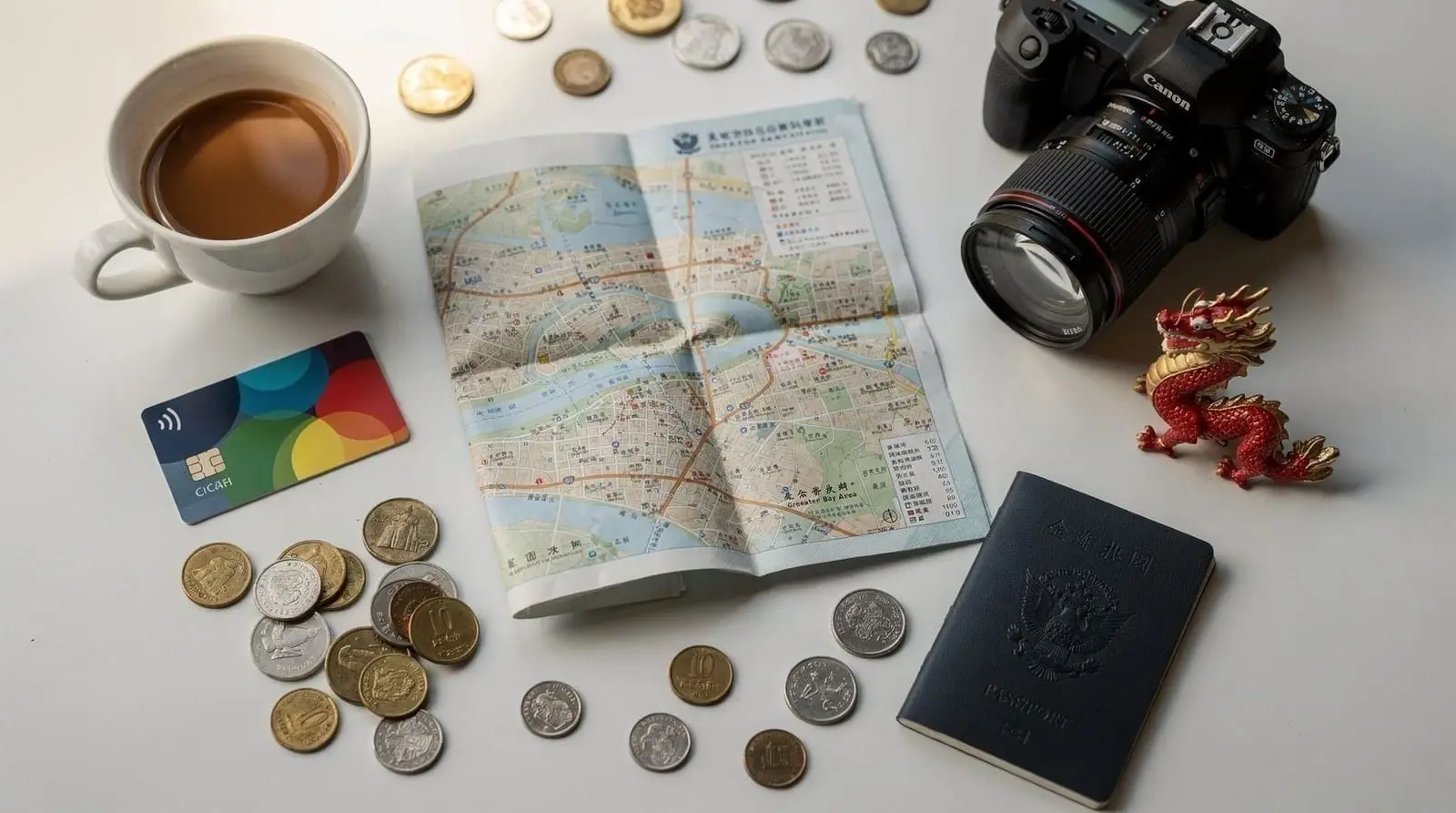
Greater Bay Area in 2 weeks: the definitive itinerary
Fourteen days is the minimum time frame for a comprehensive Greater Bay Area trip that treats each city as a destination rather than a transit stop. The GBA is the world’s most economically complex delta region — 11 cities, 87 million people, three currencies, two SAR immigration systems, two official languages (Cantonese and Mandarin), and a Portuguese linguistic heritage still active in Macau’s street signs. This plan does justice to that complexity.
| Where | Shenzhen, Hong Kong, Macau, Zhuhai, Guangzhou, Foshan, Dongguan, Dapeng |
| Cost | Approximately US$987–1,432/person for 14 days (excl. flights, accommodation) |
| Time needed | 14 days, 8 cities |
| Getting there | Metro, HSR, ferry and the HZMB bridge cover every transition — no car needed |
| Best time | October–December or March–April for clear skies and manageable heat |
The itinerary covers eight cities: Shenzhen (3 nights), Hong Kong (3 nights), Macau (1 night), Zhuhai (1 night), Guangzhou (2 nights), Foshan (day trip), Dongguan (half day), Dapeng (day trip). No car required — the metro, HSR, ferry and HZMB cover every transition.
The loop at a glance
| Days | City | Focus |
|---|---|---|
| 1–3 | Shenzhen | Tech, design, coast |
| 4–6 | Hong Kong | Kowloon, HK Island, Lantau |
| 7 | Macau | Peninsula heritage |
| 8 | Macau → Zhuhai | Tower, border crossing |
| 9 | Zhuhai → Guangzhou | Chimelong, HSR north |
| 10–11 | Guangzhou + Foshan | Dim sum, temples, ceramics |
| 12 | Dongguan | Factory-city reinvention |
| 13–14 | Shenzhen | Museum, Lianhuashan, departure |
Visa and entry planning
Before booking anything, resolve your visa situation for mainland China. The 144-hour (6-day) visa-free transit applies at designated ports for many nationalities. The Greater Bay Area visa-on-arrival covers 9 mainland GBA cities for passports of qualifying nationalities. Standard 30-day tourist visas remain the most flexible option for a 2-week trip.
Hong Kong and Macau have separate immigration — most Western passports enter visa-free. You will cross the China–Hong Kong border at least twice (entering and exiting) on this itinerary; each crossing resets the permitted stay clock.
See the China visa and 240-hour transit guide for 2026 current rules.
Days 1–3: Shenzhen — tech, design, coast
Day 1: arrive and settle into Nanshan-Shekou
Arrive at Shenzhen Bao’an Airport (SZX) or cross from Hong Kong at the Futian Checkpoint. Base in Nanshan-Shekou district — the most liveable neighbourhood for international visitors, with good restaurants, a waterfront, and access to the tech zone. Shenzhen Marriott Hotel Nanshan (from ¥650/US$90/night) is the solid mid-range choice. Budget: Hanting Express Shekou (from ¥220/US$30/night).
Afternoon: Walk the Sea World Plaza area and the waterfront promenade. The MS Kaiserin Auguste Victoria cruise ship (1906, permanent dock at Sea World) is open for deck walks — a surreal colonial-era relic in this most post-modern of cities. Dinner in the lanes behind Sea World (Korean BBQ, Sichuan hotpot, Cantonese roast meats, ¥70–120/US$10–17).
Day 2: OCT-LOFT, Splendid China and Huaqiangbei
Morning: Huaqiangbei electronics market (Line 1, Huaqiang Road North). Browse SEG Electronics Market and Mingtong Digital City for 90 minutes — the spectacle of the world’s largest physical electronics marketplace.
Shenzhen DJI flagship store and driverless car experience tourAfternoon: OCT-LOFT creative district (Line 1, Huaqiaocheng). OCAT gallery, independent design studios, best daytime café scene in Shenzhen. Then: Splendid China Folk Culture Villages (¥260/US$36, 15:00 ethnic minority performance).
Evening: OCT-LOFT bar and restaurant scene. Budget: ¥400–650/US$56–91.
Day 3: Dapeng Peninsula — fortress and coast
Full day excursion. Line 3 to Jikeng, bus 833 to Dapeng (¥12/US$1.7 — 45-minute journey each way). Dapeng Ancient Town (大鹏古城, free) — Ming fortress from 1394, salt-baked chicken lunch at a family Hakka restaurant (¥60–80/US$8–11 per person). Xichong Beach (¥5 minibus from Dapeng) for clean water and coastal walking. Return by 18:00.
Dapeng Peninsula is the most underrated part of Shenzhen — granite coast, no high-rises, the city’s best approximation of a natural environment. Budget: ¥350–500/US$49–70.
Days 4–6: Hong Kong — three days in the SAR
Day 4: crossing and Kowloon
Morning: Check out of Shenzhen hotel. Cross at Futian Checkpoint or West Kowloon HSR (8 minutes, HK$75/US$10 from Futian). Base in Kowloon for 3 nights — Hotel Icon (from HK$1,400/US$180, harbourfront, rooftop pool) or Salisbury YMCA (HK$750/US$96, harbour views, best value).
Afternoon: Tsim Sha Tsui waterfront, Star Ferry to Central (HK$4/US$0.5), walk the Wan Chai historic streetscape. Victoria Peak at dusk — Peak Tram return (HK$62/US$8) plus Sky Terrace 428 (HK$58/US$7.5). Best clear-day views: October–December.
Evening: Symphony of Lights harbour cruise at 20:00.
Star Ferry Symphony of Lights harbour cruise — watch the show from the waterDay 5: Hong Kong Island — markets, temples and seafood
Morning: Mong Kok walk — Goldfish Market (Temple Street area), Ladies’ Market (opens 12:00, worth a look for the chaos). Sham Shui Po electronics and wholesale district for genuine bargain-hunting (Apliu Street flea market for secondhand electronics and vintage items).
Afternoon: Hong Kong Island — Man Mo Temple in Sheung Wan (1847, free), Hollywood Road antiques, the Central-Mid-Levels escalator. Afternoon dim sum at Maxim’s Palace in City Hall (城市廳美心皇宮, Edinburgh Place) — the most classic traditional trolley-service dim sum left in Hong Kong. Arrive by 11:30 for the peak service; HK$130–180/US$17–23 per person.
Evening: Aberdeen typhoon shelter sampan tour (HK$60–80/US$7.7–10), seafood dinner in Aberdeen (HK$200–350/US$26–45 per person).
Day 6: Lantau Island — Big Buddha and hiking
Morning: MTR to Tung Chung, Ngong Ping 360 cable car (HK$175/US$22.5 return). Tian Tan Buddha and Po Lin Monastery vegetarian lunch (HK$100–150/US$13–19).
Afternoon: Bus 21 to Tai O fishing village (HK$5) — the Tanka stilt-house community is one of the SAR’s most intact traditional settlements. Bus 11 back to Tung Chung.
Alternatively: Dragon’s Back hiking trail (Shek O bus from Shau Kei Wan MTR, 2.5-hour round trip, free, one of Asia’s best urban hikes) for those who prefer hillwalking.
Budget Days 4–6: HK$2,200–3,200/US$282–410 per person.
Day 7: ferry to Macau — Peninsula heritage
Morning: Cotai Water Jet from Hong Kong Macau Ferry Terminal in Sheung Wan to Taipa Ferry Terminal, Macau (55–70 minutes, HK$160–200/US$21–26).
Afternoon: Ruins of St Paul’s, Senado Square, National Museum of Macau (MOP$15/US$2), Rua da Felicidade. Check in to Macau Peninsula accommodation — Pousada de São Tiago (from MOP$1,200/US$150, a Portuguese fort-turned-guesthouse) or Four Points by Sheraton Macao (from MOP$750/US$94).
Evening: Dinner at Restaurante Litoral (Macanese African chicken, caldo verde). Walk the inner harbour at night — the lit-up A-Ma Temple (1488) is worth a detour.
Macau Ruins of St Paul and historic centre guided tourDay 8: Macau Tower and Zhuhai crossing
Morning: Macau Tower (MOP$155/US$19 observation deck). Coloane Village bus 25 (30 minutes, HK$5) — Lord Stow’s Bakery egg tart (MOP$15/US$2, the original Macau-style recipe from 1989).
Afternoon: Cross to Zhuhai at Macau–Zhuhai Gongbei border (Portas do Cerco, walking, 10 minutes). Base in Zhuhai for 1 night: Sheraton Grand Zhuhai (from ¥780/US$108) or Zhuhai International Grand Hotel (from ¥380/US$53).
Evening: Zhuhai waterfront promenade (Lovers Road / 情侣路) — the 28 km seafront corniche has sunset views across to Macau and Lantau. Dinner at a Pearl River estuary seafood restaurant (¥80–150/US$11–21 per person).
Day 9: Chimelong Ocean Kingdom then north to Guangzhou
Morning/Afternoon: Chimelong Ocean Kingdom on Hengqin Island (¥350/US$48 adults). The whale shark exhibit, beluga whale shows and the world’s highest waterslide complex. Allow 5 hours minimum.
Evening: Train from Zhuhai North to Guangzhou South (HSR 45 minutes, ¥77/US$11). Arrive Guangzhou and check in for 2 nights. White Swan Boutique Hotel, Shamian Island (from ¥780/US$108) or Guangzhou Youth Hostel on Shamian Island (from ¥200/US$28 dorm). Dinner near Shamian: Xiguan old-quarter roast meat rice (¥40–65/US$5.5–9).
Day 10: Guangzhou — Xiguan, dim sum and Pearl River
Morning: Dim sum at Tao Tao Ju (陶陶居, 20 Dishifu Road, from 07:00). Budget ¥100–160/US$14–22 per person for the full experience.
Afternoon: Chen Clan Academy (陳家祠, Line 1, Chenjiaci, ¥15/US$2). Xiguan walking tour through the qilou arcade district. Canton Tower observation deck (¥150/US$21).
Guangzhou Pearl River night cruise with commentaryEvening: Pearl River night cruise (¥100–180/US$14–25). Dinner at Guangzhou Restaurant (广州酒家): double-boiled soup, steamed fish, char siu. ¥140–200/US$19–28 per person.
Day 11: Foshan — martial arts and ceramics
Day trip. Metro or HSR to Foshan (40 minutes from Guangzhou).
Morning: Foshan Ancestral Temple (佛山祖廟, ¥20/US$3) — 1,000-year-old Taoist complex and origin site of Wing Chun kung fu. Martial arts performance (weekends 10:30 and 15:30).
Afternoon: Nanfeng Ancient Kiln (南風古灶, ¥15/US$2) — a 500-year-old dragon kiln still in operation. Shiwan ceramics demonstration and market. Foshan noodle lunch: Foshan-style flat rice noodles (沙河粉) in clear seafood broth, ¥25–35/US$3.5–5.
Return to Guangzhou for dinner and overnight.
Budget Days 7–11: approximately ¥2,500–3,800/US$350–532 per person.
Day 12: Dongguan — manufacturing city reboot
Dongguan was the world’s factory city through the 1990s and 2000s. It is now reinventing itself with design parks and cultural investment. A half-day from Guangzhou (intercity metro or regular train, 45 minutes, ¥25/US$3.5) is enough to see both faces.
Morning: The 1978 Creative Park (1978文化创意园, in the former Shajiao Textile Factory) is Dongguan’s answer to Shanghai’s M50 — converted factory buildings with independent galleries, creative businesses and café culture. The industrial architecture is genuinely impressive.
Afternoon: Return to Shenzhen by HSR from Dongguan West (东莞西) or regular train (45 minutes, ¥30–55/US$4–7.5). Check in to Shenzhen for the final 2 nights.
Dongguan deserves more than a half-day but the logistics of a longer visit require overnight accommodation and a more deliberate agenda.
Budget Day 12: ¥300–450/US$42–63.
Days 13–14: final Shenzhen — Lianhuashan and departure
Day 13: Shenzhen Museum and Nanshan’s hidden side
Morning: Shenzhen Museum at Civic Center (free, Line 1 Civic Center) — the “History of Shenzhen” permanent collection is essential context for everything you have seen in the past two weeks. Lianhuashan Park (¥0) for a final skyline view.
Afternoon: Nanshan’s less-visited side — the Shenzhen Bay Park (深圳湾公园) wetland mangrove walk (¥0, 5 km paved path, excellent migratory bird habitat October–April). The Shenzhen Bay connects to Hong Kong’s Deep Bay visible to the south.
Evening: Farewell dinner at a sit-down Cantonese restaurant in Nanshan — Shenzhen Fish Restaurant (深圳鱼馆) on Shuiwan Road for grouper and Hakka tofu preparations (¥120–180/US$17–25 per person).
Day 14: departure
Shenzhen Bao’an Airport (SZX, Line 11 Airport Express from central Shenzhen, 45 minutes). Or Hong Kong International Airport via the Futian border crossing and Airport Express (total 70–90 minutes, recommended for better international connections). Or West Kowloon HSR from Futian (8 minutes) for early morning departures.
Total 14-day budget (mid-range, per person, excluding accommodation):
- Mainland China (Shenzhen + Guangzhou + Foshan + Dongguan + Zhuhai + Dapeng): ¥4,500–6,500/US$630–910
- Hong Kong: HK$2,200–3,200/US$282–410
- Macau: MOP$600–900/US$75–112
Total: approximately US$987–1,432 per person for 14 days of activities, meals and inter-city transport.
If you only have 10 days, not 14
Cutting four days from this plan means losing either Dongguan (easiest to drop — a half-day detour, not essential) or compressing Zhuhai and Macau into a single overnight instead of two. The Pearl River Delta grand loop 10-day itinerary is built for exactly this trade-off and keeps the core cities intact while tightening the schedule. Do not try to keep all eight cities and simply shorten each stay — that is how visitors end up remembering airports and train platforms more clearly than the places themselves.
Making the high-speed rail work for you
This itinerary depends on four separate HSR legs (Zhuhai–Guangzhou, Guangzhou–Dongguan, Dongguan–Shenzhen, and the West Kowloon–Futian cross-border service). Book tickets on the 12306 app or Trip.com at least a day ahead during Golden Week or Chinese New Year — seats do sell out on popular routes even though frequency is high. The Greater Bay Area high-speed rail guide covers ticket-buying mechanics, station layouts and what to do if you miss a train (rebooking is usually free within a few hours). Outside peak holiday weeks, walk-up tickets are reliably available.
Theme parks: worth adding a day for?
This itinerary already includes Splendid China (Day 2) and Chimelong Ocean Kingdom (Day 9), but the GBA has several more world-class parks that do not fit a 14-day schedule without cutting something else: Window of the World in Shenzhen, Chimelong Paradise in Guangzhou, and Ocean Park in Hong Kong. The Greater Bay Area theme parks guide ranks them by what they actually deliver versus the entry price — useful if you are travelling with children and want to swap a heritage stop for a park day.
Frequently asked questions about a 2-week Greater Bay Area trip
Is 2 weeks enough for the full Greater Bay Area?
Two weeks covers the core 8 cities well. Three of the 11 official GBA cities (Jiangmen, Zhongshan, Huizhou) are not on this itinerary — each has specific appeal (Kaiping diaolou towers, Zhongshan’s classical gardens, Huizhou’s heritage villages) but requires separate trips or extensions.
What is the best base city for a 2-week GBA trip?
Shenzhen or Hong Kong work equally well as base camps — both have excellent airport connections and HSR links to Guangzhou. The itinerary above uses three separate bases (Shenzhen, Hong Kong, Guangzhou) to minimize daily transit time.
How difficult are the border crossings on this trip?
There are four mainland China–SAR crossings on this itinerary: entering Shenzhen (Day 1), entering Hong Kong from Shenzhen (Day 4), entering Macau from HK by ferry (Day 7), and entering Zhuhai from Macau (Day 8). All are manageable without a guide. Allow 30–90 minutes for each crossing depending on time of day and whether it is a holiday period.
What languages do I need?
English works in Hong Kong and at international hotels in all cities. Mandarin is useful on the mainland; Cantonese is spoken in older neighbourhoods of Guangzhou, Macau and Hong Kong. A translation app (Google Translate with offline Chinese packs downloaded, or Pleco) covers menus and street navigation adequately.
What is the biggest mistake first-time GBA visitors make?
Underestimating transit time between cities and overloading daily schedules. This itinerary is calibrated for a realistic pace — but if you add additional activities to any day, remove another. Rushing between cities means you miss the texture of each place.
Should I add Zhongshan, Jiangmen or Huizhou to this route?
Only if you have more than 14 days or are cutting one of the eight core cities to make room. Each adds genuine value — Zhongshan’s classical gardens, Jiangmen’s Kaiping diaolou watchtowers, Huizhou’s heritage villages — but bolting a ninth city onto an already full 14 days is how the trip stops feeling like travel and starts feeling like a checklist.
Top-rated things to do in Shenzhen
Verified deep-linked GetYourGuide tours. Book through these links and we earn a small commission at no cost to you.