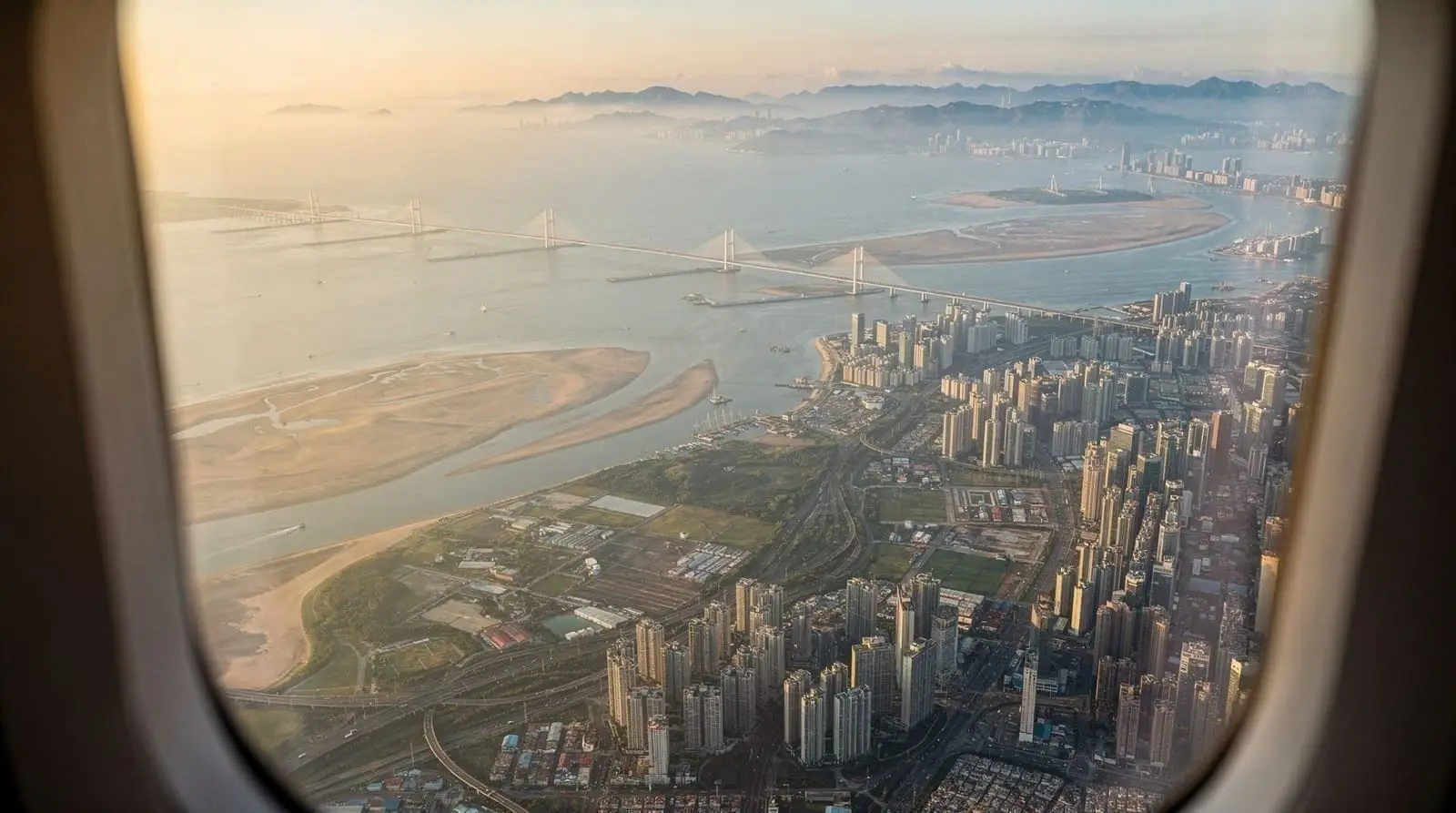
Pearl River Delta grand loop: 10 days through the Greater Bay Area
| Where | Shenzhen, Hong Kong, Macau, Zhuhai, Guangzhou, Foshan — clockwise loop |
| Cost | Approximately US$742–1,079/person for transport + activities |
| Time needed | 10 days |
| Getting there | HSR, metro, ferry and HZMB bridge — no car needed |
| Best time | October–November or March–April |
The Pearl River Delta is the most economically productive river delta in the world — a megacluster of 11 cities with a combined population of 87 million, connected since 2018 by the Hong Kong–Zhuhai–Macau Bridge and a network of high-speed rail lines that make inter-city travel faster than most European domestic flights. This 10-day loop circuits the estuary clockwise from Shenzhen: south through Hong Kong, across the HZMB to Macau and Zhuhai on the western shore, north to Guangzhou and Foshan, then back south to Shenzhen by HSR.
No car is needed. The metro, HSR and ferry cover every leg. This is genuinely one of the most efficient multi-city loops in Asia.
The route at a glance
Days 1–2: Shenzhen (tech, design, OCT) → Day 3: Hong Kong arrival, Kowloon → Day 4: Hong Kong Island → Day 5: Lantau + HZMB crossing to Macau → Day 6: Macau and Zhuhai → Day 7: Zhuhai north → Day 8: Guangzhou → Day 9: Foshan → Day 10: HSR Guangzhou South → Shenzhen North (departure)
Total distance: approximately 560 km by public transport.
Pre-trip requirements
Visas: You need entry clearance for mainland China (Shenzhen, Zhuhai, Guangzhou, Foshan) and separately for the two SARs (Hong Kong, Macau). Check whether your passport qualifies for visa-free or visa-on-arrival entry for China’s 144-hour transit programme or the Greater Bay Area scheme. Hong Kong and Macau accept most Western passports visa-free.
Money: Carry CNY for mainland cities, HKD for Hong Kong, MOP for Macau (HKD is accepted in Macau shops). WeChat Pay with a foreign card is the most useful mainland payment tool. Hong Kong and Macau are card-friendly.
Transport card: Shenzhen Tong for Shenzhen (buy at any station); Hong Kong Octopus Card for Hong Kong (buy at HK Airport or any MTR station, HK$150 deposit); Macau has no equivalent (buses are cash, taxis are cash or card).
Day 1: Shenzhen — arrival and OCT-LOFT
Arrive at Shenzhen Bao’an Airport (SZX, Line 11 Airport Express) or from Hong Kong via the Futian Checkpoint. Base in Nanshan-Shekou for Days 1–2 (Shenzhen Marriott Nanshan from ¥650/US$90/night).
Afternoon: OCT-LOFT creative district (Line 1, Huaqiaocheng station). Two hours browsing the design studios and galleries, with a stop at OCAT gallery (¥0–15/US$0–2). The OCT-LOFT is the best single concentration of Shenzhen’s cultural output — independent, not government-curated.
Evening: Shekou waterfront bar scene. Bionic Brew or Taps Craft Beer for a cold local pour (¥35–60/US$5–8). Dinner at a Cantonese restaurant in the Sea World Plaza area (¥80–120/US$11–17 per person).
Day 1 budget: ¥350–500/US$49–70.
Day 2: Shenzhen deep — Huaqiangbei, Dafen and Lianhuashan
Morning: Huaqiangbei electronics market (Line 1, Huaqiang Road North). The world’s densest consumer electronics zone — SEG Electronics Market, Mingtong Digital City. Buy phone accessories and components at 40–60% of Western retail. Allow 90 minutes.
Huaqiangbei insider tech tour — a local guide who can navigate the supplier floorsAfternoon: Dafen Oil Painting Village (Line 3, Dafen station). 800 artist studios in a dense village. Custom portraits (¥300–800/US$42–110), art copies and originals available. Then Lianhuashan Park (¥0, taxi from Dafen ¥25–35) for the Futian skyline panorama.
Evening: Shenzhen Museum at Civic Center (free) for the “History of Shenzhen” exhibition — 45 minutes, then dinner in Futian CBD food courts. Times Square basement food hall: ¥40–65/US$5.5–9.
Day 2 budget: ¥400–600/US$56–84.
Day 3: crossing to Hong Kong — Kowloon and the harbour
Morning: Check out of Shenzhen hotel. Cross at Futian Checkpoint (Line 4 to Lok Ma Chau MTR, 30–60 minutes) or West Kowloon HSR from Futian station (8 minutes, HK$75/US$10). Arrive Kowloon before noon.
Base in Kowloon for Days 3–4: Hotel Pen Tsim Sha Tsui (from HK$900/US$116) or Salisbury YMCA (from HK$750/US$96, best value harbour views in the SAR).
Afternoon: Tsim Sha Tsui harbourfront — Avenue of Stars, Symphony of Lights at 20:00 (free). Star Ferry crossing to Central (HK$4/US$0.5). Walk through Wan Chai’s colonial street grid.
Evening: Temple Street Night Market (Yau Ma Tei, 18:00–midnight). Dai pai dong dinner at the typhoon shelter area — stir-fried clams, steamed fish, ¥80–150/HK$80–150/US$10–19.
Day 3 budget: HK$500–750/US$64–96.
Day 4: Hong Kong Island — Peak, Sheung Wan, Aberdeen
Morning: Peak Tram from Garden Road terminus (HK$62/US$8 return + Sky Terrace HK$58/US$7.5). The city from 396 m is the best single urban view in the PRD.
Afternoon: Sheung Wan and Hollywood Road — Man Mo Temple (free, 1847), Hollywood Road antique strip, Central-Mid-Levels escalator. Lunch at Kau Kee Restaurant (九記牛腩, 21 Gough Street): beef brisket noodles, HK$52–68/US$6.7–8.8.
Hong Kong colonial culture walk with tram and Star FerryEvening: Aberdeen typhoon shelter sampan tour (HK$60–80/US$7.7–10 negotiated at pier). Dinner at a seafood restaurant in Aberdeen (HK$200–350/US$26–45 per person for fresh seafood).
Day 4 budget: HK$700–1,000/US$90–128.
Day 5: Lantau Island then HZMB crossing to Macau
Morning: MTR to Tung Chung then Ngong Ping 360 cable car (HK$175/US$22.5 return) to the Tian Tan Buddha. Giant Buddha (34 m, free entry) and Po Lin Monastery vegetarian lunch (HK$100–150/US$13–19 set meal). Bus 21 to Tai O fishing village (30 minutes, HK$5) for stilt house wandering and fresh shrimp paste.
Afternoon: HZMB crossing to Macau. From Tung Chung or the Passenger Clearance Building on Lantau, take the HZMB shuttle bus across the 55 km bridge and tunnel structure (MOP$65/US$8 one way, 45-minute crossing). This is one of the engineering spectacles of the 2010s — the road deck sits 6.7 m above the Pearl River at its highest point.
Alternatively: ferry from Hong Kong Macau Ferry Terminal in Sheung Wan (55–70 minutes, HK$160–200/US$21–26).
Arrive Macau by 16:00. Base in the historic Macau Peninsula (Pousada de São Tiago, a fort-turned-guesthouse from 1629, from MOP$1,200/US$150/night, genuinely memorable; budget: Mandarin Oriental Lodge from MOP$580/US$72).
Evening: Senado Square (議事亭前地) in the dusk light — the Portuguese-patterned mosaic plaza with baroque façades is at its most photogenic with the setting sun. Dinner at Restaurante Litoral: Macanese African chicken (MOP$148/US$18.5), caldo verde (MOP$38/US$4.7), pastéis de nata (MOP$7/US$0.9 each).
Day 5 budget: HK$400 + MOP$400/US$102 combined.
Day 6: Macau history and Zhuhai crossing
Morning: Ruins of St Paul’s (聖保祿天主堂遺址, free) and the surrounding historic centre — the UNESCO World Heritage core requires 2–3 hours on foot. Macau Tower observation deck (MOP$155/US$19) for the Cotai Strip aerial view.
Macau Tower observation deck ticketAfternoon: Cross to Zhuhai. The Macau–Zhuhai Gongbei land border crossing (Portas do Cerco, walking, 10 minutes) is the most frequently crossed land border in the world — 200,000+ crossings per day. Queueing varies from 15 minutes to 2 hours depending on day and time. The crossing opens at 07:00 and closes at midnight.
Base in Zhuhai for Day 6–7: Sheraton Grand Zhuhai (Cotai side, from ¥780/US$108) or Zhuhai International Grand Hotel on the seafront (from ¥380/US$53).
Evening: Zhuhai waterfront promenade (珠海情侣路, Lovers Road). The 28 km seafront corniche along Xiangzhou Bay is popular for sunset and evening walks. The Fisher Girl Statue (漁女雕像) is Zhuhai’s visual symbol. Dinner at a Pearl River estuary seafood restaurant: steamed crab, grilled oysters, fish soup, ¥80–150/US$11–21 per person.
Day 6 budget: MOP$300 + ¥350/US$87 combined.
Day 7: Zhuhai — Chimelong and coastal Zhuhai
Morning/Afternoon: Chimelong Ocean Kingdom (長隆海洋王國, Hengqin Island, 40 minutes by bus from Zhuhai centre). The world’s largest aquarium complex by total water volume — the whale shark display alone houses 7 whale sharks in the world’s largest indoor marine exhibit. Entry: ¥350/US$48 adults, ¥300/US$42 children. Plan for a full 5–6 hours.
Evening: Return to Zhuhai and depart north to Guangzhou by HSR (Zhuhai North station, high-speed rail to Guangzhou South, 45 minutes, ¥77/US$11) or by regular train (Guangzhou East, 2 hours, ¥45/US$6).
Day 7 budget: ¥550–750/US$77–105.
Day 8: Guangzhou — old city food and Canton Tower
Base in Guangzhou for Days 8–9: White Swan Boutique Hotel, Shamian Island (from ¥780/US$108), or Ibis Guangzhou Renmin Zhonglu (from ¥280/US$39).
Morning: Dim sum at Tao Tao Ju (陶陶居, 20 Dishifu Road). Arrive by 08:30. Full spread of har gow, siu mai, cheung fun. ¥100–160/US$14–22 per person.
Afternoon: Chen Clan Academy (陳家祠, ¥15/US$2, Line 1, Chenjiaci station) — 1894 ancestral hall museum with extraordinary Shiwan ceramic roof ornamentation. Xiguan (西關) old quarter walk for the qilou arcade streetscape. Canton Tower (广州塔, ¥150/US$21, Line 3/APM Canton Tower station) for the evening city view.
Guangzhou Chen Clan Academy 2-hour guided tourEvening: Pearl River night cruise (¥100–180/US$14–25) from the north bank piers. Dinner at a Cantonese restaurant in Tianhe: ¥120–180/US$17–25 per person for the roast meats and seafood combination.
Day 8 budget: ¥700–1,000/US$98–140.
Day 9: Foshan — kung fu, ceramics and Lingnan culture
Morning: Foshan is 40 minutes from Guangzhou by metro (Line 1 to Guangfo Line interchange) or 20 minutes by HSR from Guangzhou South to Foshan West. Base: transfer in for the day; no overnight needed.
The Foshan Ancestral Temple (佛山祖廟, Zumiao station) is a 1,000-year-old complex of Taoist shrines, opera stages and martial arts training halls — the most important single site in the Lingnan cultural canon. The martial arts association hall here is the geographical origin of Wing Chun kung fu (the style later popularised by Bruce Lee and Ip Man). Entry ¥20/US$3. Watch a lion dance performance if the schedule aligns (check at the gate, typically weekends at 10:30 and 15:30).
Afternoon: Nanfeng Ancient Kiln (南風古灶, adjacent to Zumiao) — a 500-year-old dragon kiln that has been continuously fired since the Ming dynasty. Shiwan ceramics (石灣陶瓷) are the distinctive Foshan art form: bold glazed figurines of deities, scholars and mythological animals. Entry ¥15/US$2; potters demonstrate throwing and glazing on-site daily.
Evening: Return to Guangzhou for dinner, then overnight before departure.
Day 9 budget: ¥400–600/US$56–84.
Day 10: return to Shenzhen for departure
Check out of Guangzhou hotel and take HSR from Guangzhou South (广州南) to Shenzhen North (深圳北, 33 minutes, ¥80/US$11) or Futian (深圳福田, 45 minutes, ¥90/US$12.5). From Shenzhen North: metro Line 5/4 to Bao’an Airport (SZX); from Futian: direct connections to the Futian Checkpoint for Hong Kong, or Line 4 to the airport. Alternatively, continue directly to Hong Kong via the West Kowloon HSR from Futian (8 minutes, HK$75/US$10).
10-day total budget (mid-range, excluding accommodation and flights):
- Shenzhen: ¥800–1,100/US$112–154
- Hong Kong: HK$1,700–2,500/US$218–320
- Macau: MOP$500–700/US$62–88
- Zhuhai: ¥600–900/US$84–125
- Guangzhou + Foshan: ¥1,500–2,200/US$210–308
- Transport between cities: ¥400–600/US$56–84
Total transport + activities: approximately US$742–1,079 per person.
Extending this loop to 14 days
If 10 days feels tight once you are on the ground, the natural extension is adding Dongguan as a half-day detour between Guangzhou and Shenzhen, plus an extra night each in Guangzhou and Hong Kong. The Greater Bay Area 2-week itinerary is essentially this loop with that extra breathing room built in — worth reading even if you stick with 10 days, since it explains what each additional day actually buys you.
Zhuhai and Chimelong: is the detour worth it?
Zhuhai is the city on this loop most likely to get short-changed, since it sits between two more famous stops (Macau and Guangzhou). It shouldn’t be — Chimelong Ocean Kingdom alone justifies the half-day, and the Lovers Road waterfront is one of the more underrated evening walks in the whole delta. The Zhuhai travel guide and the Chimelong Ocean Kingdom guide both make the case in more detail if you are considering cutting Zhuhai to save a day.
Chimelong Ocean Kingdom entry ticketFoshan: kung fu heritage beyond the Ancestral Temple
Day 9’s Foshan stop only scratches the surface of the city’s martial arts and ceramics heritage. If lion dance and Wing Chun history genuinely interest you, the Foshan kung fu and Lingnan culture guide covers the training halls open to visitors and the annual lion dance competition calendar — worth checking before you go in case your dates align with a bigger event than the standard weekend demonstration.
Frequently asked questions about the Pearl River Delta grand loop
Can I do the PRD loop in 10 days without a car?
Yes — this is one of the arguments for the Greater Bay Area as a travel destination. The HSR, metro and ferry coverage is comprehensive. The only leg that lacks a direct public transport alternative is Zhuhai to northern Zhuhai attractions (taxi or Didi is the practical option, ¥20–40/US$3–5.5).
What is the best direction to do the loop?
Clockwise (Shenzhen → HK → Macau/Zhuhai → Guangzhou → back) works slightly better for most international arrivals via Hong Kong or Shenzhen airports. Counter-clockwise works equally well from a logistics standpoint.
How is the HZMB crossing done by public transport?
Take the shuttle bus from the Hong Kong Passenger Clearance Building (accessible by bus or taxi from Tung Chung MTR) to the Zhuhai or Macau Port. Journey time: 40–55 minutes over the bridge. Ticket: HK$65/US$8.4 to Macau or Zhuhai side. Buses operate every 5–10 minutes from 06:00–midnight.
Is Foshan worth visiting as a day trip from Guangzhou?
Yes — Foshan is easier to visit from Guangzhou than many guidebooks suggest. Metro Line 1 interchange at Xilang makes the connection seamless. A 6-hour day trip covers the Ancestral Temple, Nanfeng Kiln, and a Foshan noodle lunch without feeling rushed.
What is the best time of year for this loop?
October–November (post-typhoon season, clear skies, 22–28°C) and March–April (mild, spring blossom) are optimal. Avoid the Golden Week holiday (October 1–7) and Chinese New Year (January–February) for border crossings. Summer (June–August) is hot, humid and typhoon-prone but manageable with indoor priorities.
Should I extend this to 14 days instead?
If you can spare the extra time, yes — the 2-week Greater Bay Area itinerary adds Dongguan and gives Guangzhou, Hong Kong and Zhuhai an extra night each, which noticeably reduces the pace without adding a new city. Ten days is complete on its own, but 14 is more comfortable.
Pearl River Delta experiences on GetYourGuide
Verified deep-linked GetYourGuide tours. Book through these links and we earn a small commission at no cost to you.