Huaqiangbei electronics market guide — what to buy, what to avoid
Is Huaqiangbei worth visiting as a tourist?
Yes, but with tempered expectations. Huaqiangbei is extraordinary for sourcing components and cheap gadgets, but genuine brand-name products are often counterfeit. The experience of walking through the world's densest electronics ecosystem is genuinely fascinating. Budget CNY 0 for the experience; CNY 50–300 if you buy anything.
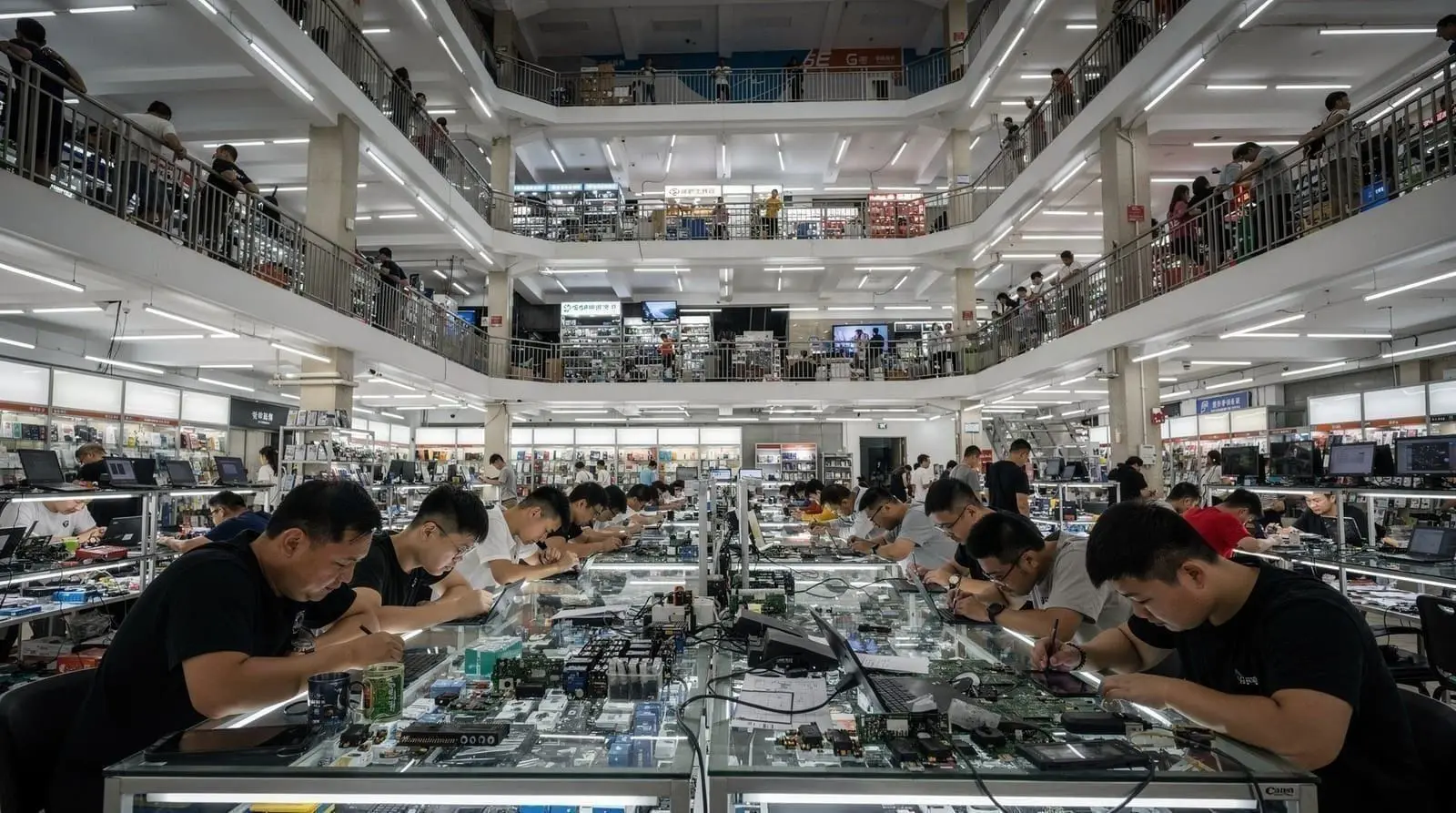
Huaqiangbei (华强北) is the world’s largest electronics marketplace. That description doesn’t capture it. Walking into the Seg Electronics Market (赛格电子市场) — the oldest and densest building — is more like entering a vertical city organized entirely around electronic components: floor after floor of vendors selling resistors, capacitors, microcontrollers, phone screens, battery packs, LED strips, cable assemblies, and every conceivable fragment of a digital device. Engineers from manufacturing facilities across the Pearl River Delta come here to source components same-day. Startups prototype here. Repair shops source spare parts by the handful.
For tourists, Huaqiangbei is one of Shenzhen’s most distinctive experiences — but it requires a realistic mindset to avoid expensive disappointment. If you’re planning a broader trip through the city, the Shenzhen in 3 days itinerary puts Huaqiangbei in context alongside other major stops.
| Where | Huaqiangbei North Road, Futian district |
| Cost | CNY 0 to browse; CNY 50–300+ if you buy |
| Time needed | 2–3 hours comfortable, 4 hours maximum |
| Getting there | Metro Line 1 or 7 to Huaqiangbei Station |
| Best time | Weekday mornings; avoid Sundays and public holidays |
The honest assessment first
Huaqiangbei has a counterfeit problem that no amount of positive framing should obscure. A significant percentage of “brand-name” products in the malls — particularly phones, tablets, headphones, smartwatches, and audio equipment — are counterfeit, grade-A clones, or refurbished units sold as new. The market has become more sophisticated about this over the years: fake Apple products look nearly identical to genuine ones, fake AirPods sound similar, fake Samsung phones boot cleanly. The tells are often in the fine print, in serialization, in the feel of materials, and in what happens when you try to register the device.
What this means practically:
- Do not buy Apple products, Samsung phones, Sony audio equipment, or any premium Western brand at Huaqiangbei expecting genuine items
- Do not buy anything that needs to pass a legitimate software authentication check (Apple ID, Google account tied to hardware)
- Do buy components, Chinese-brand electronics, accessories, cables, and generic gadgets where the authentic/counterfeit distinction doesn’t apply
With that said, Huaqiangbei is still extraordinary. No other market on earth compresses this much supply chain density into walkable space — and understanding what you’re looking at transforms it from a confusing bazaar into a genuinely illuminating window on how the modern electronics world functions.
For guidance on avoiding the most common tourist mistakes in Shenzhen shopping, the tourist traps guide covers Huaqiangbei alongside other areas where visitors commonly overpay or get misled.
Layout of the main shopping zone
The main Huaqiangbei commercial zone runs along Huaqiang North Road (华强北路) between Shennan Boulevard and Zhenhua Road. The concentration of buildings spans about 1.5 km of street-level frontage.
Key buildings:
Seg Electronics Market (赛格电子市场) The original, 52-story, and the one that defines what Huaqiangbei is. Lower floors sell assembled electronics (phones, tablets, accessories). Mid floors are the component traders — if you’re not an engineer, this is fascinating but bewildering. Upper floors are increasingly occupied by food courts. Best for: components, cables, generic gadgets, the experience. The building itself is worth entering just to see the scale: hundreds of vendors on a single floor, each running a stall the size of a small wardrobe, each specializing in something specific.
Mindray Electronics Mall (明通数码城) The largest all-electronics mall in the complex, with phone sellers dominating the first three floors. Quality varies enormously between stalls. Most accessible for tourists looking to compare prices. The ground floor near the entrance concentrates the most aggressive sales tactics; the upper floors have a slightly calmer atmosphere and more component-focused vendors.
Yuanwang Digital Mall (远望数码城) Slightly smaller than Mindray but with a higher concentration of legitimate component traders and fewer consumer-facing sellers. Less tourist-oriented, more business-oriented. If you’re genuinely looking for electronic components or development boards (Arduino, Raspberry Pi accessories, sensor modules), Yuanwang’s upper floors are the right place.
Electronics Wholesale Market (电子器件市场) Raw components, passive electronics, and development boards. Not relevant for tourists unless you’re specifically interested in electronics prototyping. Worth walking through once to see professionals at work — engineers comparing component spec sheets with vendors, logistics workers collecting bulk orders.
New Huaqiangbei (新华强北) retail zone The newer retail strip to the west has been redeveloped and now hosts authorized dealers for major Chinese brands — Huawei, Xiaomi, DJI, Honor — in standalone brand stores. This is where to buy legitimate products at legitimate prices.
What you can legitimately buy at Huaqiangbei
Generic accessories and cables: USB-C cables, charging bricks, phone cases, screen protectors, portable battery packs, cable organizers. These are the same quality as what you find on AliExpress, just physically in front of you. Prices are often lower than airport shops or tourist-area electronics stores. CNY 15–60 for most accessories. A good 65W USB-C GaN charger runs CNY 45–80 — similar to what you’d pay online but you can inspect the build quality before buying.
Chinese-brand electronics: Xiaomi, Huawei, Honor, Oppo, Vivo, and Realme all have authorized retailer clusters in the zone. These are legitimate products at competitive prices. A Xiaomi Redmi Note series phone runs CNY 1,200–1,800 from authorized sellers; a Huawei Band 9 smartwatch runs CNY 280–350. Do not buy these products from random stalls — only from identifiable brand-authorized shops with official signage and sealed-box products.
DJI drones (at the DJI authorized store): DJI, the world’s dominant consumer drone manufacturer, is headquartered in Shenzhen. The DJI authorized dealers in the area sell legitimately at official Chinese retail prices, which are often lower than Western markets. A DJI Mini 4 Pro runs approximately CNY 4,499 at official retail — compare with USD 759 in the US market. Verify you’re in an authorized store (look for the official DJI partner registration, official warranty documentation, and serial numbers that verify at store.dji.com).
LED strips and smart home components: If you have a technical interest in smart home systems or LED lighting, the component floors of Seg are genuinely extraordinary for variety and price. WS2812B addressable LED strips, Zigbee sensors, Wi-Fi switch modules — all available at a fraction of Western retail prices and in the specific quantities you need.
Wearables from Chinese brands: Smartwatches and fitness bands from Xiaomi (Mi Band series), Huawei (Band series), and similar are legitimately available at competitive prices from authorized sellers. The Xiaomi Mi Band 9 runs CNY 199–249 from authorized vendors. Avoid any watch claiming to be an “Apple Watch” — it isn’t.
Repair and unlocking: If your phone is broken, screen-cracked, or locked, Huaqiangbei repair shops are fast and cheap. A screen replacement on a standard iPhone runs CNY 200–400 depending on screen quality. An iPhone battery replacement runs CNY 100–180. Ask about replacement screen grade (original vs. aftermarket) and negotiate. Repairs that would take a week at Apple Stores in other countries often happen same-day here.
Audio equipment from Chinese brands: Brands like Moondrop, Fiio, and Hidizs — all serious audiophile-adjacent brands producing IEMs (in-ear monitors) and portable DACs — are available from legitimate retailers in the zone at prices that undercut international shipping. A pair of Moondrop Aria 2 IEMs runs CNY 399 from legitimate sellers.
The counterfeit gauntlet — how to spot fakes
If despite the warnings you’re curious about what “grade A” fakes look like, here’s what to watch for:
Apple products: Fake iPhones and iPads often have slightly wrong font weights on the UI, plastic components that should be aluminum, and cannot be registered to an Apple ID cleanly. The box printing is sometimes slightly blurry. Always check serial numbers at apple.com/coverage before handing over money. Fake AirPods Pro (second generation) now include a fake serial that may initially appear valid — the giveaway is that the spatial audio calibration fails during setup and the noise-cancelling performance is noticeably inferior within minutes.
Headphones: The giveaway for fake AirPods and Sony WH-1000XM series is weight (clones are lighter), battery life (shorter), and connectivity (less stable pairing). Codes don’t verify on manufacturer apps. Fake Sony headphones also typically have cheaper-feeling ear cushion foam and the headband adjustment mechanism feels loose compared to genuine units.
Smart watches: The Apple Watch is the most commonly cloned item at Huaqiangbei. A real Apple Watch has specific UI behavior that clones can’t replicate exactly; the screen brightness is usually lower on fakes; the haptic motor feels qualitatively different. The most telling test: try to enable ECG function — genuine Apple Watches have region-specific software controls on this; clones simply don’t have the hardware.
The general rule: If a price is less than 40% of the official retail price and the product is a major Western brand, it’s counterfeit. “Factory seconds” and “export surplus” justifications are sales tactics with no basis in how consumer electronics manufacturing actually works. Genuine factory surplus from Apple, Sony, or Samsung does not flow through open market stalls.
GoPro cameras: A persistent scam involves “grade A” GoPro cameras at CNY 400–600. Real GoPros don’t exist in the legitimate grey market at those prices. What you’re getting is a clone body with inferior internals and GoPro-style housing.
Which building suits your goal
| Goal | Best building | Why |
|---|---|---|
| See the scale, take photos | Seg Electronics Market | 52 floors, the most visually overwhelming single building |
| Compare phone/tablet prices | Mindray Electronics Mall | Widest concentration of consumer-facing sellers |
| Source components, dev boards | Yuanwang Digital Mall | Business-oriented, fewer tourist-facing stalls |
| Buy legitimate Chinese-brand tech | New Huaqiangbei retail zone | Authorized Huawei/Xiaomi/DJI stores, fixed prices |
| Screen or battery repair | Any building’s repair counters | Same-day service, negotiate on screen grade |
Safety and common-sense precautions
Huaqiangbei is a legitimate commercial district and not a dangerous place, but it rewards the same caution as any dense market anywhere in the world. Keep bags zipped and phones in a front pocket in the most crowded aisles of Seg during peak afternoon hours. Counterfeit disputes are the main practical risk, not personal safety — if a vendor becomes aggressive after a haggling attempt falls through, simply walk away rather than escalate. For a broader picture of how Shenzhen compares to other major Chinese and regional cities on everyday safety, the is Shenzhen safe guide covers petty crime, scams, and emergency numbers in more depth.
Getting to Huaqiangbei
Metro Line 1 or Line 7 to Huaqiangbei Station (华强北站). From exit A, you’re at the edge of the main market zone within a minute’s walk. The area is dense and signage is Chinese-language; download an offline map before arriving. The Shenzhen metro guide has full coverage of line routes, interchange stations, and ticketing for foreigners.
The Futian district guide covers accommodation in the area if you want to base yourself nearby. Huaqiangbei is a short Didi ride from Futian CBD.
DJI flagship store — a Huaqiangbei highlight
DJI, the world’s dominant consumer drone manufacturer, is headquartered in Shenzhen. The DJI authorized dealers and the DJI experience center in the area let you see and test their full drone lineup — from the Mini series to the Matrice professional drones and the Osmo action cameras. If you’re seriously interested in purchasing a DJI product, this is one of the best places in the world to do it: full selection, competitive pricing, and staff who can answer technical questions in Mandarin (bring a translation app).
The DJI Avata 2 FPV drone, the DJI Osmo Mobile phone gimbal, and the DJI Mic wireless microphone system are all available at Chinese retail prices. These represent genuine savings over US or European retail — approximately 10–20% depending on the product and current exchange rate.
Book an insider Huaqiangbei electronics tour to navigate the market with a guide who speaks Chinese, knows which vendors are reliable, and can translate technical specifications. Particularly valuable if you’re planning a larger electronics purchase or want to understand the supply chain context of what you’re seeing.
Combine Huaqiangbei with a tech experience tour including DJI and autonomous vehicles — a popular option that adds context to the hardware you’re seeing in the market and connects the electronics ecosystem to Shenzhen’s broader role in emerging tech.
Haggling and price negotiation
Huaqiangbei operates on a negotiation model for most stalls. Starting prices are typically 30–60% above the actual selling price. General guidance:
- Ask for the price (多少钱? duō shao qián)
- Counter with 40–50% of the stated price
- Expect to settle somewhere in the middle
- Don’t feel obligated to buy after negotiating; vendors are used to price enquiries
- Show competing stall prices on your phone if you’ve price-checked elsewhere in the same building
- Walk away if the price doesn’t meet your threshold — vendors will often call you back
When not to haggle: Brand-authorized dealers (Huawei, DJI, Xiaomi flagship stalls with official branding) operate at fixed prices. Haggling is pointless and slightly rude in those contexts. Similarly, the repair shops typically have tiered pricing by screen grade that’s somewhat fixed — you can ask for a better grade at the same price, but the overall price structure is less flexible than component vendors.
The WeChat Pay angle: Some vendors will offer a marginally better price if you pay via WeChat Pay rather than cash, as it reduces their handling costs. This is worth noting if you have WeChat Pay set up. The WeChat Pay and Alipay for foreigners guide covers how to get these payment systems working on a foreign phone before your visit.
The Huaqiangbei supply chain story — why this matters globally
Huaqiangbei didn’t appear from nowhere. It emerged from Shenzhen’s transformation from fishing village to manufacturing powerhouse across the 1980s and 1990s, as the Pearl River Delta became the world’s workshop for consumer electronics. The key catalysts were Shenzhen’s Special Economic Zone status (granted 1980), proximity to Hong Kong’s capital and distribution networks, and the clustering of component manufacturers across Dongguan, Guangzhou, and Shenzhen itself.
By the early 2000s, Huaqiangbei had become the world’s most efficient component spot market. Manufacturers across the delta could source any electronic part within a day of identifying a design need. This same-day access to components compressed the hardware development timeline in ways that accelerated all of Chinese electronics manufacturing.
The shanzhai (山寨) culture that emerged here deserves honest context. Shanzhai — often translated as “copycat” but more accurately understood as a decentralized, informal innovation ecosystem — produced phones and electronics that combined multiple functions, reached markets faster than official brands, and served price points that were impossible for branded manufacturers. What started as straight copies evolved into genuine innovation: shanzhai phone manufacturers were putting dual SIM cards, FM radio, and removable batteries into phones years before international brands standardized these features for the mass market.
This open-hardware culture fed directly into Shenzhen’s current strength in hardware startups. The city is one of the fastest places on earth to go from a component prototype to a manufacturable product. Makers and hardware entrepreneurs from around the world come specifically to Huaqiangbei to source components for prototypes — the OCT-LOFT creative district is adjacent to this ecosystem and shows the design side of the same culture.
The supply chain compression that Huaqiangbei represents has real global consequences: roughly 80% of the world’s consumer electronics incorporate components that either originate in or pass through the Pearl River Delta supply chain. Walking through Seg Electronics Market, you are literally looking at the physical substrate of the global technology industry.
A half-day Huaqiangbei visitor route
For a first visit, this sequence works well:
Arrive 10–10:30am at Huaqiangbei Station via Line 1 or Line 7. Exit A puts you at the southern end of the main strip. Start at Seg Electronics Market (赛格, the tall building) — the component floors in the middle of the building are the most visually distinctive, but start at ground level to get your bearings. Allow 30–40 minutes in Seg.
Cross to Mindray Electronics Mall (明通) for the consumer-facing side — phones, tablets, accessories. This is where the tourist-oriented stalls concentrate. Spend 20–30 minutes comparing prices and observing the sales dynamic. Don’t buy anything yet.
Walk north along Huaqiang North Road to the newer authorized dealer zone, where you’ll find standalone Huawei, Xiaomi, and DJI stores with fixed prices and legitimate products. If you’re going to buy Chinese-brand tech, buy it here. Allow 30–45 minutes.
Lunch around noon: Head to the food floors in the upper levels of Seg (6th–8th floors), which have a functional food court with Cantonese fast-food options, noodle stalls, and congee — CNY 20–45 for a meal. Alternatively, the area around Huaqiangbei Station exit B has street-level restaurants serving Hong Kong-style lunch sets (CNY 30–60). The Futian district has a broader dining overview if you want to extend your eating beyond the immediate market area.
Afternoon (optional): Return to any specific floors or buildings you want to explore in more detail, or head to the Ping An Finance Centre observation deck for a dramatic contrast — from the bottom of the supply chain to one of the most striking buildings the supply chain’s profits built.
Total time: 2–3 hours is comfortable. 4 hours is the maximum most visitors want before electronic-component saturation sets in.
The tech tour experience — guided vs. self-guided
Self-guided exploration of Huaqiangbei is entirely possible, and for casual tourists who just want to absorb the atmosphere, it’s fine. The visual experience of the market doesn’t require explanation — the density speaks for itself.
Where a guide adds genuine value:
Language in negotiations: Most vendors speak minimal English. A guide who speaks Mandarin (and ideally Cantonese, given the delta heritage) can communicate specifications, negotiate effectively, and identify when a vendor’s description of a product doesn’t match what’s in front of you.
Vendor identification: Knowing which stalls in Mindray are consistent sellers vs. which are here for one more sale before disappearing is not something you can determine from appearance alone. Guides with regular Huaqiangbei presence know the reliable component vendors and the legitimate brand-authorized sellers vs. the stalls with official branding but counterfeit stock.
Technical translation: If you have a specific component need — a particular battery cell specification, a specific display driver board, a particular wireless module — a guide who understands electronics can navigate the Yuanwang floors efficiently where a self-guided visitor would spend hours.
The comparison with nearby Dongmen’s street market is instructive: Dongmen requires no guide because the product categories are visible and the food is straightforward to evaluate. Huaqiangbei’s complexity — the difference between a legitimate Xiaomi stall and a lookalike counterfeit operation, or between a grade-A screen replacement and a grade-B one — benefits from local knowledge in a way that Dongmen’s street food simply doesn’t.
For electronics-focused tourists, the guided tour options in this area are among the most worthwhile in Shenzhen. A knowledgeable guide at Huaqiangbei is not a convenience — it’s often the difference between a good purchase and an expensive mistake.
Huaqiangbei in the broader Shenzhen tech picture
The market is worth understanding as part of Shenzhen’s role in the global electronics supply chain. Roughly 90% of the world’s consumer electronics contain components either manufactured in or sourced through the Pearl River Delta region. Huaqiangbei is the visible, accessible face of that invisible infrastructure.
For more on Shenzhen’s shopping landscape beyond electronics, the Shenzhen best shopping malls guide covers modern retail options. The Futian district guide situates the market in its urban context. For a broader weekend plan that includes Huaqiangbei alongside Shenzhen’s other highlights, the Shenzhen weekend 48-hour itinerary balances tech tourism with food and culture stops.
Frequently asked questions about Huaqiangbei
Is it legal to buy things at Huaqiangbei as a tourist?
Purchasing counterfeit goods is illegal in China and importing them into most countries is illegal and subject to customs seizure. Buying generic or non-branded electronics, accessories, and components is completely legal. Buying legitimate Chinese-brand products (Xiaomi, Huawei, DJI) from authorized sellers is legal and commonly done by international visitors.
Can I bring electronics bought at Huaqiangbei back to Europe or the US?
Genuine electronics: yes, subject to customs duty thresholds. Counterfeit goods: customs services in the EU, UK, and US regularly confiscate these. If the product carries a brand logo it doesn’t own the right to, it can be seized at your home country’s customs. This applies to fake Apple devices, fake Sony headphones, and any other cloned branded product. Chinese-brand phones (Xiaomi, Huawei, etc.) can generally be imported, but check frequency band compatibility for your home country’s cellular networks before purchasing — Chinese models may not support all European or US LTE bands.
What are the best buildings in Huaqiangbei for tourists?
Seg Electronics Market (赛格) for the overwhelming visual experience and best photo opportunities. Mindray Electronics Mall for accessible consumer tech comparison. The DJI authorized dealer for legitimate drone purchases. The new retail zone along the western side for legitimate Chinese-brand electronics from official stores.
When is Huaqiangbei open?
Most market buildings open around 9–10am and close at 6–7pm, Monday through Saturday. Sunday hours are reduced at some buildings; component traders are less likely to open on Sundays. The street-level retail and newer brand stores continue later (until 9–10pm). Avoid public holidays — the market goes quiet and key vendors close.
Is Huaqiangbei worth a full day?
Probably not for most tourists. Two to three hours covers the main buildings, the scale, and any purchases. Pair it with the nearby Dongmen street food area for an evening meal, or head to Futian’s shopping malls for legitimate retail after the market experience.
Can I use WeChat Pay or Alipay at Huaqiangbei?
Yes — most stalls display QR codes for both. Cash (yuan) is also universally accepted. Foreign credit cards are less reliably accepted at individual stalls. Set up WeChat Pay or Alipay before your visit; the WeChat Pay and Alipay guide for foreigners explains how to link foreign Visa or Mastercard to these systems.
What language do I need at Huaqiangbei?
Very minimal English is spoken in the component floors. In the consumer-facing malls (Mindray, the new retail zone), some vendor staff speak basic product-category English. Translation apps (Google Translate with the camera function, or Pleco for Chinese characters) are genuinely useful. Showing prices on a calculator is a universal communication tool for negotiation.
Top-rated things to do in Shenzhen
Verified deep-linked GetYourGuide tours. Book through these links and we earn a small commission at no cost to you.