Shenzhen in 3 days: the honest itinerary
| Where | Futian, Nanshan-Shekou, Luohu, Dapeng Peninsula |
| Cost | ¥1,500–2,200/US$210–310 per person, excl. accommodation |
| Time needed | 3 days |
| Getting there | West Kowloon HSR (8 min) or Futian Checkpoint on foot from Hong Kong |
| Best time | October–December or March–April for clear skies |
Three days is the sweet spot for Shenzhen. Long enough to move past the surface impressions — high-rises, shopping malls, WeChat Pay bafflement — and reach the parts that reward curiosity: a fishing village turned design quarter, a hilltop park with the best city panorama in Guangdong, an oil-painting village where hundreds of artists work in full view of the street. Short enough that you never feel trapped in one of China’s megacities.
This plan covers Shenzhen’s core without a car. The metro reaches everything on this list. Budget figures are honest 2026 midpoint estimates — neither the rock-bottom hosteller nor the five-star weekender.
Getting your bearings before you land
Shenzhen is a planned city built on a 1979 fishing village. There is no organic “old centre” — instead, the city is a chain of distinct districts, each with its own character. Futian is the CBD and government district. Nanshan-Shekou is the tech cluster (Tencent, DJI, BYD HQ) with the most liveable café-and-bar scene. Luohu is the oldest, slightly grittier commercial core directly at the Hong Kong border. OCT (Overseas Chinese Town) spans the two and contains most of the theme parks and the independent arts quarter.
Metro Line 1 is your spine. A Shenzhen Tong transit card (¥50/US$7 deposit, rechargeable at any station) pays for metro and buses and saves queuing. Didi ride-hailing works fine for non-metro gaps — English-language interface, Visa/Mastercard linkable since 2024.
Arriving from Hong Kong: the fastest option is West Kowloon HSR to Futian (8 min, ~HK$75/US$10) or Shenzhen North (14 min). Walking border crossings at Futian/Lok Ma Chau take 20–40 minutes total with the immigration queues — acceptable for a morning crossing.
Day 1: tech Shenzhen and the Pingshan hills
Morning — Huaqiangbei electronics market
Start at the world’s densest concentration of consumer electronics. The Huaqiangbei (华强北) area around Huaqiang Road North metro station (Lines 1/7) is several city blocks of malls dedicated entirely to components, phones, drones, cables, and what the industry politely calls “refurbished” goods. Mingtong Digital City and the SEG Electronics Market are the most navigable for visitors. Prices are genuine: a USB-C hub that costs US$25 on Amazon costs US$7 here if you compare the specs carefully and apply moderate haggling (10–20% is realistic; more is rude).
Trap warning: the ground floor stalls selling name-brand phones are almost never what they claim. Go for accessories, components, drone parts, and curiosities. The upper floors of SEG have professional component suppliers who are happy to ignore tourists entirely — that is a good sign.
Huaqiangbei insider electronics tour with a local guide — worth booking if you want someone who can negotiate in Cantonese/Mandarin and translate the more arcane specifications.
Breakfast option: the basement food court of Mingtong Digital City opens at 08:00 with congee, youtiao (fried dough) and soy milk for ¥15–25/US$2–3.5.
Afternoon — OCT-LOFT creative district and Shenzhen Museum
Take Line 1 west to Huaqiaocheng station. The OCT-LOFT (华侨城创意文化园) is a converted industrial zone now occupied by independent galleries, design studios, small-batch coffee roasters, and the better restaurants in west Shenzhen. It is quiet on weekdays before 15:00 — a deliberate contrast to the morning’s sensory overload. The independent bookshop Librairie Avant-Garde has an outpost here. Lunch at one of the lane restaurants (HK Food Street or the newer noodle spots on the north campus); expect ¥40–70/US$5.5–10.
Shenzhen Museum at Civic Center (Line 1, Civic Center station) is free, well-curated in English, and covers the transformation from fishing village to tech megalopolis with enough primary material to be genuinely interesting. The archaeology galleries on floor 2 are underrated. Allow 90 minutes.
Evening — Lianhuashan Park panorama
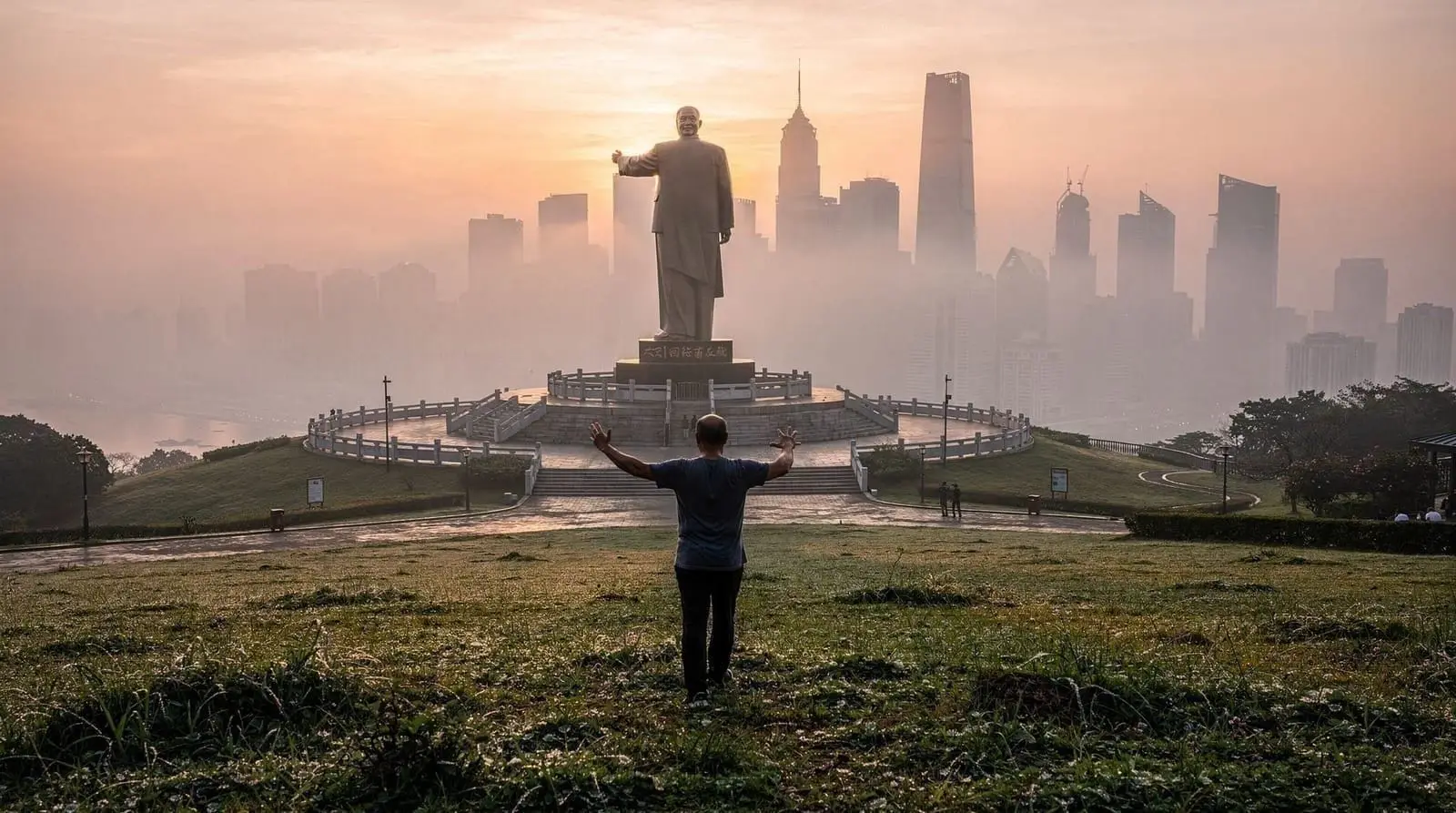
Walk or take a short Didi ride to Lianhuashan Park (莲花山公园) for the pre-dusk hour. The hilltop has the best unobstructed view of the Futian CBD skyline. Ping An Finance Centre (599 m) dominates to the south. No entrance fee. The Deng Xiaoping statue at the summit is the most-photographed spot in the city among domestic tourists.
Dinner in Futian: Lianxianglou (联香楼) on Fuzhong Road does excellent Cantonese roast duck and char siu without the tourist markup. A meal for two costs ¥120–160/US$17–22.
Day 1 budget: ¥350–500/person (US$50–70), not counting shopping.
Accommodation: The OCT area has good mid-range options. Shenzhen Marriott Hotel Nanshan (from ¥650/US$90/night) is well-positioned for Days 2 and 3. Budget option: Home Inn Select Huaqiangbei (from ¥250/US$35/night, clean, functional).
Day 2: heritage, art and the bay
Morning — Dafen Oil Painting Village
Luohu district’s Dafen Village (大芬油画村) is a legitimate wonder: roughly 800 studios producing oil paintings at every scale from postcard-sized copies to gallery-scale originals. The “copy painting” industry here is not a tourist gimmick — it supplies reproductions to hotels, restaurants and interior designers worldwide. The quality range is enormous. Spend an hour watching artists at work (studios open from 09:00), then decide whether you want a custom portrait (¥300–800/US$42–110 for a 50×70 cm canvas, delivered to your hotel in 3 days), a copy of a classic (Van Gogh’s Starry Night: ¥200–400/US$28–55), or a contemporary piece from one of the dozen independent galleries at the village’s south end.
Getting there: metro Line 3 to Dafen station, 3-minute walk. The round trip from Futian takes 40 minutes.
Guided 3-hour Dafen village tour includes a short painting demonstration workshop — reasonable value if you want context on the industry.
Afternoon — Window of the World or Splendid China
Take Line 1 west to Window of the World station. You have two options at the OCT resort cluster:
Window of the World (世界之窗): 130 miniature replicas of global landmarks across a large landscaped park. Eiffel Tower, Taj Mahal, Sydney Opera House, all at 1:10 scale. Intellectually absurd, visually spectacular, particularly good for photos in the morning light (afternoon gets crowded). Entry: ¥220/US$30. Allow 3 hours.
Splendid China and Folk Culture Villages (锦绣中华): similar concept focused on China’s own landmarks and ethnic minority cultures, with dance performances running through the afternoon. Entry: ¥260/US$36. The cultural shows are genuinely produced, not a cynical performance. Allow 3–4 hours.
If you have children, both parks reward the full afternoon. Without kids, one is enough; Window of the World photographs better.
Window of the World skip-the-line entry ticketEvening — Shekou waterfront
End in Shekou (蛇口), the original 1980s SEZ experiment zone, now a relaxed waterfront neighborhood with the best concentration of non-Chinese restaurants, craft beer bars and internationally oriented cafés in Shenzhen. Sea World Plaza around the German cruise ship MS Kaiserin Auguste Victoria (permanently docked) is the main gathering point. Dinner at Lai Heen by The Ritz-Carlton if budget allows (Cantonese fine dining, ~¥300–400/person); more realistically, the lane behind Sea World has Korean BBQ and Sichuan hotpot around ¥80–120/person/US$11–17.
Day 2 budget: ¥500–700/person (US$70–100) with one theme park entry.
Day 3: Dapeng Peninsula and coastal Shenzhen
Full day — Dapeng Fortress and Xichong Beach
Dapeng Peninsula is Shenzhen’s best-kept geographic secret: a rugged coastline of granite headlands, clear water, and a Ming-dynasty coastal fortress. Getting there by metro and bus takes 75–90 minutes from central Shenzhen — take Line 3 to Jikeng station, then Bus 833 toward Dapeng (¥12/US$1.7). A Didi from the city costs ¥60–90/US$8–12 and is faster with a full group.
Dapeng Ancient Town (大鹏古城) is a walled 1394 Ming fortress that served as a coastal defence against Japanese pirates. Entry is free. The inner streets retain original stone architecture and a handful of family-run Hakka restaurants serving salt-baked chicken (盐焗鸡), the regional specialty. Lunch here for ¥60–80/US$8–11 per person.
Xichong Beach (西涌) is Shenzhen’s cleanest and least commercial beach, accessible by minibus from Dapeng town (¥5). The water is swimmable in summer (June–October), though jellyfish appear in August. In spring and autumn it is a hiking base for the coastal trail south to Nanao.
Return and departure logistics
Heading back to Hong Kong from Dapeng: reverse the bus-metro route to Luohu or Futian border, or book a Didi directly to the crossing (¥70–100/US$10–14). The Futian/Lok Ma Chau crossing to Hong Kong MTR is the most convenient and less crowded than Luohu. Allow 45–90 minutes for the crossing depending on time of day.
Day 3 budget: ¥300–450/person (US$42–63) including transport.
Practical details
Total 3-day budget (mid-range, excluding flights/accommodation): ¥1,500–2,200/person (US$210–310). Accommodation adds ¥500–900/night (US$70–125) for a comfortable mid-range hotel.
Connectivity: purchase a China eSIM before arrival (Airalo, Nomad) or use a Hong Kong SIM card with data roaming — Hong Kong SIMs work on mainland China without hitting the Great Firewall. Install WeChat Pay and link a Visa/Mastercard before arrival; the WeChat international version (not the mainland app) now supports foreign card linking.
Language: Mandarin is universal. Cantonese is widely spoken in older neighborhoods and restaurants. English exists at most hotels, is absent in most restaurants, and is patchy at tourist attractions. Google Translate photo mode (download offline Chinese packs) covers most menus.
Getting around: Metro is clean, reliable, air-conditioned and inexpensive (¥2–8/trip). The Shenzhen Tong card refund requires a visit to a customer service centre — not worth refunding for a 3-day stay.
Explore the Shenzhen destination overview for maps and seasonal timing, or read the full Shenzhen transport guide for border crossing details.
Window of the World or Splendid China: which one on Day 2?
The plan above leaves this as an either/or on purpose, and it genuinely is a coin flip for most adult visitors. Window of the World photographs better (the miniature global landmarks are more visually striking in morning light) and appeals more to first-time visitors who have not travelled widely. Splendid China’s ethnic-minority cultural performances are more substantive if you care about China’s internal cultural diversity rather than architectural spectacle. The Window of the World vs Splendid China comparison guide breaks down the difference by what actually matters — photo opportunities, performance schedules, crowd levels — rather than just ticket price.
If you have a fourth day
The extra day that rewards this itinerary most is not a fourth Shenzhen district but a proper half-day dedicated to Dapeng — this plan already sends you there on Day 3, but a full extra day lets you add the coastal hiking trail south to Nanao rather than just the beach and fortress. The Dapeng fortress and beaches guide covers the hiking option in more detail. Alternatively, the day trips from Shenzhen guide lists other one-day excursions (Guangzhou, Hong Kong, Zhuhai) if you would rather leave the city entirely for a day.
Shenzhen’s nightlife beyond Shekou
This itinerary keeps evenings low-key (Futian dinners, Shekou waterfront), but if a proper night out matters to you, Shenzhen’s rooftop bar and craft beer scenes have grown substantially since 2023. The Shenzhen rooftop bars guide and the craft beer and bars guide both cover venues with better views and beer selection than the Sea World Plaza lanes mentioned above — worth a look if Day 1 or 2 evening leaves you wanting more than dinner.
Frequently asked questions about a 3-day Shenzhen itinerary
Do I need a China visa for 3 days in Shenzhen?
Many nationalities qualify for the 144-hour (6-day) visa-free transit if arriving via a designated port and not re-entering a third country. Some nationalities can get a Shenzhen-only Greater Bay Area visa-on-arrival at the land border. Check the current rules against your passport — they changed several times between 2024 and 2026.
Is 3 days enough to see Shenzhen properly?
Three days covers the main districts and a few excellent excursions without feeling rushed. It is not enough for Guangzhou or an overnight in Hong Kong. For the broader Greater Bay Area, plan 7–10 days.
What is the best area to stay in Shenzhen?
For first-time visitors, Nanshan (OCT/Shekou area) offers the most liveable environment with good restaurants and bar access. Futian is more central for metro connections. Luohu is cheapest but least interesting.
Can I use cash in Shenzhen?
Cash (CNY) is accepted everywhere. However, many local vendors — especially street food stalls and smaller shops — now primarily use mobile payment (WeChat Pay or Alipay). Foreign Visa/Mastercard now links to both apps via the international versions; set this up before you arrive.
Is Shenzhen safe for solo travellers?
Yes. Shenzhen has among the lowest violent crime rates of any Chinese megacity. The main caution is petty theft in crowded markets (Dongmen, Huaqiangbei) and overcharging by unofficial taxis at the border crossing — use Didi or metered cabs only.
When is the best time of year to do this itinerary?
October–December and March–April give the clearest skies for the Lianhuashan Park panorama and the most comfortable walking weather for Dapeng. The best time to visit Shenzhen guide has a month-by-month breakdown including typhoon season risk (June–September) and Chinese New Year closures.
Top-rated things to do in Shenzhen
Verified deep-linked GetYourGuide tours. Book through these links and we earn a small commission at no cost to you.