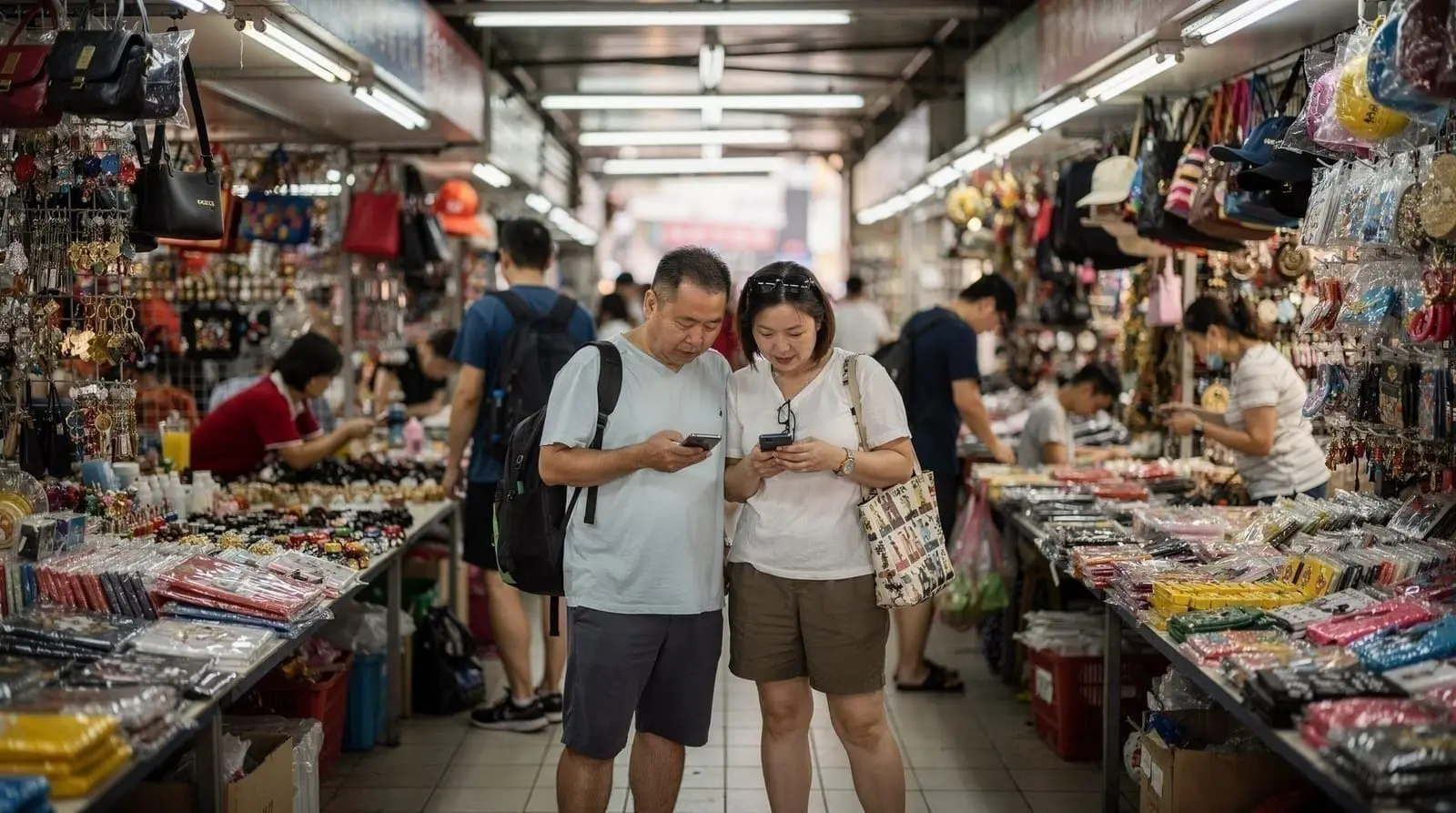
Shenzhen tourist traps: what to avoid and how
What scams should I watch out for in Shenzhen?
The main risks are counterfeit electronics at Huaqiangbei, the tea ceremony con, and unofficial taxis. Use Didi, buy from licensed shops, and decline all unsolicited street invitations to eat or drink.
Shenzhen is a safe city and an honest travel destination for the most part. But like any major city that receives a significant number of foreign visitors, it has a handful of reliable tourist traps worth knowing about before you arrive. The goal of this guide is consumer protection, not paranoia: these situations are avoidable once you know how they work.
None of the traps below are physically dangerous. They are financially costly — and entirely preventable with the specific knowledge in this guide.
For context on Shenzhen’s overall safety level, see is Shenzhen safe?.
| Trap | Typical cost if caught | How to avoid |
|---|---|---|
| Tea ceremony scam | CNY 800–3,000+/person | Decline all unsolicited invitations |
| Counterfeit electronics | Full purchase price lost | Buy fixed-price shops, test first |
| Unofficial taxis | 2–4x the metered fare | Use Didi or insist on the meter |
| Border touts | Varies, avoidable entirely | Walk past, head straight for the metro |
| Souvenir inflation | 3–5x fair price | Counter-offer at 15–20% of asking price |
The tea ceremony (friendship) scam
This is the one that consistently catches visitors who have not been warned about it. It operates in a similar form across China — Beijing, Shanghai, Xi’an, and Shenzhen all have active versions — and it specifically targets English-speaking tourists.
How it works: someone approaches you on the street, often near a tourist area or in a busy shopping district. They speak good English and are friendly. The conversation is warm and low-pressure. After a few minutes they mention they are a student (or an artist, or a local guide showing a friend the city) and would you like to experience a traditional tea ceremony? They know a great local place. It will be authentic, educational, fun.
At the tea house, tea is served ceremonially. Your new friend seems genuinely interested in you. The session runs 45–90 minutes. Then the bill arrives: CNY 800–3000 per person, sometimes higher. The items on the menu — each cup of tea, each “ceremony fee” — are individually described in Chinese characters you cannot read. Your new friend either disappears or insists you must pay. The establishment has staff who ensure payment. Credit cards may or may not work; there is often pressure to pay cash.
Why it works: the social engineering is good. The person is friendly rather than pressuring, the early conversation feels natural, and the invitation seems like a genuine cultural experience. The bill is the first moment of pressure, and by then you are already inside the establishment.
How to avoid it: decline all unsolicited invitations to eat, drink, or experience anything with a stranger you have just met on the street. Full stop. This is not about being unfriendly to local people — it is about a specific, known con. If someone you have not met before approaches you near a tourist area and proposes going anywhere together, the answer is no, regardless of how reasonable the explanation sounds.
If you want to experience a genuine tea ceremony, book one through your hotel’s concierge, a reputable tour platform, or a licensed tea house with visible fixed-price menus. The experience is genuinely enjoyable when arranged legitimately.
Huaqiangbei electronics market: real risks and real opportunities
Huaqiangbei in Futian is the world’s largest electronics wholesale market — multiple city blocks of multi-storey malls selling components, phones, drones, cables, wearables, and every type of consumer electronics. For tech-curious travellers, it is one of the most interesting places in Asia to spend an afternoon. It is also home to several traps you should understand before you buy anything.
Counterfeit and fake goods
The most significant risk is counterfeit products presented as genuine. This applies most directly to:
- Branded smartphones: cheap “iPhones” or “Samsung” phones that are Android clones running custom software to look like iOS. These are easy to spot if you know what to check; less easy if you do not. The give-away is usually price — if an iPhone 16 is selling for CNY 800 when the genuine article costs CNY 6999, it is not genuine.
- Headphones and earbuds: AirPods and Sony WH-1000XM clones are everywhere. Some are competent generic products; some are very poor quality. None are what they claim to be. They will not be covered by any warranty and in some countries are illegal to import.
- Cables, chargers, and power banks: quality varies enormously. Cheap power banks with inflated capacity claims (listing 30,000 mAh when the actual cells store 8,000 mAh) are common. At worst, underspecified chargers can damage devices or, rarely, create fire risk.
- Camera lenses and accessories: the after-market camera accessory sector at Huaqiangbei is huge and genuinely useful for budget gear; the counterfeit sector mimics branded lenses with misleading optical performance claims.
What to do: buy from shops with clearly displayed fixed prices — these are more likely to be official distributors or legitimate retailers than floor vendors with no signage. Test everything on the spot before paying; most sellers will let you try a device. Get a written receipt (even a handwritten one in Chinese is useful). For anything above CNY 300, comparison-check prices on Taobao (China’s largest consumer platform) on your phone before agreeing to pay.
Genuine components and legitimate-brand accessories are available at Huaqiangbei — the market is not purely a counterfeit operation. The official brand shops on the upper floors of the main malls (SEG Electronics Market, Huaqiang Electronics World) sell genuine goods. The highest-risk stalls are the small open-format floor stalls with no fixed-price signage.
The inflated-price haggle
In Huaqiangbei’s informal vendor sections, starting prices for tourists are substantially inflated — sometimes 5–10 times the actual value. This is not unique to Shenzhen (it is standard in any informal market anywhere in Asia) but the scale of inflation can be surprising.
A reasonable counter-offer is 10–20% of the asking price if you are dealing with a market stall. Then negotiate upward from there. If the vendor will not come below 60–70% of their starting price, the starting price was not as inflated as it appeared — or they have decided you are not buying. Either is fine. The key error to avoid is accepting a price in the first 30% of the opening ask.
If you feel uncomfortable with this style of negotiation — and many people do — simply stick to the shops with clearly marked fixed prices, which are available throughout the market. You will pay more than a skilled negotiator at a floor stall, but you will pay a fair market rate for a genuine product.
Unofficial taxis and meter-less rides
The official taxi system in Shenzhen is metered and reasonably priced. The unofficial version — drivers who approach you at airports, train stations, and border crossings offering fixed-price rides — is almost always more expensive, and occasionally much more expensive.
The setup: you exit Shenzhen North Station or arrive at the Luohu border crossing. Someone approaches and says they will take you where you need to go for a flat fee. They may say the metered taxis are all busy, or that the fare is the same. It is not the same — the “flat fee” is typically 2–4x what a metered taxi or Didi would charge for the same journey.
How to avoid it: use Didi (China’s dominant ride-hailing app) for almost all your ground transport in Shenzhen. Didi shows the price before you confirm, tracks the journey, and processes payment through the app. It is cheaper than unofficial taxis, safer than flagging random cabs, and has an English-language mode. Download it before you travel and add a payment method (international Visa/Mastercard works on Didi in 2026).
If you do take a regular taxi, insist on the meter before you get in. Say “da biao” (打表, meaning “run the meter”) or point to the meter. If the driver refuses to use the meter, do not get in. A metered taxi from Luohu border to Futian CBD is approximately CNY 30–40; unofficial drivers at that crossing regularly ask for CNY 100–200.
See the Shenzhen metro guide for the metro alternative — for most tourist journeys in Shenzhen, metro is cheaper and faster than any taxi. Having Didi and a VPN set up before you land makes this far easier to handle in the moment — see the eSIM and VPN in China guide for what to install before you travel.
A closer look at Huaqiangbei — a legitimate destination worth doing properly
It’s worth restating that Huaqiangbei itself is not a trap — it is one of Shenzhen’s most genuinely interesting neighbourhoods, and the electronics market is only part of the picture. The Huaqiangbei electronics market guide covers which specific buildings and floors sell genuine goods, and treating the market as a place to browse and understand rather than a place to buy impulsively is the single best way to avoid the counterfeit risk entirely. If you want a guided introduction that removes the guesswork on your first visit, several operators run small-group tours through the legitimate wholesale floors.
Border-area touts: Luohu (Lo Wu) and beyond
The Luohu border crossing is the busiest land border in the world by passenger volume on peak days. The concentration of people means a concentration of people trying to extract money from those people. This is not Shenzhen-specific — it is universal to any high-traffic border crossing — but Luohu is a particularly active example.
What they offer: “tours” of Shenzhen or Guangzhou at fixed prices, SIM card deals, currency exchange, “cheap” hotel bookings, escorted transfers to specific (commission-paying) shops. The common thread is that whatever they are offering, you can arrange it independently for less.
How to handle it: walk briskly, make no eye contact, and say nothing beyond a firm single “no” if pressed. You do not owe anyone an explanation. The metro entrance from Luohu is signposted — head there directly and you are past the tout zone in under two minutes. The crossing itself is straightforward; the overwhelming majority of people at the border are not touts, they are commuters.
This guidance applies to the Hong Kong-Shenzhen border crossings generally, though Luohu/Lo Wu is where the tout density is highest. Futian/Lok Ma Chau and Huanggang/Man Kam To crossings are quieter.
Souvenir market inflation
Souvenir and craft markets — the Dongmen pedestrian area in Luohu, various tourist-oriented stalls near major attractions — operate on the inflated-starting-price model for all tourist items. This is not a scam in the strict sense; it is a normal informal market dynamic. But if you pay the first price asked, you will pay 3–5x what other buyers pay for the same item.
The same counter-offer logic applies as for Huaqiangbei: open your counter-offer at 15–20% of the asking price, be cheerful and not aggressive about it, and expect to settle somewhere between 30–50% of what was first asked. If you dislike haggling, skip the souvenir stalls and buy gifts in fixed-price convenience stores or the gift shops of major museums and attractions (Window of the World, Splendid China Folk Village) where the prices are marked.
Dongmen in particular has both sides of this dynamic — genuinely good, cheap street food alongside souvenir stalls with inflated tourist pricing. The Dongmen street food guide is a useful companion for telling the two apart, since the food side of Dongmen has almost none of the inflation problems that affect the souvenir and clothing stalls.
Temple fortune tellers and high-pressure “readings”
Around temples and heritage sites — less common in Shenzhen than in older cities like Guangzhou or Xi’an, but present — fortune tellers and “traditional medicine” practitioners occasionally approach tourists with unsolicited offers of palm readings, face readings, or health assessments. These are not dangerous, but they apply social pressure: once you have accepted a “free” reading, there is often a hard ask for payment (sometimes significant) at the end.
How to avoid it: decline at the first approach. If you are interested in a fortune telling experience, arrange it through a temple’s own official service (clearly priced) rather than with an individual who approached you unsolicited.
Fake “help” at ticket machines and metro gates
A smaller-scale version of the friendship approach shows up around metro ticket machines and self-service kiosks at busy stations. Someone offers to “help” you buy a ticket or top up your transit card, then either overcharges for the assistance or, in rarer cases, pockets your change during the transaction. The machines have a functional English-language option, so unsolicited help is rarely necessary — if someone offers before you’ve even started struggling, that itself is the warning sign. Station staff at the manned counter are the right people to ask if you genuinely need help; they are salaried, uninterested in tips, and used to assisting confused travellers.
What is NOT a scam
Some things that look like traps to first-time visitors are actually normal:
Prices in CNY that seem very low: Shenzhen is genuinely inexpensive for food, transit, and basic goods. A CNY 15 lunch at a good noodle shop is not a sign that something is wrong — it is just Shenzhen’s cost of living.
QR code payment everywhere: nearly everywhere in Shenzhen accepts only WeChat Pay or Alipay, not cash or foreign cards. This is not a scam — it is how the Chinese digital payment system works. Set up payment before you arrive; see the WeChat Pay and Alipay guide for how foreigners can now use both.
Metro gates that will not let you through: this just means your transit card has insufficient balance. Top it up at the machines (which have English-language options) and proceed. No one is trying to trap you.
Restaurant with no English menu: most restaurants in Shenzhen do not have English menus. Use Google Translate’s camera function (download the Chinese language pack offline before arriving). This is a navigation challenge, not a tourist trap.
Passport registration requirements at museums and attractions: several free attractions, including Shenzhen Museum, require passport scanning at the entrance for foreign visitors. This is a standard administrative requirement, not a data-harvesting scheme aimed at tourists specifically — Chinese nationals go through an equivalent ID-card process. Bring your passport (or a clear photo of it as backup) to any free museum or government-run attraction.
Toolkit: how to protect yourself efficiently
A short, practical summary:
- Use Didi for all taxi-equivalent journeys. No meter disputes, no overcharging, tracked journeys.
- Decline all unsolicited invitations from strangers to eat, drink, or experience anything. One firm “no thank you” is sufficient.
- Test electronics before paying at Huaqiangbei; buy from fixed-price shops where possible; compare prices on Taobao before agreeing.
- Pay with WeChat Pay or Alipay where possible — digital payment creates a transaction record and avoids cash disputes.
- Walk past border touts at Luohu without engaging. Head directly to the metro sign.
- Haggle at informal markets; do not pay asking price. Counter-offer at 15–20% of the opening ask.
- Book tea ceremonies and cultural experiences through hotels or licensed platforms, not via street introductions.
The Shenzhen visa and entry guide and budget planner have additional context on navigating the city’s practical logistics without surprises. For context on overall crime and safety levels in the city, see is Shenzhen safe?. If you are planning a visit to Hong Kong or Macau as part of your trip, the tea ceremony and electronics traps appear in those cities too — different operators, same playbook.
The Hong Kong to Shenzhen border crossings guide covers what to expect at each crossing point, including the tout situation at Luohu from the Hong Kong side. Choosing a well-located base also reduces exposure to border-area touts generally — see the where to stay in Shenzhen guide if you haven’t settled on a neighbourhood yet.
Frequently asked questions about Shenzhen tourist traps
How common is the tea ceremony scam in Shenzhen?
It operates in Shenzhen but is less prevalent than in Beijing or Shanghai. The highest-risk areas are around central tourist zones and busy shopping streets in Luohu and Futian. The key marker is that the approach always comes from a stranger who initiates the conversation unprompted, quickly steers toward going somewhere together, and is specifically targeting English-speaking tourists.
Is it safe to buy electronics at Huaqiangbei?
Yes, with the right approach. The official brand shops and fixed-price retailers in the main malls sell genuine goods at competitive prices. Genuine components, cables, accessories, and no-name devices from reputable vendors are also real value. The risk is specifically from informal floor-level stalls selling items that are either counterfeit, misrepresented (capacity, specs), or defective. Test before paying, buy from shops with visible price tags, and get a receipt.
Can I haggle at official shops in Shenzhen?
Fixed-price shops (with price tags on goods) do not negotiate — the price is the price. Informal market stalls and vendors in tourist souvenir areas do negotiate, and starting prices are inflated specifically because haggling is expected. You can always ask “zui di duo shao?” (最低多少 — “what is the lowest price?”) at any vendor to test whether there is room to move.
What should I do if I end up in a tea house scam?
If you find yourself with a bill you consider extortionate, stay calm. Do not sign anything. Take photos of the bill and menu if you can. In extreme cases (bills in the thousands of CNY), contact the police (110) — this is a documented scam and authorities are familiar with it. In practice, many visitors pay a negotiated portion of the inflated bill to end the situation; this is a personal judgement call. The best outcome is to avoid the situation entirely by declining the invitation at the start.
Are the taxi drivers in Shenzhen honest?
Most are. The metered taxi system in Shenzhen is regulated and drivers generally run the meter without being asked. The minority problem is with unofficial drivers (not displaying the standard Shenzhen taxi livery) who approach tourists near stations and borders. These are the ones to decline. If you take a taxi from a rank or flag one on the street, confirm “da biao” (打表) before you get in — most drivers will already have the meter running.
Is it safe to use ATMs in Shenzhen?
Yes. Bank ATMs (Bank of China, ICBC, China Construction Bank, HSBC) at branches and shopping malls are reliable and accept international Visa and Mastercard. Avoid ATMs in very small shops or clearly informal settings. Use ATMs during daylight hours at bank branches when possible. Be aware that ATM withdrawal limits in China are typically CNY 2000–3000 per transaction (bank-dependent); if you need more cash, make multiple withdrawals.
Are there any tourist traps at the main theme parks?
The theme parks themselves (Window of the World, Splendid China) are legitimate attractions with regulated pricing. Inside the parks, standard amusement park dynamics apply: food is overpriced, unofficial photographers push high-margin photo packages, and some optional experiences (carnival games, specific shows) are poor value. None of these are scams — they are the normal commercial dynamics of any large theme park. Eat before you enter, ignore the game stalls, and you will spend what your ticket says you will.
Should first-time visitors be worried about Shenzhen’s tourist traps?
No, not disproportionately. Shenzhen’s known traps are narrow, well-documented, and easy to sidestep once you know the five or six patterns covered in this guide. Compared with many major global tourist destinations, Shenzhen has relatively few active scams targeting foreign visitors, and none of them are physically dangerous — they are financial nuisances that a little preparation avoids entirely.
Do these same traps apply on a day trip from Hong Kong or Macau?
Yes, largely unchanged. Visitors doing a same-day Shenzhen trip from Hong Kong are, if anything, a slightly higher-value target for border touts and tea ceremony operators near Luohu, simply because a shorter visit sometimes means less time spent reading up beforehand. The precautions in this guide apply identically whether you’re staying a week or doing a single day trip — the metro-straight-to-your-destination habit and the flat “no” to unsolicited invitations work regardless of trip length.
Top-rated things to do in Shenzhen
Verified deep-linked GetYourGuide tours. Book through these links and we earn a small commission at no cost to you.