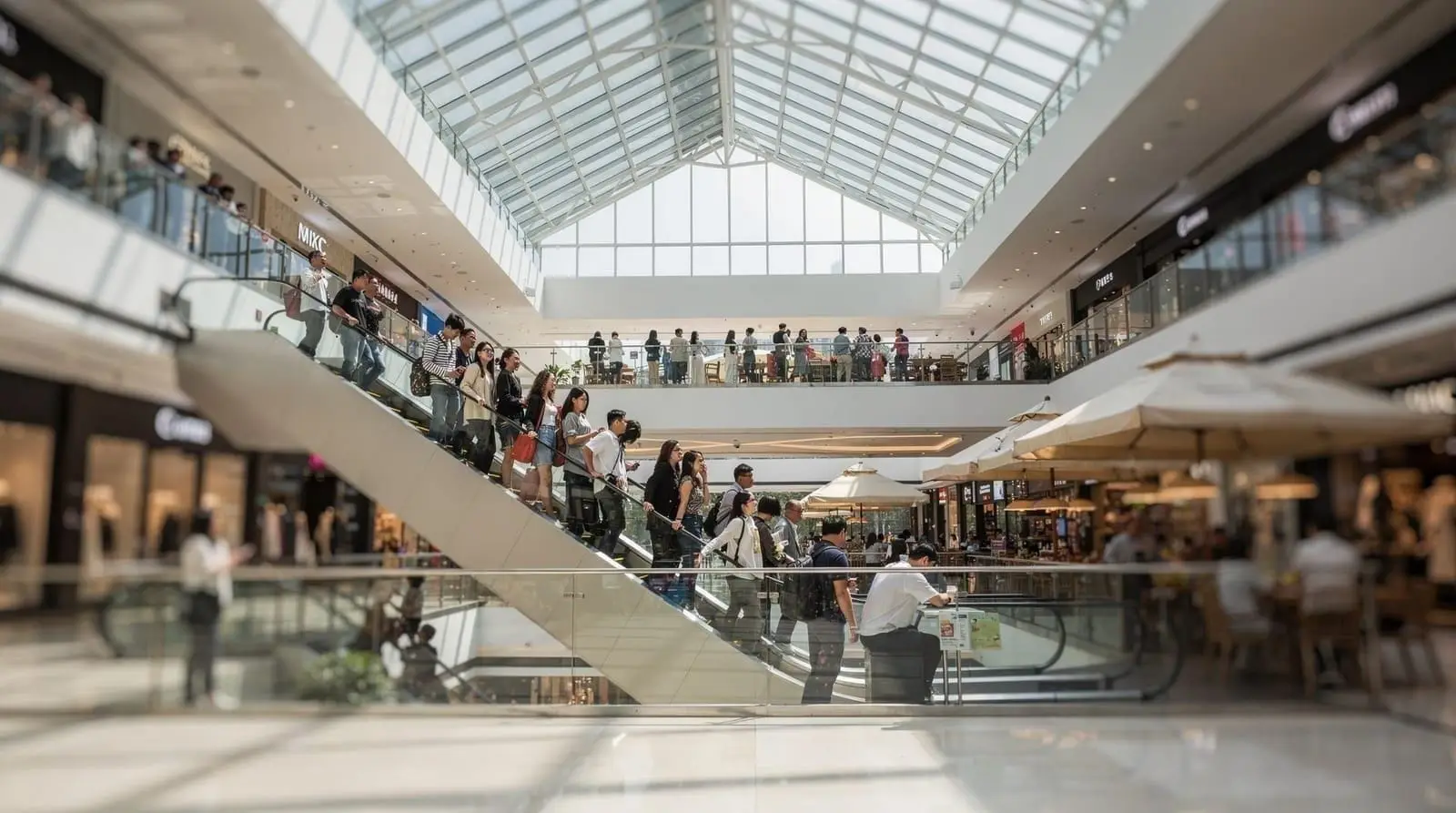
Shenzhen best shopping malls — from luxury to local finds
Which is the best shopping mall in Shenzhen?
MixC (万象城) in Luohu is the most established luxury mall; Shenzhen MixC World in Futian is the largest. For everyday brands and local fashion, Futian Coco Park and UpperHills in Futian are excellent. Coastal City in Nanshan serves the western expat market. All are metro-accessible.
Shenzhen’s retail landscape has gone through several generations in four decades. The original Dongmen market stalls gave way to department stores, which gave way to the mainland’s first Western-style malls in the 1990s, which were then displaced by the current generation of megamalls that rival anything in Dubai or Singapore. The city now has some of the best shopping infrastructure in Asia, distributed across its major districts and consistently accessible by metro.
This guide covers the malls worth visiting — not every shopping center in the city, but the ones that are actually interesting for visitors, with honest assessments of what you’ll find and what you’ll pay. If you’re coming specifically for electronics, the separate Huaqiangbei electronics market guide is the right starting point — the malls here don’t compete meaningfully on tech hardware. For the best overview of the Futian district and Nanshan Shekou as places to stay and explore, the district guides provide broader context alongside the shopping picture.
| Where | Luohu, Futian, Nanshan, and OCT districts |
| Cost | Free to browse; luxury pieces from CNY 3,000, tailoring from CNY 150 |
| Time needed | Half a day per district; a full day to compare two or three malls |
| Getting there | Metro to Luohu, Futian, Coastal City, or OCT stations |
| Best time | Weekday mornings for quiet browsing; weekend evenings for atmosphere and food |
Which mall for which priority
| Priority | Best mall | Why |
|---|---|---|
| International luxury | MixC Luohu | The original benchmark, deepest luxury boutique bench |
| Architecture and atmosphere | Shenzhen MixC World, Futian | Open-air walkways, gardens, best evening ambience |
| Everyday brands, value | Futian Coco Park | Practical mid-range mix, strong food court |
| Watches and quieter browsing | UpperHills | Less crowded, excellent watch floor |
| Expat comforts, imported groceries | Coastal City | Western brands, imported supermarket |
| Custom tailoring | Luohu Commercial City | Multiple tailor floors, 24–48 hour turnaround |
Luohu — the original shopping district
MixC (万象城) — the benchmark
The original MixC in Luohu is where Shenzhen’s mall culture was first taken seriously. Opened in 2004 by CR Land, it set the template for luxury mall development across the Pearl River Delta. The anchor tenants are international luxury — Louis Vuitton, Gucci, Hermès, Cartier — alongside a strong mid-range floor with international sportswear and clothing brands. The layout across multiple underground and above-ground floors is more compact than the newer MixC World in Futian, which makes it easier to navigate but less architecturally dramatic.
The basement food hall has evolved over the years and now contains a solid mix of Cantonese restaurants, Japanese chains, and fast-casual options. Weekend afternoons are crowded; midweek is calmer. The mall sits directly above Luohu’s transit hub, making it convenient for visitors arriving from Hong Kong via Lo Wu border — the same journey that brings people to the Luohu district generally.
The watch and jewelry floor (Level 1 and Level 2) is worth browsing even without purchase intent: the authorized dealer network for Swiss watches here includes Rolex, Omega, IWC, and Patek Philippe boutiques. For Chinese luxury jewelry, Chow Tai Fook and Chow Sang Sang occupy prominent positions with their characteristic gold and jade-focused collections at prices running CNY 3,000–50,000+ depending on piece.
Metro: Luohu Station (Line 1) or Grand Theatre Station (Line 1) — both 5-minute walks. Hours: 10am–10pm daily. Best for: Luxury purchasing, window shopping, the basement food court.
Luohu Commercial City (罗湖商业城)
Adjacent to the Lo Wu border crossing, this five-story mall is technically a tourist market — floors of tailoring, handbags, shoes, and accessories at negotiated prices. The reputation for copies and counterfeits is well-earned, but there are also legitimate sections selling authentic goods, particularly tailored clothing.
For custom tailoring: Several tailors on floors 3–5 offer made-to-measure suits and dresses in 24–48 hours. Quality varies; bring a photo of what you want, provide your measurements, and ask for a fitting before final payment. Budget CNY 400–800 for a basic suit in standard polyester-wool blend; CNY 700–1,400 for genuine wool or cashmere fabrics. Shirts run CNY 150–300 for a custom-fitted piece in standard cotton; CNY 250–450 for linen or premium cotton options. The better tailors in the mid-floor sections have fabric sample books to help you choose.
Tourist trap warning: Vendors near the entrance aggressively pitch handbags and watches. Most products in the bag/watch sections are counterfeit. Buying counterfeits is illegal in China and subject to customs seizure on return home. The tourist traps guide has practical detail on how to navigate this. The key rule: if someone approaches you on the street or mall entrance offering to show you a “special selection,” walk past.
Metro: Luohu Station (Line 1) — the mall is directly connected to the border immigration building.
Futian — the city center megamalls
Shenzhen MixC World (深圳万象天地)
The newer, larger sibling of Luohu MixC, opened in 2018. MixC World is an open-air retail street concept hybridized with enclosed mall floors — you walk between brand buildings connected by covered walkways, through landscaped gardens, and into food and beverage zones. The architecture alone makes it worth visiting: a deliberately Instagram-optimized environment that’s actually pleasant to walk through even if you’re not shopping.
Brand mix skews younger and more international than the original MixC — Muji, Zara, H&M, Uniqlo alongside upscale Chinese brands (Bosie, NPC, Randomevent, MO&Co), a Hema Supermarket, and an exceptional cinema. The complex has a distinct character at different times of day: calm and browsable in the morning, busy at lunch with office workers from surrounding towers, and social in the evening when the outdoor areas fill with younger crowds. The lighting design in the evening — the outdoor walkways have warm accent lighting across the garden landscaping — makes this one of the more pleasant evening walks in Shenzhen.
The Level 1 outdoor walkway has the best restaurant selection in the complex: a Japanese omakase counter, multiple Sichuan and Guangdong options, and a bubble tea corridor that draws queues on weekends. The Hema Supermarket (B1 level) is worth visiting on its own — it’s a demonstration of what a tech-integrated supermarket looks like, with scan-to-order from phone, live seafood picked to order, and a fast-casual eating area where you can have your selection cooked on-site.
Metro: Futian Station (Lines 2/3/4) — direct connection via underground concourse. Hours: 10am–10pm daily; some restaurants until midnight. Best for: Architecture, browsing, dining, cinema, evening social atmosphere.
Futian Coco Park (福田COCO Park)
Two buildings facing each other across a pedestrian park — CoCo Park and the newer CoCo Garden. This is where Futian’s after-work and weekend crowd gathers. The retail mix is practical: mid-range fashion (Zara, Mango, Uniqlo, local brands), electronics (Samsung, Huawei), and a strong food and beverage offering at street level and underground.
The outdoor plaza between the two buildings becomes a social gathering space in the evenings — food stalls, people-watching, and occasional live performances, particularly on weekend evenings in the autumn months. The CoCo Garden building (the newer of the two) has a better range of independent restaurants and is where you’ll find the more interesting dining options including a well-regarded Yunnan rice noodle restaurant and a Chongqing-style hotpot that’s popular with the young professional crowd.
The basement food court is one of the better ones in Futian for variety and value — see the food courts section below for specifics on what’s worth eating here.
Metro: Futian Station (Lines 2/3/4) or Gangxia Station (Line 7) — both within 8 minutes’ walk. Hours: 10am–10:30pm. Best for: Practical mid-range shopping, evening atmosphere, accessible food options.
UpperHills (深圳天虹国际广场)
A newer premium mall in Futian targeting the mid-to-luxury bracket below the original MixC. Particularly strong for watches (multiple authorized dealers including TAG Heuer, Longines, and IWC), Chinese luxury fashion brands, and upscale dining. Less crowded than MixC on weekends, which makes it more pleasant to browse. The watch floor is one of the best-curated in Shenzhen outside the MixC buildings.
The upper dining floors have some of Futian’s better restaurant options for a sit-down meal without the MixC crowds: a Japanese set-lunch counter, a Shanghainese restaurant with good xiao long bao, and a Taiwanese-style café that works well for an afternoon coffee stop.
Metro: Che Gong Miao Station (Lines 1/7) — 5-minute walk. Hours: 10am–10pm.
Nanshan — the western expat hub
Coastal City (海岸城)
The anchor mall for Nanshan’s expat and tech-worker community, within 10 minutes of the Shekou ferry terminal and the major tech campuses (Tencent, WeWork, various startups). The brand mix reflects the customer base: IKEA-adjacent home stores, outdoor gear brands (North Face, Salomon, Arc’teryx), international restaurants, and a well-stocked cinema showing some international releases.
Honest assessment: Coastal City is convenient rather than exciting — you come here for practical purchases and comfortable dining in a Western-friendly environment, not for unique shopping finds. The supermarket basement has the best imported goods selection in Nanshan: European cheeses, Japanese snacks, and a reliable wine section. If you’re staying in Shekou or Nanshan, you’ll likely visit Coastal City out of practical necessity. For a more interesting Nanshan shopping and eating option, Vientiane Tiandi (below) is more rewarding.
Metro: Coastal City Station (Line 2) — directly below the mall. Hours: 10am–10pm.
Vientiane Tiandi (万象天地) — Nanshan
Not to be confused with MixC World in Futian, this Nanshan lifestyle complex is smaller and more boutique-oriented, with a craft beer hall, independent restaurants, and a curated mix of Chinese designer brands. More interesting than Coastal City for food and entertainment; less useful for practical shopping. The outdoor section has better independent restaurants than most Shenzhen malls — particularly for Japanese and Korean options. See the Nanshan Shekou district guide for how this fits into a full evening in the area.
Metro: Qianhai Station (Lines 1/5) — 10-minute walk.
Shenzhen Bay MixC (深圳湾万象城)
Opening phases through 2025–2026, Shenzhen Bay MixC is the newest major luxury retail development in the city, positioned near Shenzhen Bay Park in the southwest of Nanshan. The luxury brand lineup is expected to rival the original Luohu MixC. Worth checking current status by the time you visit — phased openings mean not all floors may be operational.
OCT district — culture meets retail
Happy Coast (欢乐海岸)
The Happy Coast development adjacent to the OCT theme park area functions as a lifestyle mall with waterfront restaurants, a branded shopping area, and an entertainment complex. Less serious for shopping, more appropriate as an evening destination combining dinner with a walk along the bay. The area is directly adjacent to the OCT Overseas Chinese Town attractions, making it a natural evening add-on to a day at the theme parks or OCT-LOFT creative park.
Metro: OCT Station (Line 1) — 10-minute walk.
Shenzhen vs. Hong Kong for shopping — the honest comparison
This question comes up repeatedly, and the answer is genuinely nuanced — it depends entirely on what you’re buying.
When Hong Kong wins: International luxury brands (Chanel, Hermès, Rolex, Louis Vuitton) are generally cheaper in Hong Kong due to lower import duties and Hong Kong’s zero-tariff trade status. The difference on a single luxury handbag can be CNY 2,000–8,000, which makes a same-day return trip from Shenzhen to Hong Kong financially logical for serious luxury purchases. Hong Kong also has better Apple Store infrastructure (Genius Bar, proper warranty service), more international book options in English, and a more reliable selection of Western food products in supermarkets.
When Shenzhen wins: Chinese brands — Li-Ning, Anta, Bosideng, Bosie, MO&Co, Urban Revivo — are significantly better represented and often cheaper in Shenzhen’s malls than in Hong Kong, where domestic Chinese brands have less floor presence. Electronics from Chinese manufacturers (Xiaomi, Huawei, DJI) are better priced in Shenzhen with more complete product selection. Tailoring and custom clothing from Luohu Commercial City has no Hong Kong equivalent at competitive prices. The overall mall experience — scale, food options, architectural ambition — is superior in Shenzhen’s newest developments compared to Hong Kong’s aging mall infrastructure in Central and Causeway Bay.
The practical verdict: If your priority is international luxury, base yourself in Shenzhen and make a day trip to Hong Kong for specific purchases. For Chinese brands, everyday goods, or the mall experience itself, Shenzhen is the right choice without the cross-border trip. The Shenzhen metro guide has full information on the MTR connection to Hong Kong for those making the comparison trip.
Chinese brands worth buying in Shenzhen malls
Shenzhen’s malls are one of the best places in the world to buy from China’s domestic brands at competitive prices with full selection. These brands are worth understanding before you shop:
Li-Ning (李宁): China’s original sporting brand, founded by Olympic gymnast Li Ning in 1990. The brand underwent a major repositioning in the late 2010s — from cheap sportswear to a “national tide” (国潮) aesthetic that incorporates traditional Chinese design elements into athletic footwear and clothing. A pair of Li-Ning running shoes runs CNY 400–800; lifestyle sneakers from the WADE and ACE basketball lines run CNY 600–1,200. The designs are distinctive enough that they’re worth buying specifically for the aesthetic, not just the price.
Anta (安踏): The number-one sports brand in China by revenue, and genuinely competitive on performance footwear. More mainstream than Li-Ning but solid for sports-specific shoes — particularly running and basketball. CNY 300–700 for most performance footwear. Anta acquired FILA’s China license and runs a separate, more premium FILA store in major malls at CNY 600–1,500 per piece.
Bosideng (波司登): China’s leading down jacket brand, and worth buying if you need a down coat or puffer jacket. Bosideng offers genuine quality at CNY 800–2,500 — significantly cheaper than comparable Western brands (The North Face, Canada Goose equivalent quality brackets) and made to a standard that matches the price point. The flagship stores in Futian malls have the full range.
MO&Co (摩安珂): A Guangzhou-born contemporary women’s fashion brand, now widely available in Shenzhen’s mid-to-premium malls. Prices range CNY 400–1,200 for individual pieces — more expensive than fast fashion but with significantly better fabric quality and design sophistication. Comparable to & Other Stories aesthetically; better fabric than Zara at a similar price.
Bosie (bosie): A gender-fluid Chinese clothing brand established in 2018 that has become one of the most interesting domestic fashion stories in China. Strong on pattern work, color combinations, and tailoring — the brand has collaborated with traditional Chinese craft techniques on limited collections. CNY 300–800 for most pieces. Best selection at MixC World Futian.
Urban Revivo (UR): The Chinese brand most directly competing with Zara on design speed and trend responsiveness, but with better fit calibration for Asian body proportions. CNY 200–600 for most pieces. Worth visiting for trend-forward fashion at Zara-comparable prices but with better fit on average.
Shenzhen’s wholesale district beyond Huaqiangbei
Electronics aren’t the only wholesale story in Shenzhen. For clothing, fabric, and accessories, the city has substantial wholesale infrastructure that most visitors never see.
Nanyou Clothing Wholesale Market (南油服装批发市场): Located in Nanshan near Nanyou Station (Line 1), this multi-building complex is one of the larger clothing wholesale markets in southern China. Individual stalls sell clothing at per-unit prices that assume buying in multiples — a single piece might cost CNY 50–80 where the same item retails for CNY 150–200 in a mall. Not a tourist market; vendors are accustomed to trade buyers and may be impatient with single-item requests. Worth visiting if you have genuine buying intent or serious curiosity.
Fabric Markets: The area around Buji (Longhua) has fabric and textile wholesale markets serving Shenzhen’s garment manufacturing industry. For anyone interested in fabric sourcing, the variety is extraordinary: silk, denim, technical fabrics, embroidery, and trim at wholesale prices unavailable in retail environments.
The reality check: Wholesale markets in Shenzhen are designed for trade buyers, not tourists. The language barrier is more significant than in tourist-facing retail. Coming with clear intentions, a translation app, and willingness to buy in minimums is essential.
Join a Shenzhen wholesale market shopping tour to explore the behind-the-scenes trade markets where Shenzhen’s goods originate — a genuinely different experience from the polished malls, and a rare window into how Chinese consumer goods reach global markets.
Dongmen: the market street before the malls
Before MixC and MixC World existed, Dongmen (东门) was Shenzhen’s shopping district — a dense pedestrian grid of market stalls, small shops, and street food near Luohu. It’s still there, and still worth an hour even for visitors who prefer the modern malls. The Dongmen street food guide covers the food side in detail; on the shopping side, expect cheap fashion, phone accessories, and negotiable prices rather than fixed retail. It pairs naturally with a MixC Luohu visit since the two are a short walk apart — do the mall first for a benchmark on quality and price, then Dongmen for contrast.
Private guided tour of Dongmen and the electronics marketsA practical half-day shopping route
For visitors who want one mall visit rather than a citywide tour, this route covers the highlights efficiently: start at Shenzhen MixC World in Futian mid-morning for the architecture and a browse, have lunch at the MixC World basement food hall or walk 10 minutes to Futian Coco Park for its food court instead, then finish the afternoon at UpperHills for a quieter watch-floor browse before the evening crowds arrive.
This keeps everything within Futian and a short metro ride, avoiding the cross-district travel that a Luohu-plus-Nanshan day would require. Those staying in Nanshan should substitute Coastal City and Vientiane Tiandi for an equivalent half-day without crossing districts — see the Nanshan Shekou guide for how to sequence it with dinner.
Best food courts in Shenzhen malls
Mall food courts in Shenzhen deserve separate mention — several are legitimately good as standalone lunch destinations independent of any shopping intent.
MixC World Futian (basement B1): The best food court in the city’s central malls, with a real mix of regional Chinese options — Sichuan noodles (CNY 30–45), Cantonese roast meat over rice (CNY 35–55), and a dim sum section open from 10am. The quality is consistently above food court average. Busiest noon to 1:30pm on weekdays; expect to wait for a table or arrive before noon.
Futian Coco Park (basement): Slightly more casual than MixC World, with a stronger street-food orientation — Yunnan crossing-the-bridge noodles, Hong Kong-style cha chaan teng options, and a Japanese ramen counter that consistently has queues. The hot pot section is better than expected for a food court. CNY 25–60 for a full meal. Better value than MixC World and less crowded at peak times.
UpperHills food level: The most upscale food court environment in Futian — sit-down restaurant counters rather than stall service. The Japanese sushi set counter here (around CNY 80–120 for a set) is legitimately good. Less crowded than the MixC options, making it a better midweek lunch choice if you’re in the area. The Shanghainese restaurant on the same floor does a good xiao long bao.
Coastal City food basement: Strong on imported and Western options — a Hong Kong-style dim sum restaurant, a Japanese curry chain, and a Western bakery are the anchors. Prices are slightly higher than equivalent Futian options (CNY 40–80 for a full meal) reflecting the expat positioning. The dim sum here is convenient but not as good as dedicated restaurants; see the Shenzhen dim sum guide for proper options.
For Cantonese food beyond mall food courts, the Hakka food guide and Chaoshan cuisine guide cover the distinct food traditions that Shenzhen’s restaurants represent.
Seasonal shopping notes
Shenzhen’s retail calendar has its own rhythm worth planning around. 11.11 (Singles’ Day, November) and 618 (June) are the two biggest promotional periods nationwide, and Shenzhen malls run in-store tie-ins alongside the online discounts — expect crowds and genuinely good markdowns on Chinese brands during these windows.
Chinese New Year (late January or February, date varies) sees malls decorated elaborately but also unusually crowded with domestic shoppers doing gift shopping; some smaller tailoring stalls at Luohu Commercial City close for the holiday week, so avoid that specific errand around the New Year date. Summer (June–August) is the quietest period for mall visits generally, aside from the promotional 618 week, and the air-conditioned malls are a comfortable escape from the heat and humidity outside.
Shopping tips for Shenzhen malls
Price reality: Prices at Shenzhen’s luxury malls are Chinese retail price, not discounted. International luxury brands (Gucci, LV, Cartier) cost roughly the same in Shenzhen as in Hong Kong, and sometimes more once you factor in the yuan exchange rate.
Tax refunds: China’s tourist tax refund (VAT rebate) applies to purchases above CNY 200 from registered retailers. Look for the 退税 (tax refund) logo at mall entrances. Process the refund at designated counters before you leave — you’ll receive the refund in cash or to your card at the departure airport.
Payment: All malls accept WeChat Pay, Alipay (both linked to foreign Visa/Mastercard), and most accept foreign cards directly at major brand stores. The WeChat Pay and Alipay guide for foreigners explains how to set these up before your visit. Cash is widely accepted.
Opening hours: Shenzhen malls rarely close before 10pm; most operate until 10:30pm on weekends. Sunday is a peak retail day, not a rest day. For quieter browsing, Tuesday and Wednesday mornings are the best windows.
For a broader shopping plan combining malls with Huaqiangbei electronics and Dongmen market, the Shenzhen on a budget itinerary sequences these into a practical day plan. The Shenzhen weekend 48-hour itinerary integrates shopping with the city’s food and cultural highlights.
Frequently asked questions about shopping in Shenzhen
Is Shenzhen cheaper than Hong Kong for shopping?
For international luxury brands: roughly similar, sometimes slightly more expensive in Shenzhen due to mainland import duties. For Chinese brands and everyday goods: Shenzhen is notably cheaper. Electronics: depends heavily on what you’re buying and where — see the Huaqiangbei guide for the full picture.
Are there outlet malls near Shenzhen?
The nearest major outlet is in Dongguan, accessible by high-speed rail from Shenzhen North Station (about 30 minutes). International brands with significant discounting appear there. Within Shenzhen city limits, outlet options are limited. Luohu Commercial City has discounted tailoring and some negotiated-price goods but is not an outlet mall in the standard sense.
Can I get custom clothing made in Shenzhen?
Yes. Luohu Commercial City (near the Lo Wu border crossing) has multiple floors of tailors. For custom suits and dresses: bring reference photos, allow 24–48 hours for production, and request a fitting before final payment. Quality varies between tailors; mid-floor vendors generally have better reputations than the entrance-level stalls. Budget CNY 500–1,000 for a basic made-to-measure suit, CNY 200–400 for a custom shirt.
What’s the best mall for kids in Shenzhen?
Shenzhen MixC World has a dedicated family floor with children’s clothing, toy shops, and a soft-play area. Happy Coast near OCT has outdoor play space alongside the retail. For a full family day, combine mall shopping with the nearby OCT Overseas Chinese Town attractions, which has multiple theme parks adjacent to the Happy Coast retail zone.
Do Shenzhen malls have good food beyond fast food?
Yes — the food levels of the major malls (MixC World, Futian Coco Park, UpperHills) have sit-down restaurant options that go well beyond fast food. The Guangzhou-Shenzhen foodie itinerary has a broader food-focused framework for visitors interested in regional Cantonese cuisine alongside the shopping.
Which mall is best for a rainy day?
Shenzhen MixC World’s covered walkways handle light rain reasonably well, but for genuinely bad weather, a fully enclosed mall like Futian Coco Park or Coastal City is more comfortable — both have long indoor stretches connecting shops, food, and cinema without stepping outside.
Is haggling expected at Shenzhen malls?
No — fixed prices apply in all the malls covered here. Haggling is only normal at Luohu Commercial City’s market-style floors and at Dongmen’s street stalls, not in branded mall stores.
Do I need cash at Shenzhen malls, or is mobile payment enough?
Mobile payment (WeChat Pay or Alipay, linked to a foreign card) covers essentially every transaction in every mall listed here, including food courts and small kiosk vendors. Cash is accepted everywhere as a backup, but carrying large amounts is unnecessary — see the WeChat Pay and Alipay guide for setup before you arrive.
Are Shenzhen malls open on public holidays?
Yes, and they are typically busier rather than closed — Chinese New Year, Labour Day (May), and National Day (October) are peak domestic shopping periods with extended crowds. If avoiding crowds is the priority, plan mall visits for a regular weekday outside these national holiday windows.
Top-rated things to do in Shenzhen
Verified deep-linked GetYourGuide tours. Book through these links and we earn a small commission at no cost to you.