Macau food guide: Macanese cuisine, Portuguese dishes, and where to eat
What is Macanese food and where do I find it?
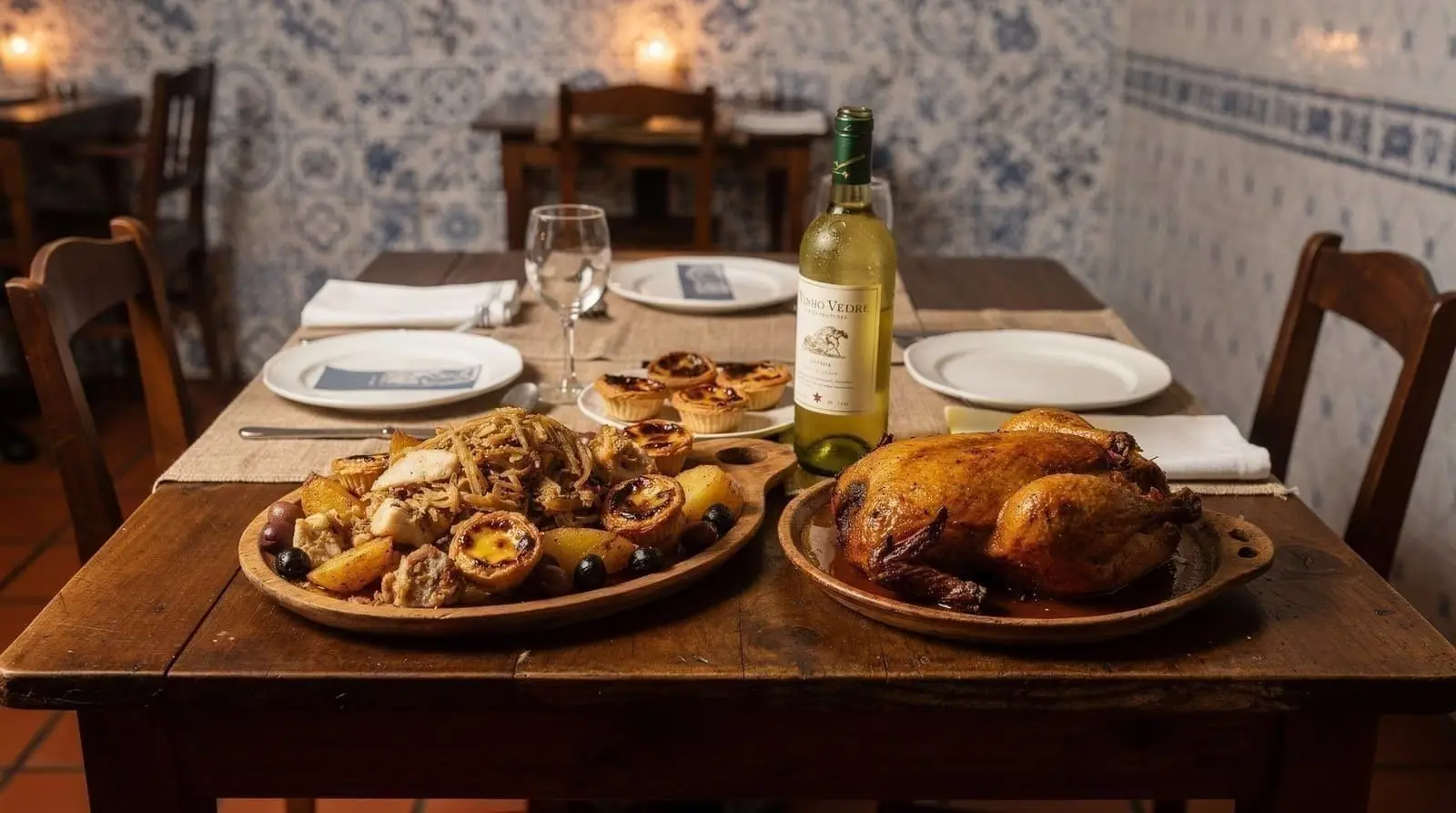
Macanese cuisine blends Portuguese, African, Indian, Malay, and Cantonese cooking — a 500-year fusion produced by Portuguese traders moving between colonies. The result includes dishes like African chicken, minchi, and bacalhau. Honest Macanese cooking is found in places like Restaurante Litoral, A Lorcha, and Café Nga Tim — not in the casino buffets.
Macau’s food culture is genuinely distinctive. The Macanese culinary tradition — a fusion of Portuguese, Cantonese, and colonial-route ingredients from Africa, India, and Southeast Asia — developed over five centuries and is now recognised by UNESCO as an Intangible Cultural Heritage. It is also, by the standards of the Pearl River Delta, somewhat endangered: fewer than 20 restaurants in Macau still serve authentic Macanese cooking, versus hundreds of generic casino buffets. Finding the real thing requires about 10 minutes of research. This is that research.
| What | Macanese cuisine — Portuguese, Cantonese, African, Indian fusion, UNESCO-listed |
| Cost | MOP 80–120 budget, MOP 180–280 mid-range per person |
| Where | Senado Square, A-Ma Temple area, Taipa Village, Coloane |
| Signature dishes | African chicken, minchi, bacalhau, pork chop bun |
| Booking | Reserve ahead for Restaurante Litoral, especially dinner |
What Macanese cuisine actually is
The term “Macanese” in a food context refers to a specific cuisine, not just “food found in Macau.” Authentic Macanese cooking uses Portuguese-origin techniques (slow braising, salt cod, olive oil) combined with local Cantonese ingredients and the spice routes that Portuguese traders navigated — hence the coconut milk, turmeric, coriander, and chilli that appear in dishes with no Chinese counterpart.
Key dishes to know:
African chicken (galinha à africana): Roast chicken marinated and cooked with coconut milk, palm oil, chilli, garlic, and bayleaf — brought to Macau via Portuguese East Africa. Rich, mildly spiced, served with bread for the sauce. The original is at Restaurante Litoral; most casino versions are diluted.
Minchi: The everyday home dish of Macau — minced beef or pork fried with onion, soy sauce, bay leaf, and Worcestershire sauce, served with a fried egg on top and a scoop of fried potato cubes or rice. Simple, filling, and absent from casino menus. Found at Café Loreto and a handful of local lunch spots.
Bacalhau (salt cod): Borrowed directly from Portuguese culinary tradition, appearing in Macau in dozens of forms: baked casseroles, deep-fried patties (pastéis de bacalhau), and slow-cooked with potatoes and eggs. The salt cod in Macau is imported from Portugal and Norway; the preparation is local.
Caldo verde: Portuguese green soup with kale and chorizo. Appears on most Macanese restaurant menus as a starter; varies considerably in quality.
Feijoada: Slow-cooked bean and pork stew adapted from the Portuguese-Brazilian version. The Macau iteration is milder and often served on weekends as a special.
Arroz de pato: Duck rice, cooked with linguiça (smoked sausage) and served in a clay pot. A staple of the restaurant menus and reliably good when made properly.
Where to eat: honest restaurant recommendations
Restaurante Litoral
The benchmark for authentic Macanese cooking. Run by the Ferreira family for decades, and named in almost every serious food guide since the 1990s. Despite its reputation, it is not overpriced: lunch and dinner menus run approximately MOP 220–350 per person including a glass of wine. The African chicken, minchi, and bacalhau casserole are consistently well-executed. Closed Tuesdays.
Address: 261 Rua do Almirante Sergio, Macau Peninsula
Reservations: Strongly advised; call or use email; they’re consistently full for dinner
Price: MOP 220–350 per person
A Lorcha
Slightly more tourist-facing than Litoral but still genuinely Portuguese-Macanese kitchen. The salt cod and arroz de pato are reliable. Larger portions than Litoral; good for groups. The bread basket and caldo verde starter are worth ordering. Location near the A-Ma Temple makes it convenient after visiting the historic centre.
Address: 289 Rua do Almirante Sergio
Price: MOP 180–280 per person
Café Nga Tim
A terrace café in the village of Coloane, on the Largo do Eduardo Ferreira facing a small church square. The setting is the draw as much as the food — painted colonial houses, a banyan tree, and a café that seems indifferent to being discovered. The minchi and African chicken are adequate; the location is exceptional. Takes Macau Pataca cash; not all cards accepted.
Getting there: Bus 21A or 26A from Senado Square to Coloane village, then 5-minute walk
Price: MOP 100–180 per person
Henri’s Galley
An institution near the airport, Henri’s has been serving African chicken to Macau regulars since the 1970s and is routinely described as the dish’s definitive version in the territory. The restaurant is not photogenic (think roadside canteen with laminate tables) and the service is efficient rather than warm. The African chicken comes with a side of piri-piri chilli oil on request. Order it.
Address: 4 Avenida da República, near the Outer Harbour ferry terminal
Price: MOP 150–220 per person
The great egg tart debate
Macau’s Portuguese custard tart (pastel de nata or simply “egg tart”) is one of the territory’s most celebrated exports. Two competing origin stories exist for the Macanese version: Lord Stow’s Bakery in Coloane Village (Andrew Stow, British, opened 1989) versus the Portuguese pastelaria tradition that predates the casino era. In practice, both are worth trying.
Lord Stow’s Bakery: The original and still the best. Located in Coloane Village; also has a branch in the Venetian’s Grand Canal Shoppes (slightly inferior but convenient). The shells are flakier than the Cantonese Hong Kong version; the custard is less sweet and more egg-forward. MOP 12–14 each. Opening: 07:00–22:00, 7 days.
Margaret’s Café e Nata: Located near the Floating Casino, Macau Peninsula. A smaller operation with a dedicated local following and queues at breakfast time. Slightly thicker custard, crispier shell than the Venetian outlet of Lord Stow’s. MOP 10–12 each.
What to avoid: Any egg tart sold at the stalls immediately below the Ruins of St Paul’s costs MOP 13–16 and is mass-produced. It’s the most visible egg tart in Macau and not the best.
Dim sum in Macau
Macau’s Cantonese dim sum scene is significant and underappreciated because the casino food courts absorb a lot of visitor spending. The best value is found outside the casino perimeter:
Café Bela Vista: A traditional-style dim sum hall in the Macau Peninsula district near the Sands Macao. Open for breakfast and lunch only; arrive before 09:00 on weekends or expect to queue. MOP 80–130 per person.
Jade Garden (inside the Grand Lisboa): Casino-attached but the quality is consistent and the setting more comfortable than a push-cart hall. MOP 150–250 per person; reservations recommended for Sunday brunch.
Tim Ho Wan (Galaxy Macau): The Michelin-starred Hong Kong chain. Reliable, reasonably priced by casino standards (MOP 100–160 per person), and the baked BBQ pork buns are worth the separate trip. Queues at weekends.
The pork chop bun (pão com bifanas)
A slice of pork loin, marinated briefly and grilled, sandwiched in a crispy Portuguese roll and eaten on the street. It is Macau’s answer to a fast-food sandwich and it is excellent. The most famous vendor is Tai Lei Loi Kei on Rua Coelho do Amaral in Taipa Village, but the Macau Peninsula branch at Rua de S. Paulo serves the same bun to the tourist crowd near St Paul’s. MOP 45–55 per bun (2026 prices). Not a snack — it’s a meal.
Serradura and other Portuguese sweets
Serradura (sawdust pudding) is a layered cream dessert made with whipped cream and crushed Maria biscuits. Found at most Macanese restaurants as a dessert option; also sold in small tubs at Lord Stow’s and at a handful of patisseries on Senado Square. MOP 30–45 per serving.
Bebinca: A Goan-origin layered coconut cake occasionally found in Macau. Rarer than serradura; worth trying when you spot it.
Food tour and evening food walk options
A guided evening food tour covering the historic centre’s back-lane vendors, egg tart bakeries, and pork chop bun stalls is available and worth the cost if you want context along with the tasting. Book the Macau hidden gems evening food tour
The tour typically covers 6–8 tastings across the Senado Square area, Taipa Village, and a Macanese restaurant stop. Groups rarely exceed 8 people; guides are local Macau residents.
What to avoid in Macau dining
Casino buffets as a primary dining option: The major casino buffets (Grand Lisboa, The Venetian’s Bambu) offer variety but not quality. At MOP 300–500 per person for dinner, you can eat significantly better at Restaurante Litoral or A Lorcha. The buffets are reasonable for families with picky children who need wide choice.
The “Macanese experience” restaurant packages: Several tour operators bundle a “Macanese dinner experience” into a sightseeing package at a restaurant that serves Portuguese chicken in a tourist-adapted, simplified version. These exist primarily in the casino shuttle bus circuit. The restaurants are not bad but the food is optimised for speed and predictability, not authenticity.
Portuguese wine at casino prices: Restaurants inside casinos markup wine 300–400%. At Restaurante Litoral, a bottle of Alentejo or Douro red costs MOP 150–220 (USD 18–27). The same wine at the Venetian’s restaurant would be MOP 450+. Eat and drink outside the casinos where possible.
Getting between restaurants and the food landscape
The Macau Peninsula food scene clusters around Senado Square (egg tarts, street food), the A-Ma Temple area (Litoral, A Lorcha), and Taipa Village (pork chop buns, Tim Ho Wan in nearby Galaxy). Cotai resorts have casino dining. Coloane has Café Nga Tim, Lord Stow’s, and a couple of quieter restaurants. A taxi from peninsula to Coloane takes 15–20 minutes (MOP 60–80); bus 21A or 26A takes 30 minutes for MOP 6.40.
For the full Macau food and sightseeing picture, see our guides on Senado Square and the historic centre, the Cotai Strip resorts, and the Macau day trip from Hong Kong. Those planning a regional food journey should also look at our Cantonese food guide for Guangzhou — the two cuisines share an ancestor but have evolved in different directions.
Eating in Macau with children
Macanese food is generally kid-friendly — minchi, arroz de pato, and pork chop buns are all mild and familiar in shape even if the flavours are new. African chicken has some heat, so ask for it milder if travelling with young children. Casino buffets, despite their cost, are a reasonable fallback for families with picky eaters who want maximum choice in one sitting. The Macau with kids guide covers the fuller family dining picture alongside the Cotai attractions.
Combining food with a Shenzhen-based Macau trip
If you are visiting Macau from a Shenzhen base rather than staying overnight, food logistics matter more, since you have less flexible time. Plan lunch around whichever half of the historic centre you’re covering that day — A-Ma Temple area for Litoral or A Lorcha, or Senado Square for egg tarts and dim sum — rather than crossing back and forth. The Macau day trip from Hong Kong guide has a realistic hour-by-hour itinerary that slots meals in without wasting the ferry-bound day, and works the same way whether you enter via Hong Kong or via Zhuhai from Shenzhen.
Frequently asked questions about Macau food
Is Macanese food spicy?
Generally mild to moderately spiced. African chicken has heat from chilli and piri-piri but is not aggressively hot by default. Minchi has no chilli. Bacalhau preparations are not spiced at all. If you have low spice tolerance, Macanese cuisine is accessible.
Is there vegetarian food in Macau?
Limited but not impossible. Buddhist vegetarian restaurants exist near the A-Ma Temple area. Most Macanese dishes centre on meat or fish; asking for vegetarian versions is rarely successful. The dim sum options have vegetable dumplings and turnip cake that are meat-free. The Venetian food court has international options including vegetarian.
What does a full meal cost in Macau?
Budget: MOP 80–120 per person (dim sum, pork chop bun plus egg tarts, street food)
Mid-range: MOP 180–280 per person (Macanese restaurant, wine by glass)
Higher-end: MOP 300–500 per person (casino restaurant, fine dining, wine included)
A two-course lunch with a glass of wine at a decent Macanese restaurant runs MOP 200–260 per person (approximately USD 25–32).
Can I pay by card at restaurants?
Most mid-range and up restaurants accept Visa and Mastercard. Street food and small cafés like Café Nga Tim prefer cash (MOP or HKD, both accepted). ATMs are available at every ferry terminal and throughout Senado Square.
Top-rated things to do in Macau
Verified deep-linked GetYourGuide tours. Book through these links and we earn a small commission at no cost to you.