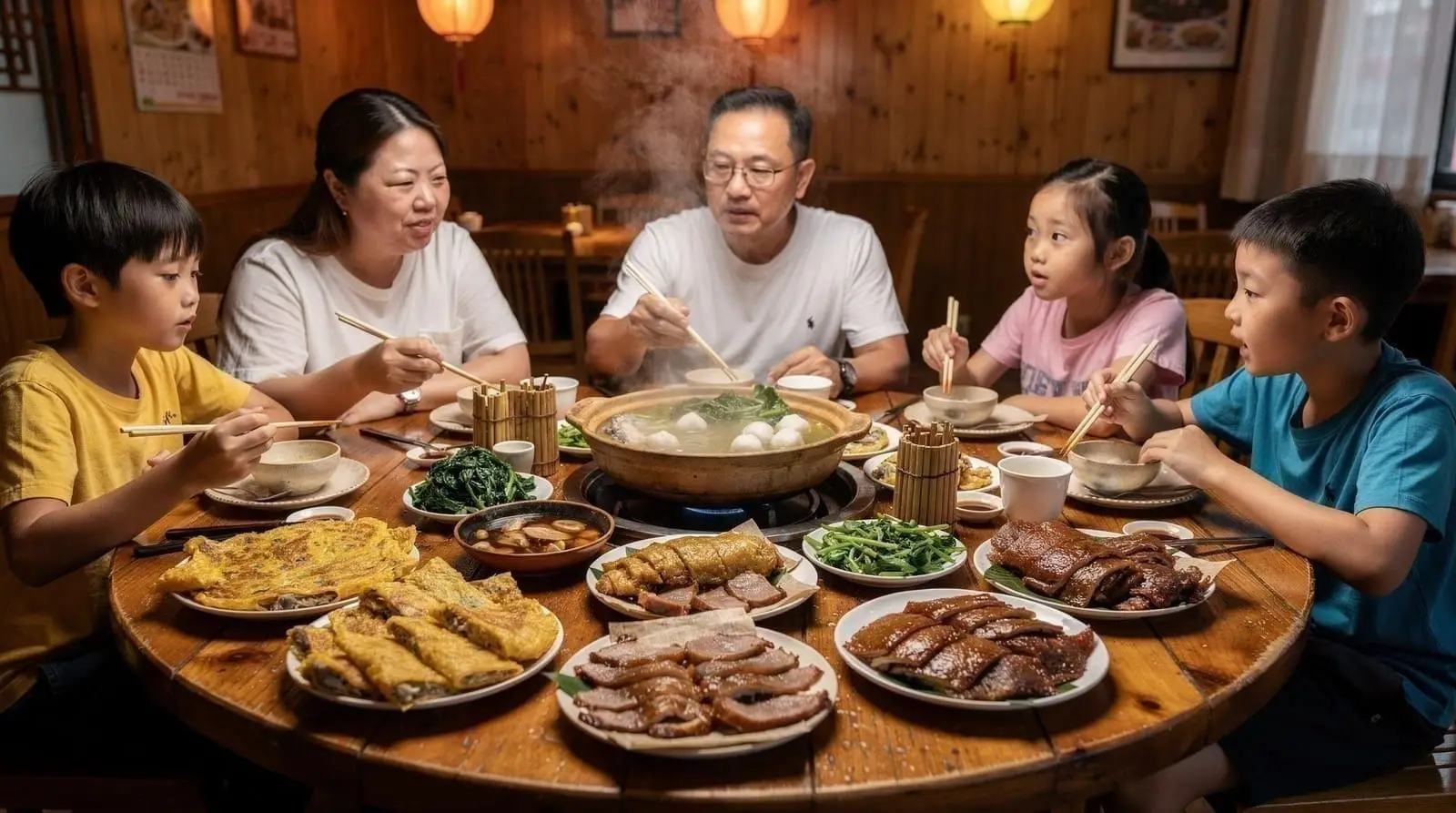
Shenzhen Chaoshan cuisine — a guide to Teochew food in the city
Where can I eat authentic Chaoshan food in Shenzhen?
Chaoshan (Teochew) cuisine is all over Shenzhen, especially in Luohu and Longhua. Look for restaurants with "潮汕" in the name. Marinated goose, oyster omelette, and hand-rolled beef noodles are the entry points. Expect to pay CNY 50–100 (~USD 7–14) per person at a good sit-down restaurant.
Shenzhen’s food identity is inseparable from migration. When Deng Xiaoping designated Shenzhen a Special Economic Zone in 1980, people came from everywhere — Hunanese workers, Sichuanese engineers, Hakka villagers from Guangdong’s hinterlands. But no community left a deeper mark on Shenzhen’s food culture than the Chaoshan people from the eastern Guangdong coast.
Chaoshan cuisine (also called Teochew cuisine, from the Romanization of the Chaozhou dialect) is one of China’s most refined regional cooking traditions. It prizes fresh seafood, subtle seasoning, cold-temperature marinating, and an extraordinary variety of congee and noodle dishes. In Shenzhen today, Chaoshan restaurants range from humble morning congee stalls open at 5am to elaborate seafood banquet halls charging CNY 400+ per person. This guide focuses on the middle ground — restaurants where the food is the point, not the décor.
| Where | Concentrated in Luohu and Longhua; upscale options in Futian |
| Cost | Around CNY 40–100 per person at a good sit-down restaurant |
| Time needed | 1–2 hours per meal; a full day for the dedicated food route below |
| Getting there | Metro Line 1 (Luohu) or Line 4 (Longhua) |
| Best time | Early morning (6–9am) for congee culture, or late night (10pm–1am) for supper |
What makes Chaoshan cuisine different
Cantonese food (from Guangzhou and Hong Kong) emphasizes wok technique, roasted meats, and a mild sweetness. Chaoshan cooking, while adjacent geographically, takes a different direction:
Cold marinating (卤水, lǔ shuǐ): The defining technique. Proteins — goose, duck, pork, tofu, eggs, offal — are slow-cooked in a spiced master stock, then allowed to cool and absorb flavor over hours. The result is more intense and aromatic than Hong Kong-style roasted meats. A good lu shui goose is worth seeking specifically.
Seafood from the coast: Teochew cooks from Chaozhou and Shantou traditionally had access to excellent South China Sea seafood. Shenzhen’s Chaoshan restaurants still source from coastal suppliers. Raw marinated crab (生腌蟹) is the most theatrical dish — fresh crab cured in soy, garlic, and chili without heat — eaten cold and intensely briny.
Hand-rolled beef noodles (牛肉丸面): Chaoshan beef meatballs are in a category of their own. Hand-pounded until springy and almost bouncy, served in clear beef broth with flat rice noodles, they’re available at almost every Chaoshan restaurant and most breakfast stalls. These are not the frozen variety you find at supermarkets; the real thing has a satisfying snap when you bite.
Morning congee culture: Unlike Cantonese jook (thick, silky), Chaoshan congee (稀饭, xīfàn) is deliberately thin — almost like rice water — allowing the toppings to be the star. Typical accompaniments are small plates of braised peanuts, preserved vegetables, dried shrimp, salted egg, and fresh seafood added to order.
The Chaoshan diaspora in Shenzhen — why the food is here
The concentration of Chaoshan cuisine in Shenzhen is not accidental. It reflects a specific pattern of migration that unfolded over four decades, and understanding it explains why the food is so authentic rather than diluted.
The first wave: 1980s factory workers When Shenzhen’s first factories opened in the early 1980s, workers came primarily from rural Guangdong, and the Chaoshan region — then economically depressed, with limited agricultural land and strong out-migration traditions — sent disproportionate numbers. These workers settled in Luohu and early Longhua, the neighborhoods closest to Shenzhen’s first industrial zones. Food stalls serving Chaoshan breakfasts appeared to feed them. The congee stalls and lu shui vendors around Dongmen’s back alleys trace their lineage to this period.
The second wave: Chaoshan merchants The Chaoshan people have a cultural reputation across China (and Southeast Asia) as natural traders — the “Jews of Asia” as both compliment and somewhat fraught comparison. Chaoshan merchant families were early movers into Shenzhen’s commercial zones, establishing wholesale businesses, import-export operations, and retail networks. Wealthier Chaoshan entrepreneurs settled in Luohu’s newer residential blocks and in parts of Futian, and the restaurant culture followed. The more upscale Chaoshan restaurants serving banquet-style marinated goose and live seafood cater to this second-wave community.
The third wave: Longhua manufacturing When Foxconn and other large electronics manufacturers established Longhua as a manufacturing district in the 1990s and 2000s, a second wave of migration from Chaoshan followed. Longhua today has a substantial Chaoshan worker population, and its food scene reflects this with a rawer, more canteen-oriented Chaoshan offer — congee shops open before dawn, beef meatball noodle stalls open until midnight, and lu shui takeaway counters serving workers on shift.
Cultural permanence Unlike some migrant food traditions that fade within a generation, Chaoshan cuisine in Shenzhen has deepened rather than diluted. This is partly because the Chaoshan community maintains strong regional identity — Chaoshan people tend to socialize with other Chaoshan people, maintain the dialect, and patronize community-owned restaurants. The result is that Shenzhen’s Chaoshan food is nearly as authentic as what you’d eat in Chaozhou or Shantou city itself.
Where to eat Chaoshan food in Shenzhen by district
Luohu — the original Chaoshan stronghold
Luohu’s older market streets and residential blocks around the commercial center harbor the highest concentration of Chaoshan morning spots and lunch restaurants. The community has been here since the 1980s.
Lao Chaozhou (老潮州) — Dongmen area A chaotic, beloved institution open from 6am. Tables spill into the alley by 7:30am on weekends. Order the lu shui goose platter (CNY 48–88 depending on size), a bowl of clear beef broth, and ask what congee accompaniments they have today. Cash preferred. Metro: Laojie Station (Line 1), 8-minute walk.
Han Kee (汉记潮汕) — Luohu branch More polished than Lao Chaozhou, with printed menus and a slightly calmer atmosphere. The oyster omelette (蚝烙, háo lào) here — crispy-edged, eggy, loaded with plump Chaoshan oysters — is one of the best in the city. CNY 60–100 (~USD 9–14) per person. Metro: Grand Theatre Station (Line 1).
Mianhua Street (棉花街) food cluster Less of a restaurant name than a cluster of food stalls and small eateries running off Mianhua Street in Luohu. Saturday and Sunday mornings see vendors selling braised goose, handmade fish cakes, and Chaoshan sweet potato desserts alongside the congee shops. It’s chaotic, crowded, and excellent. No fixed hours; arrive before 9:30am for the best selection.
Longhua — where migrants gathered
Longhua district (north of Futian, served by Metro Line 4) became a major destination for Chaoshan migrants working in Shenzhen’s manufacturing industry in the 1990s and 2000s. The food scene there is less polished but often more authentic.
Shantou Beef House (汕头牛肉屋) — Minzhi area Longhua’s most-discussed Chaoshan beef noodle spot. The meatballs are hand-pounded in-house; you can sometimes watch through the open kitchen. Three types of noodle available (flat rice, round rice, egg). A bowl with mixed beef plus tendon runs CNY 25–35. Metro: Minzhi Station (Line 4), 7-minute walk.
Futian — upscale Chaoshan
For a more upscale Chaoshan experience, Futian’s restaurant district near the Convention Center has several higher-end options that serve the business-dinner crowd. The Futian district has the highest concentration of expense-account Chaoshan dining.
Chaoshan 1980 (潮汕1980) A deliberately nostalgic brand packaging Chaoshan food in a heritage-aesthetic space. The marinated goose, cold crab, and oyster omelette are all executed well. Prices are 30–40% higher than neighborhood restaurants — expect CNY 120–180 (~USD 17–26) per person — but the environment is calmer and menus are bilingual. Metro: Convention Center Station (Lines 1/4).
Chaoshan vs Cantonese vs Hakka: choosing where to eat
Shenzhen’s three major Cantonese-region food traditions are easy to confuse for first-time visitors. Here’s the practical distinction:
| Tradition | Signature technique | Best for | Where in Shenzhen |
|---|---|---|---|
| Chaoshan (Teochew) | Cold marinating, thin congee, seafood | Marinated goose, raw crab, beef meatballs | Luohu, Longhua |
| Cantonese | Wok technique, roasted meats, dim sum | Yum cha, roast goose, char siu | City-wide, strongest in Luohu and Futian |
| Hakka | Preserved and stewed ingredients | Salt-baked chicken, stuffed tofu | Longgang, older Hakka villages |
If you only have time for one regional cuisine on a Shenzhen trip, Chaoshan is the strongest recommendation — it’s more distinctive to this specific part of Guangdong than Cantonese food, which is available (and often better) in Hong Kong and Guangzhou. See the Hakka food guide and dim sum guide for the other two traditions in full.
The essential Chaoshan dishes to order
Marinated goose (卤鹅): Order the full platter if you’re with three or more people; it arrives sliced, with the liver, gizzard, and tofu alongside. The skin should be dark amber; the meat dense and fragrant without being dry. Dipping sauce is white vinegar with garlic — do not skip it.
Oyster omelette (蚝烙): Made with small, intensely flavored Chaoshan oysters, sweet potato starch, and egg. The best versions are half-crispy, half-custardy. Anything fully cooked-through is overcooked.
Hand-pounded beef meatballs (手打牛肉丸): A bowl of clear broth with meatballs, tendon slices, and flat noodles. The meatball quality tells you everything about the restaurant. It should bounce slightly when you press it.
Raw marinated crab (生腌蟹): Not for the timid. Fresh crab marinated in soy, garlic, chili, and aromatics without heat. Served cold. The roe is concentrated and intensely oceanic. Order only at restaurants where you can see fresh crab in the tank — freshness is not optional here.
Chaoshan congee (潮汕稀饭): Thin, almost watery rice porridge served with 4–6 small accompaniments ordered separately. Budget CNY 8–15 for the base bowl plus CNY 5–15 per plate of accompaniments.
Braised pork belly (红烧五花肉): Less distinctive than the goose but deeply satisfying — slow-braised with soy, sugar, and aromatics until almost gelatinous.
Chaozhou style vs Shantou style
Within Chaoshan cuisine itself, Shenzhen’s restaurants often specialise toward one of the two main sub-regional styles, and knowing the distinction helps when reading a restaurant’s self-description. Chaozhou-style cooking tends toward slightly more refined presentation and a wider variety of vegetarian and tofu-based lu shui items, reflecting Chaozhou city’s history as an inland administrative and craft centre.
Shantou-style cooking leans harder into raw and lightly cured seafood — the city’s port-town history put fresh catch at the centre of the cuisine, and Shantou-leaning restaurants in Shenzhen tend to have the better raw crab and seafood congee options. Neither style is objectively better; the distinction mostly affects which dishes a given restaurant does best, so it’s worth asking staff which region their kitchen traces back to if you’re choosing between two similarly rated options.
Street food and grab-and-go Chaoshan snacks
Beyond restaurants, Chaoshan snacks appear at street stalls and wet market corners across Shenzhen:
Chaoshan fish balls (潮汕鱼丸): Sold skewered and grilled at street stalls, usually CNY 5–8 per skewer. Made from minced fish paste, lighter and more delicate than the beef equivalent.
Fried taro cake (芋头糕): Thick wedges of taro cake pan-fried until crispy. Available at most Chaoshan breakfast stalls. CNY 5–10 per portion.
Sweet potato in ginger syrup (姜薯糖水): A Chaoshan dessert — chunks of sweet potato in a light ginger syrup, served hot or warm. A common street-stall dessert in Luohu. CNY 8–15 per bowl.
Chaoshan crystal rolls (水粿): Small white rice flour rounds with sweet radish filling, eaten with a splash of garlic-chili oil. Delicate and unusual. Look for stalls specifically labeled 潮汕水粿.
Night eats: Chaoshan supper culture
Chaoshan eating culture doesn’t end at dinner. One of the most distinctive features of Teochew food in Shenzhen is the late-night supper (宵夜, xiāoyè) tradition, which runs with particular intensity in Luohu and Longhua and is almost entirely Chaoshan-inflected.
The midnight window Between 10pm and 2am, a parallel restaurant economy opens in Shenzhen’s older residential areas. Congee shops that closed their morning service at 11am reopen at 10pm for the supper crowd. Lu shui counters wheel out fresh goose platters. Beef meatball noodle stalls that sold out by noon restart with fresh stock. The late-night Chaoshan economy serves workers on second shifts, families eating late after evening events, and the general Shenzhen night-owl population.
What’s open after 10pm The most reliable late-night Chaoshan options concentrate around Dongmen’s back alleys and the Luohu Station area. By 11pm, the mainstream restaurants are closed, but the following categories stay open reliably:
- Congee counters serving thin rice porridge with a rotating selection of accompaniments (pickled vegetables, salted duck egg, dried shrimp). Look for hand-painted signs in residential block ground-floor spaces.
- Beef meatball noodle stalls — often the same stalls that were crowded at 7am, now with shorter queues and a later-night clientele of workers and students.
- Lu shui takeaway windows where you can buy sliced marinated goose, tofu, and eggs packaged to eat elsewhere — often with plastic stools set up outside for standing consumption.
- Fish ball and skewer stalls — grilled fish balls on bamboo skewers, CNY 3–5 each, sold from rolling carts that move between residential blocks.
Longhua’s late-night village The Minzhi area of Longhua has a particularly concentrated late-night food culture that reflects its manufacturing district origins. Workers on night shifts eat between midnight and 3am; the food stalls around Minzhi metro station area cater explicitly to this schedule. A late-night congee bowl with accompaniments and a plate of cold lu shui costs CNY 30–45. Metro: Minzhi Station (Line 4), then walk the surrounding streets.
The supper tea ritual Late-night Chaoshan eating comes with its own version of the tea ritual — not the formal teahouse setting of morning yum cha, but small iron teapots (潮汕工夫茶, gōngfū chá) set on the table with tiny cups. Gongfu tea-making is a Chaoshan specialty: a highly concentrated tea brewed in a small clay pot with an extremely high leaf-to-water ratio, poured into thimble-sized cups, and drunk in three sips. At late-night stalls, a server will often set up the tea kit automatically. Drinking it is optional but recommended — the strong tea cuts through the richness of the marinated meats and congee.
Beyond restaurants: Chaoshan in Shenzhen’s wet markets
Some of the most interesting Chaoshan food in Shenzhen isn’t served in restaurants at all. It’s found in the wet markets — the covered fresh food markets that supply both home cooks and restaurant kitchens — where Chaoshan ingredients and half-prepared foods are available to take home or eat on the spot.
What to look for Every large wet market in Luohu and Longhua has at least one Chaoshan-focused vendor. Key things to spot:
- Lu shui stations: Stalls with large metal trays displaying pre-braised goose, duck necks, pig ears, tofu, and eggs in the master stock. You can buy by weight (CNY 25–55 per 100g for goose, less for tofu and eggs). Ask for sliced (切片) and they’ll package it to go.
- Hand-pounded beef: Some wet markets have meatball makers working in open stalls, pounding beef on a wooden block. You can buy meatballs raw (CNY 25–35 per jin, roughly 500g) to cook yourself, or ask where the nearest noodle shop is.
- Fresh fish paste: Chaoshan fish paste (鱼浆) for making homemade fish balls. The fresh version is incomparably better than what’s sold in supermarkets. Luohu’s covered market near Dongmen has reliable fish paste vendors on weekend mornings.
- Preserved and dried goods: Dried oysters from Chaoshan, dried shrimp (虾米), preserved radish (菜脯) — the pantry ingredients of Chaoshan cooking. Useful if you have kitchen access; also interesting to understand the flavor foundations of the cuisine.
The Dongmen market area The covered wet market running off Dongmen Pedestrian Street is the most accessible for visitors. It operates daily from roughly 6am to 7pm, with the most active trading between 7am and noon. Even without buying anything, walking through it is educational — you’ll see the raw materials of everything you’ve been eating in the restaurants above. The Dongmen street food guide covers the market zone in the context of the wider food crawl.
Luohu’s Shuibei market area Less visited by tourists, the Shuibei district of Luohu has a more residential wet market character. The Chaoshan vendors here serve the local community rather than any tourist audience — prices are lower and the selection more practical. It’s a 20-minute walk from Laojie Station or a short ride to Grand Theatre Station.
A one-day Chaoshan food route in Luohu
This route is designed for a dedicated Chaoshan food day, using Metro Line 1 as the spine and Luohu as the base. Budget CNY 150–200 per person for the full day.
7:00am — Morning congee at Lao Chaozhou Arrive at Laojie Station (Line 1, exit B) and walk 8 minutes to Lao Chaozhou on the Dongmen back alleys. Order one bowl of thin congee (CNY 10), a plate of marinated goose (CNY 45 for a small platter), and whatever daily accompaniments are on offer. Eat slowly — this is not a rushed breakfast. Budget CNY 65–80. Duration: 45–60 minutes.
9:00am — Wet market walk Walk from the restaurant to the Dongmen covered wet market, roughly 5 minutes. Spend 30 minutes walking through the Chaoshan food vendors — no obligation to buy. Watch the lu shui stalls, note the fish paste sellers, observe the dried goods section. This is background context for everything else you’ll eat today.
10:30am — Coffee break (skip the tea for now) By mid-morning the food energy has shifted. Walk toward Grand Theatre Station and find one of the small cafes in the surrounding streets for a coffee break before the next eating session. Budget CNY 20–35.
12:30pm — Lunch at Han Kee (汉记潮汕) Return to Grand Theatre Station area and find Han Kee. Order the oyster omelette (CNY 35), a portion of hand-pounded beef meatballs in broth (CNY 28), and a plate of braised tofu from the lu shui menu (CNY 18). This is the core Chaoshan lunch. Budget CNY 80–90 per person.
3:00pm — Rest and tea Find a gongfu tea house in the surrounding streets — many operate out of small storefronts with the traditional clay pot tea setup. Spend an hour resting and drinking the strong, aromatic tea. This is culturally central to Chaoshan life and a marked contrast to the pace of eating. Budget CNY 30–50 per person for a full tea session.
6:30pm — Dinner: cold crab and marinated meats Take Metro Line 1 west to Futian or stay in Luohu for an elevated Chaoshan dinner. At a mid-range restaurant, order the raw marinated crab (CNY 85–120 for a whole crab, depending on size and season), braised pork belly (CNY 55), and Chaoshan spring rolls (CNY 28). Budget CNY 120–160 per person.
10:00pm — Late-night supper option If energy permits, a final bowl of beef meatball noodles at one of Luohu’s late-night stalls completes the day. CNY 25–30.
Book a Shenzhen food and culture tour with local expertise if you want a guided introduction to the city’s migrant food scene — guides can navigate the language barrier and get you into the right stalls.
Building Chaoshan food into a wider trip
A single Chaoshan meal fits easily into any Shenzhen itinerary, but for visitors who want to go deeper, the cuisine works well as a thread through a longer food-focused trip. The Guangzhou-Shenzhen foodie itinerary pairs Shenzhen’s Chaoshan restaurants with Cantonese dim sum and street food in Guangzhou, giving a useful contrast between the two traditions over several days. Those short on time can still get a genuine sense of the city’s migrant food layering by reading the weekend eating through Shenzhen piece, which weaves Chaoshan stops into a broader two-day eating plan alongside Hakka and Cantonese food.
Practical guidance for Chaoshan restaurants in Shenzhen
Hours: Chaoshan congee and morning spots open 5–6am and close by 11am. Full-service restaurants open 10am–10pm. Night-owl snack shops in Luohu can run until midnight.
Ordering without Chinese: Point at neighboring tables, use Google Translate camera mode, or ask for a photo menu (照片菜单). Most Chaoshan restaurants don’t have English menus, but staff are accustomed to non-Chinese tourists pointing and gesturing.
The raw crab question: If you’re sensitive to raw seafood or have any immunocompromising conditions, skip the 生腌 (raw marinated) dishes. Otherwise, at a reputable restaurant with visible live crab tanks, the risk is low.
Price reality check: Chaoshan food is not expensive. If a “Chaoshan restaurant” is charging CNY 150+ per person before seafood, they’re selling the brand not the food. The real stuff costs CNY 40–80 per person for a satisfying meal.
For more on Shenzhen’s food diversity, see the Hakka food guide for the contrasting mountain cuisine tradition, or the dim sum guide for the Cantonese morning tea experience. The Dongmen street food guide covers the bustling market area where several Chaoshan stalls operate alongside dozens of other regional cuisines. The Shenzhen food and drink overview maps all the major cuisine traditions across the city.
For context on how to reach Luohu and Longhua from other parts of Shenzhen, see the Luohu district guide or check the Shenzhen metro guide.
Frequently asked questions about Chaoshan food in Shenzhen
Is Chaoshan food spicy?
Not typically. Chaoshan cuisine relies on the depth of the marinating stock, fresh seafood quality, and dipping sauces (garlic-vinegar, chili oil on the side) rather than built-in heat. Diners control the spice level themselves via condiments, unlike Sichuan or Hunan cooking.
Can vegetarians eat Chaoshan food?
It’s difficult — the cuisine is built around meat and seafood, and even the tofu and vegetable dishes are often cooked in the same lu shui stock as meat. Braised tofu ordered separately, plain congee, and vegetable side dishes are the safest options, but vegetarians should expect a more limited menu than at a general Cantonese restaurant.
Top-rated things to do in Shenzhen
Verified deep-linked GetYourGuide tours. Book through these links and we earn a small commission at no cost to you.