Shenzhen craft beer and bars guide — the best spots in 2026
Does Shenzhen have good craft beer bars?
Yes. The craft beer scene has grown significantly since 2018. Strong clusters exist in Nanshan (Sea World area), OCT-LOFT, and Futian. Expect CNY 40–75 (~USD 6–11) per pint of local craft. Major local breweries include Taps Beer (本地), and imports from Hong Kong's Young Master and Lions Rock.
Shenzhen’s craft beer story is short by global standards and genuinely impressive by regional ones. In 2015, the city had perhaps four craft beer bars, all in the Shekou expat bubble. By 2026, you can find local craft on tap in Futian office buildings, OCT-LOFT courtyard bars, and neighborhood bottle shops from Nanshan to Longhua. This is still a young scene — don’t expect the density of Tokyo or Berlin — but it’s worth knowing about, and it rewards an evening of purposeful exploration.
The broader nightlife picture in Shekou and OCT frames the bar scene in its district context. For anyone planning a dedicated bar evening, the Nanshan Shekou district guide has accommodation and transport logistics for where most of the best craft beer is concentrated.
| Where | Nanshan/Shekou, OCT-LOFT, and Futian |
| Cost | Around CNY 40–80 per pint of craft beer; CNY 70–140 for cocktails |
| Time needed | An evening (2–4 hours) for one neighbourhood route |
| Getting there | Metro Line 1, 2, or 7 depending on district; Didi for the return after last train |
| Best time | Thursday–Saturday evenings for atmosphere; weekday evenings for quieter conversation |
How craft beer came to Shenzhen — a brief history
The first craft beer bars in Shenzhen appeared around 2012–2013, almost entirely in the Shekou district. Shekou’s foreign community — expat engineers from Tencent, Huawei, and manufacturing firms, plus the semi-permanent population of Hong Kong residents working on the mainland — created a small but consistent demand for beer beyond the Pearl River lager that dominated everywhere else.
The catalysts were Hong Kong’s craft beer movement (which was itself maybe five years ahead of Shenzhen) and the opening of import beer bars in Sea World (海上世界), Shekou’s converted freight vessel turned entertainment complex. By 2015–2016, the first dedicated taprooms with local or mainland-sourced craft appeared, moving beyond import bottles.
The 2018–2020 period was the real acceleration. Several things converged: mainland Chinese craft brewing had matured enough to produce consistent quality products from breweries in Beijing, Chengdu, and Shanghai; the Chinese middle class’s interest in premium food and drink was growing fast; and Shenzhen’s tech-industry income level meant the customer base could afford CNY 50–80 pints. Bionic Brew (Nanshan) and The Tap House (Sea World) opened in this window and became the anchors of the scene.
The COVID-19 years (2020–2022) were difficult, and several early taprooms closed. But the rebound from 2023 onward has been strong — new taprooms opened in Futian CBD, OCT-LOFT, and even in Longhua (north Shenzhen’s newer residential zones). By 2026, the scene is genuinely diverse: you can find quality craft in five or six distinct neighborhoods, with a mix of local Shenzhen production, mainland Chinese imports, and Hong Kong and international options.
The key distinction from Hong Kong’s craft scene: Shenzhen’s craft beer culture is more mainland Chinese than expat-driven now. The core customers at most taprooms are young Chinese professionals, not foreign residents. That shift has brought the beer scene into alignment with the broader Chinese interest in premium experiences — and means the bars have had to get better on service, food, and atmosphere as well as the beer itself.
Shenzhen craft beer styles to know
What are Shenzhen’s local breweries actually making? The picture has developed beyond the IPAs and wheat beers that dominated the first wave.
Wheat beers: Still the gateway style for Chinese craft beer consumers who find IPAs too bitter. Taps Beer’s hefeweizen is the most widely available; it’s solid rather than exceptional — cloudy, moderately fruity, and easy drinking. Expect CNY 40–55 per pint.
IPAs: American-style West Coast IPAs have found a committed following among younger beer drinkers who’ve traveled or studied abroad. Bionic Brew’s house IPA is well-made with a consistent dry-hopped character. More sessionable, lower-ABV IPAs have appeared as a response to Chinese drinking culture’s preference for volume over intensity.
Lagers: The craft lager category has grown significantly. Master Gao’s Shenzhen lager is the best local example — a genuine continental-style pilsner with more bitterness and character than Pearl River, but familiar enough to be approachable. Craft lager is also the style most likely to appear at non-craft establishments (hotel restaurants, nicer Chinese restaurants) as a premium option.
Fruit and sour beers: A growing category driven by Chinese palates that lean toward sweetness and freshness. Watermelon wheat beers in summer, yuzu-infused berliner weisse styles — these appear as rotating specials at The Tap House and similar venues. Not refined craft in the European sense, but genuinely interesting as a local style development.
Stouts: Less common but present. Master Gao’s stout is legitimately good — dark chocolate notes, moderate roast, manageable at CNY 55–70 a pint. Worth ordering if you like the style and it’s available; it’s not always on tap.
Hong Kong imports: Young Master’s Ale No.1 and their seasonal IPA series are available at most better taprooms in Shenzhen. Lions Rock’s blonde ale is another reliable HK import. Carbon Brews from Hong Kong occupies the more experimental end — barrel-aged stouts, wild fermentation projects — and appears occasionally at specialty bottle shops.
The local brewing picture
Shenzhen doesn’t have the production breweries that Hong Kong does (Young Master, Lions Rock, Carbon Brews are all HK-based) but the city’s taprooms increasingly stock these alongside mainland Chinese craft. The significant local brands:
Taps Beer (本地啤酒坊): The longest-running Shenzhen craft brewery, founded in Shekou and now distributed across the city. Their wheat beer and IPA are reliably well-made. Available on tap at Sea World-area bars and in bottles at major supermarkets (including Hema and Ole).
Master Gao Craft (高手精酿): A Shenzhen-native microbrewery that opened around 2019. Small batch production, rotating seasonals. Their lager and stout are particularly well-executed. Available in their own taproom in Nanshan and select bars.
Pearl River Beer (珠江啤酒): Not craft in the artisanal sense but the dominant regional lager from Guangzhou, widely available and perfectly drinkable as a cheap background option. CNY 8–15 per bottle at most bars. If you’re in a bar without a craft selection, Pearl River on tap is the right call over Tsingtao or Snow.
Best craft beer bars by district
Nanshan and Shekou
The Tap House (海上世界) Consistently the best rotating tap selection in Shenzhen. 20+ taps covering local Shenzhen craft, Hong Kong imports (Young Master, Lions Rock), and international options. The staff know their beer — you can ask for recommendations by style and get an informed answer. Flights of four 100ml pours available for CNY 80–100. Full pints: CNY 45–75. The location in Sea World puts it in the middle of Shekou’s bar district, making it easy to combine with an evening meal nearby.
Moonlight Craft Beer (月光精酿) A small taproom in the Vientiane Tiandi lifestyle complex in Qianhai, Nanshan. Smaller tap selection than The Tap House but focuses on unusual imports and limited-edition Chinese craft. Good bottle shop section for takeaway — worth browsing even if you don’t sit down. CNY 50–80 per pint.
Bionic Brew Technically a brewpub — they brew on-site in small batches. Located in Nanshan near Tencent headquarters, it draws tech-worker crowds on Thursday and Friday evenings. The IPA and pale ale are house-brewed; the seasonal specials are hit-or-miss. The food menu (bar snacks, pizza) is serviceable. CNY 55–85 per pint of house beer. Worth visiting specifically if you want a brewpub atmosphere rather than a taproom.
OCT and OCT-LOFT
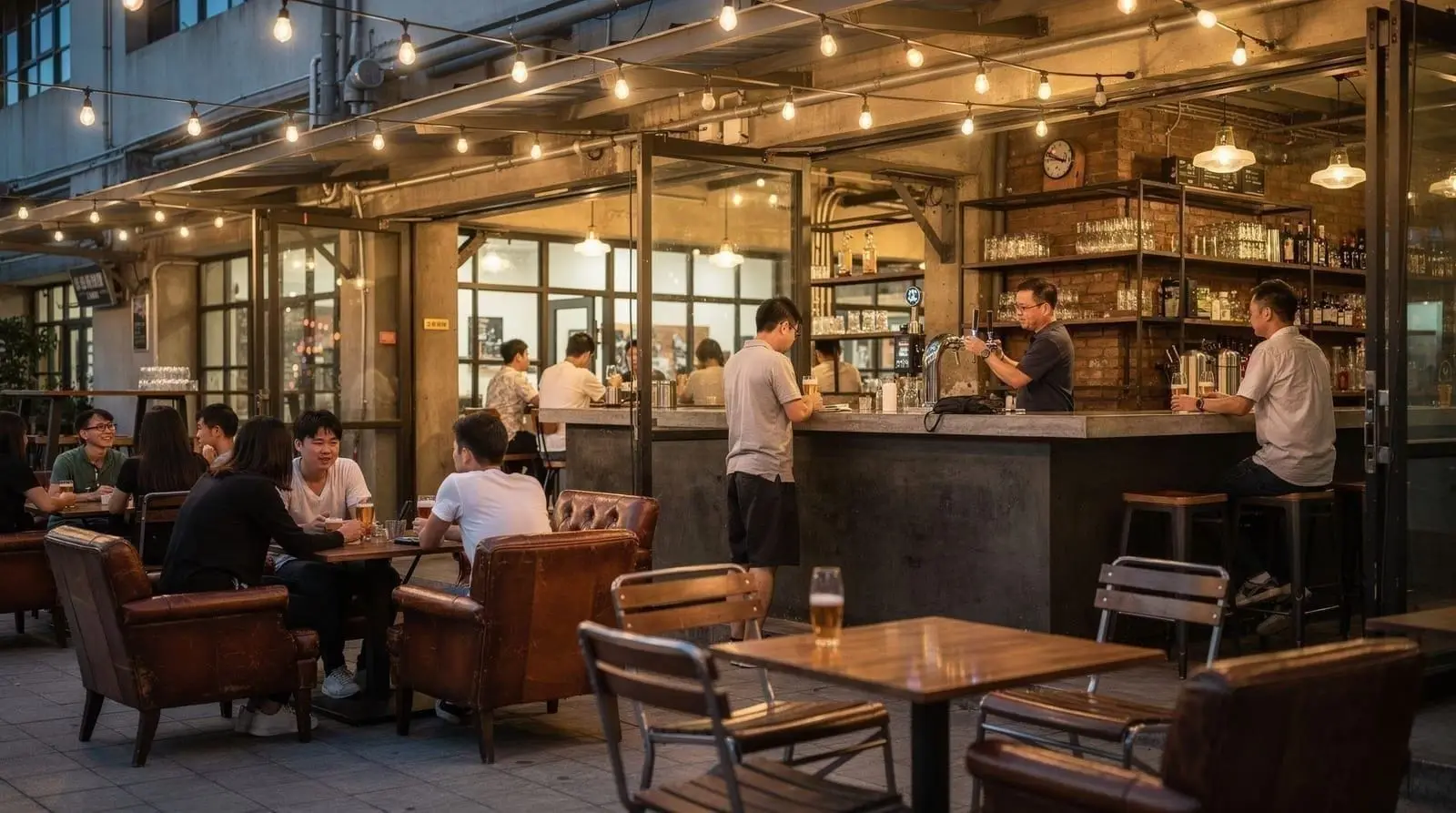
Peel Bar (OCT-LOFT) The OCT-LOFT’s most interesting craft beer option, operating in a converted factory space with outdoor seating in the courtyard. Carries a rotating selection of mainland craft alongside stable imports. The atmosphere — exposed brick, string lights, creative-industry crowd — is the best in Shenzhen for a relaxed evening. CNY 45–70 per pint. The OCT-LOFT creative park is worth visiting in daylight before settling in here for the evening.
Factory Bar (OCT-LOFT) Adjacent to Peel, with more of a cocktail focus but a respectable craft beer selection. Gets busier later in the evening (10pm+) when Peel’s calmer crowd shifts and the music gets louder. CNY 50–80 for cocktails, CNY 40–65 for beer. The design is more club-adjacent than the Peel atmosphere.
Futian
The Brew Bar (福田区) A Futian-based taproom that opened in 2022 and has become popular with the Futian CBD’s young professional crowd. Strong on mainland Chinese craft from Chengdu, Beijing, and Shanghai breweries alongside local options. The food is better than most craft beer bars — small plates designed to pair with beer. CNY 45–70 per pint.
Wagas (multiple Futian locations) Technically a café chain, but Wagas locations in Shenzhen carry craft beer in the evening, including imported options. Not a dedicated beer bar, but useful if you’re in a part of Futian far from a dedicated taproom and want a craft option. The Futian Coco Park location has the most reliable selection.
Luohu
Luohu has fewer dedicated craft beer venues — the beer culture is more traditional here, skewing toward lager and Cantonese restaurants with standard beer lists. The best option:
Corner Beer (角落啤酒) A small, no-frills bar in Luohu with an impressive bottle selection (150+ beers, mostly imported) and eight rotating taps. Popular with a younger local crowd rather than expats. Prices are lower than Nanshan: CNY 35–55 per pint. Metro: Grand Theatre Station (Line 1), 8-minute walk.
Choosing a neighbourhood: quick comparison
| District | Vibe | Best for | Foreigner-friendliness |
|---|---|---|---|
| Shekou/Nanshan | Harbour-side, relaxed, expat-adjacent | Rotating taps, brewpub atmosphere | Highest — most English spoken |
| OCT-LOFT | Creative, courtyard, art-district | Outdoor seating, best overall atmosphere | High |
| Futian | Polished, CBD, business crowd | Cocktails, food pairing, hotel bars | Moderate |
| Luohu | Local, no-frills, cheaper | Bottle selection, budget drinking | Lowest |
First-time visitors deciding between neighbourhoods should default to OCT-LOFT for the single best evening atmosphere, or Shekou if staying nearby in Nanshan.
Cocktail bars worth knowing
Beyond craft beer, Shenzhen has developed a small but respectable cocktail bar scene concentrated in Futian and Nanshan. These are worth knowing if you want something other than beer.
Hope & Sesame (芝麻·希望) Part of a Guangzhou-born bar group, the Shenzhen branch in Futian CBD is one of the city’s most technically accomplished cocktail bars. The bartenders trained at premium Hong Kong and Singapore programs; the spirits selection (particularly Asian spirits — baijiu cocktails, Japanese whisky) is genuine and extensive. Cocktails: CNY 85–140. Reserve for weekend evenings; seats are limited.
Botanist (植物学家) Gin-focused bar in Nanshan with an international botanical spirits list. The gin and tonic selection alone runs to 30+ options with different gin/tonic combinations. Comfortable seating, no rush policy. CNY 80–130 per cocktail. A good choice for anyone who wants to drink slowly and well rather than loudly.
Captain’s Bar (船长酒吧) — Shekou A Shekou institution with a nautical theme appropriate to its harbor-adjacent location. Strong on rum and classic cocktails. The bartender has been making the same excellent daiquiri since 2015. CNY 70–110 per cocktail; slightly cheaper than Futian competitors. The bar has survived Shekou’s bar scene cycles and is worth visiting for that consistency alone.
The wine bar alternative
Not everyone wants beer, and Shenzhen’s wine bar scene has quietly developed alongside craft beer, particularly in Futian and the newer Nanshan lifestyle complexes.
Natural wine: The natural wine movement — low-intervention, often orange-tinged, funky — has a following in Shenzhen’s food-conscious circles. Several wine bars in the Futian area carry natural wine by the glass alongside conventional selections. Expect CNY 80–160 per glass for quality natural wine, compared to CNY 60–100 for conventional wine by the glass.
Wine bars in Futian: The UpperHills mall area has two wine-focused bars that work well as pre- or post-dinner drinks stops. Both carry reasonable by-the-glass programs (CNY 70–130) and better-than-hotel food to pair. Less atmospheric than dedicated wine bars in Hong Kong or Shanghai, but a legitimate option for wine drinkers in the city.
Hotel wine programs: Several five-star hotels in Futian (Kerry Hotel, Marriott) have genuine wine lists with good by-the-glass programs, particularly for Burgundy and Bordeaux. Pricing is higher (CNY 120–200 per glass) but the selection and service quality is reliable. The Kerry Hotel’s wine bar on the ground floor is the most accessible for non-guests.
The honest assessment: Wine drinking in Shenzhen is improving but still trails Shanghai, Beijing, and Hong Kong for quality and variety at the wine bar level. Beer drinkers will be more satisfied here than wine drinkers compared to other major Chinese cities.
Bar-hopping routes by neighborhood
A Shekou evening route
Start at The Tap House in Sea World at 7pm — a pre-dinner beer while the area fills up. Walk or Didi to a dinner nearby (the Sea World area has good Cantonese and international restaurants within 10 minutes). Return to The Tap House for a second round, then walk to Captain’s Bar in Shekou proper for a classic cocktail closer to 10pm. The area is compact enough to do this without transport.
An OCT-LOFT evening route
Arrive at OCT-LOFT station (Line 1) around 6pm and walk through the creative park while the gallery spaces are still open (most close at 8pm). Settle in at Peel Bar at 7–8pm for the best outdoor seating atmosphere in the city. Move to Factory Bar after 9:30pm if you want a later, louder finish. The area is well-serviced by Didi for the return.
A Futian evening route
For a Futian-based evening, The Brew Bar from 6:30pm works as a starting point. Walk to Hope & Sesame after 8:30pm for cocktails in a more formal setting — reserve ahead. Finish at one of the hotel lobby bars (Kerry Hotel is the most conveniently located) for a final drink before the metro home. The Futian district has where-to-stay options nearby if you want to extend the evening.
Join a Shenzhen nighttime city walking tour to see the lit-up skyline and understand the city’s evening geography before committing to a specific bar neighborhood — useful for first-time visitors deciding between Shekou, OCT-LOFT, and Futian.
A Luohu evening route
Luohu’s smaller scene works well as a budget-friendly add-on to a shopping or food day in the district rather than a destination in itself. Start with dinner at one of the Chaoshan restaurants or dim sum spots near Grand Theatre Station, then walk to Corner Beer for the evening — its 150-bottle selection and eight rotating taps hold their own against the pricier Nanshan venues, at noticeably lower prices. It’s a low-key finish rather than a full bar crawl, and suits visitors staying in Luohu who don’t want to cross the city for a drink.
Where not to waste your evening
Clubs in Futian CBD: Several nightclubs operate in the Futian CBD area that are heavily touristed and charge CNY 200–500 minimum spend. The music is generic; the pricing targets expense accounts. Not recommended for travelers unless you specifically want the club experience.
Hotel bars (general): Most five-star hotel bars in Shenzhen (Marriott, Sheraton, etc.) are technically competent but charge CNY 120–180 for cocktails that are better and cheaper at the dedicated bars above. The exception is rooftop hotel bars with genuine views — covered in the Shenzhen rooftop bars guide.
Any bar near the Lo Wu border crossing: The bars immediately around the Lo Wu crossing are primarily for cross-border travelers grabbing a quick drink before or after immigration. Quality is minimal; prices are elevated.
Bottle shops for takeaway drinking
Not every evening needs a bar tab. Shenzhen’s bottle shop scene has grown alongside the taprooms, and several are worth a stop if you’d rather drink back at a hotel or Airbnb. Moonlight Craft Beer in Qianhai has the strongest bottle-shop section of the venues listed above, with rotating limited releases from mainland Chinese breweries that don’t make it onto tap lists elsewhere.
Hema and Ole supermarkets (present in most malls covered in the best shopping malls guide) stock Taps Beer and a handful of imported craft bottles at retail prices well below bar mark-ups — a practical option if you want to try a few styles without committing to a full bar evening. Corner Beer in Luohu also functions partly as a bottle shop, with 150+ labels available to drink in or take away.
Craft beer events and culture
Shenzhen hosts a small number of craft beer events throughout the year. The annual Shekou Craft Beer Festival (typically October) draws local and regional breweries and is worth planning around if you’re visiting in autumn. Check social media channels (WeChat and Xiaohongshu/RED) for current event listings — there’s no single English-language aggregator.
The OCT-LOFT community around Factory Bar and Peel also hosts occasional beer-pairing dinners and brewery tap-takeover events (where a single brewery takes over all taps for a night). These are announced with short notice on the bars’ WeChat accounts.
Beyond dedicated beer events, Shenzhen’s broader festival calendar occasionally intersects with the bar scene — check the Shenzhen festivals and events guide for dates that might coincide with a trip, since several neighbourhood festivals in Nanshan and OCT include pop-up beer gardens alongside the main programming.
Practical craft beer logistics in Shenzhen
Opening hours: Most craft beer bars open at 4–5pm and close at 1–2am. Sunday opening is variable — call ahead or check WeChat.
Payment: WeChat Pay and Alipay (both foreign-card-linkable) accepted at virtually all bars. Cash accepted. Foreign cards directly less common at smaller venues. The WeChat Pay and Alipay guide for foreigners covers setup.
Getting home: Pre-schedule your Didi return before 11pm to avoid surge pricing. The metro closes around 11pm–midnight depending on the line — check the Shenzhen metro guide for last train times on Lines 1, 2, and 7, which serve the main bar districts.
Language: Most craft beer bar staff in Shekou and OCT speak reasonable English. Futian and Luohu bars may have limited English. The beer menu itself is often bilingual — taps usually have the beer name and style in both Chinese and English at better taprooms.
Bringing your own: Bottle shops in the Shekou area will sometimes allow a small corkage fee (CNY 20–40) if you buy a bottle from them and drink it at their bar. Worth asking.
Frequently asked questions about bars in Shenzhen
Is Shenzhen a good city for nightlife?
It depends on what you’re looking for. Craft beer and cocktail bars are a genuine strength — the scene is young, improving, and concentrated in walkable areas. Club nightlife is less distinctive; the main clubs in Futian target Chinese big-spending culture rather than international visitors. For the best overall evening experience, the OCT nightlife guide covers the full picture.
What time do bars in Shenzhen close?
Most craft beer taprooms close at 1–2am. Cocktail bars close at 2–3am. Clubs operate until 4–5am. The metro closes around 11pm–midnight, so plan for Didi or walk-back distances if you’re staying later than 11pm.
Is craft beer expensive in Shenzhen?
By mainland Chinese standards, yes — CNY 45–75 per pint is three to five times the price of a Pearl River lager. Compared to Hong Kong or Western cities, it’s competitive: similar to what you’d pay in Melbourne, cheaper than London, similar to mid-range US craft beer bar pricing. The Shenzhen on a budget itinerary has realistic numbers for drink budgets alongside other expenses.
Can foreigners pay at Shenzhen bars without WeChat Pay?
Most bars accept cash (yuan). Major taprooms in Shekou and OCT accept WeChat Pay and Alipay linked to foreign cards. Direct foreign card payment (Visa, Mastercard) is less consistent — possible at hotel bars and some Shekou establishments, less reliable at independent taprooms.
Are Shenzhen bars foreigner-friendly?
The Shekou and OCT-LOFT bars are the most foreigner-comfortable — many staff speak English, menus are often bilingual, and the atmosphere is accustomed to international visitors. Futian bars vary; the Brew Bar has English-capable staff but it’s not guaranteed. Luohu bars are the least English-adapted. A translation app is useful everywhere outside the Shekou cluster.
Is it worth visiting more than one bar district in a single trip?
If you have two or more evenings free, yes — Shekou and OCT-LOFT feel genuinely different (harbour-side and relaxed versus creative-district and courtyard-focused), and comparing them gives a much better sense of Shenzhen’s range than a single night out. On a one-night trip, pick based on where you’re staying rather than trying to cross the city.
Do I need to book ahead at Shenzhen’s craft beer bars?
No, for taprooms — they’re walk-in venues. The exception is upscale cocktail bars like Hope & Sesame on weekend evenings, where a reservation is genuinely useful given limited seating.
Top-rated things to do in Shenzhen
Verified deep-linked GetYourGuide tours. Book through these links and we earn a small commission at no cost to you.