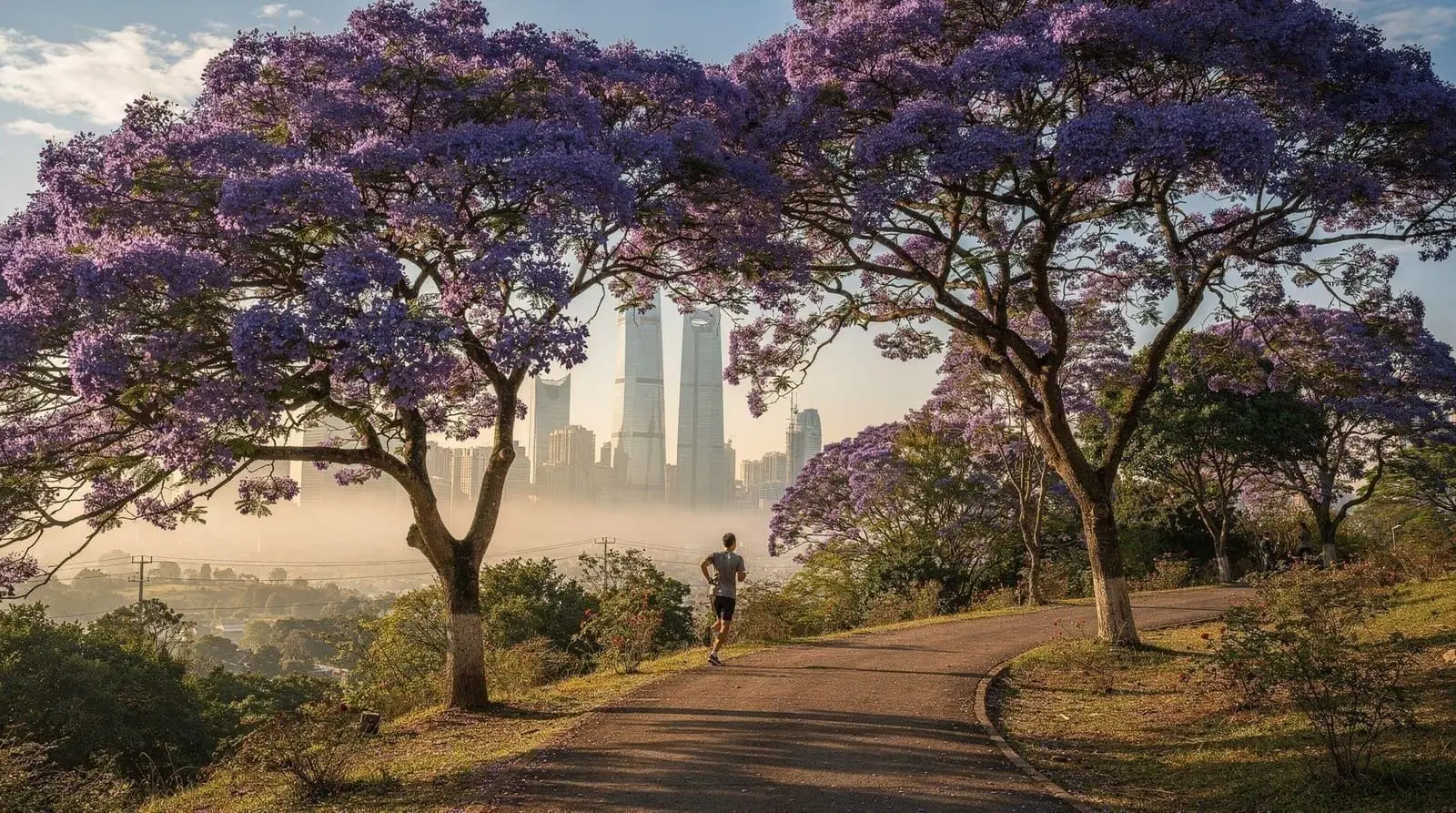
Best time to visit Shenzhen: month-by-month guide
When is the best time to visit Shenzhen?
March–April and October–November offer the best combination of mild weather, lower humidity, and manageable crowds. Avoid June–August: typhoon season brings storms, 35°C heat, and 85% humidity. January–February is dry and mild but watch for Chinese New Year crowds.
Shenzhen sits just north of the Tropic of Cancer at the edge of the Pearl River Delta, giving it a subtropical climate with mild winters, hot humid summers, and a typhoon season that runs nearly half the year. Unlike northern Chinese cities where seasons are dramatically distinct, Shenzhen has two modes: pleasant and punishing. Knowing which months fall into which category makes the difference between a comfortable trip and a week of wilting in monsoon heat.
The short version: come in autumn (October–November) or spring (March–April). If you must come in summer, plan for frequent afternoon downpours and heat-heavy mornings. If you come in January or February, know that Chinese New Year turns the city into a ghost town for two weeks — charming for some travelers, frustrating for others.
| Best overall | October (post-Golden Week) and November |
| Avoid | June–August (typhoon season, 35°C, 85% humidity) |
| Cheapest flights | January and November |
| Watch out for | Chinese New Year (Feb 15–23, 2026) and National Day (Oct 1–7) |
| What to pack | Light layers Oct–Apr; breathable, rain-ready gear May–Sep |
Shenzhen’s climate at a glance
Shenzhen averages 22°C (72°F) annually with 1,933 mm of rainfall concentrated heavily in the April–September wet season. Humidity ranges from 55% in the driest winter months to 85% during peak typhoon season. Temperatures rarely drop below 8°C even in the coldest months and regularly hit 35°C in July and August.
Typhoon season officially runs May through December, with the strongest storms occurring July through September. Shenzhen receives several direct typhoon landfalls or near-misses each year. These are not tropical storms — a Category 2 or 3 typhoon hitting the Pearl River Delta brings sustained winds above 100 km/h, metro suspensions, and city-wide closures. They also pass in 24–48 hours, after which the sky is remarkably clear.
Month-by-month breakdown
January: dry season, mild, manageable
Weather: 14–18°C, low humidity (~55%), minimal rain. Clear skies most days. Sweater weather in the mornings and evenings.
Crowds: light to moderate. January is not a peak domestic tourism month, and international visitors are relatively few. Hotel rates are reasonable.
What to do: ideal for outdoor activities — hiking Wutong Mountain, walking the Dapeng Fortress coastal trails, spending time at Shekou and the waterfront. Theme parks like Window of the World are comfortable without summer queues. Consider a day trip to Zhuhai or Guangzhou via the high-speed rail network.
Rating: ⭐⭐⭐⭐
February: Chinese New Year — plan carefully
Weather: 14–20°C, dry, occasionally foggy. Still comfortable.
Crowds and closures: Chinese New Year in 2026 falls on February 15–23. This is the single most disruptive event in Shenzhen’s annual calendar. Because Shenzhen is a migrant city — the majority of its 17 million residents are from other provinces — a large proportion of the population travels home for the holiday. Restaurants close, malls operate reduced hours, construction stops, and streets that are normally packed become unusually quiet.
For some travelers, this is atmospheric and worth experiencing. For others — particularly those planning to eat widely in local restaurants or do serious shopping in Huaqiangbei — it is a frustration. Check your trip dates carefully.
Outside of the New Year window, early and late February are excellent. The period from February 1–14 and February 24 onward is quiet, mild, and pleasant.
Rating: ⭐⭐⭐ (CNY window) / ⭐⭐⭐⭐ (non-CNY)
March: spring arrives, one of the best months
Weather: 18–24°C, humidity starts rising (65–70%) but still manageable. Some rain, especially late March.
Crowds: moderate and growing. Spring Festival crowds have dispersed. Schools are in session. This is when the city returns to full operation.
What to do: everything. Outdoor dining, hiking, theme parks, day trips to Guangzhou or Zhuhai — all are pleasant. Flowers are blooming in the city’s many parks.
Flight prices: mid-range. Not the January low, not the peak summer high.
Rating: ⭐⭐⭐⭐⭐
April: peak spring, excellent
Weather: 22–28°C, humidity 70–75%, episodic afternoon rain. Still very comfortable for most of the day.
Crowds: moderate. Qingming Festival (Tomb Sweeping Day) falls in early April — a 3-day public holiday with moderate domestic travel. Not as crowded as Golden Week.
What to do: all outdoor activities remain comfortable. Dapeng Peninsula beaches start becoming pleasant, though water temperature is still cool for swimming. Good time to do the 3-day Shenzhen itinerary.
Packing: light layers, a compact umbrella or packable rain jacket. Rain comes suddenly.
Rating: ⭐⭐⭐⭐⭐
May: heat and humidity ramp up
Weather: 25–31°C, humidity 78–82%, rain increases significantly. The pre-typhoon pressure builds: the air feels heavy and the afternoon storms become reliable.
Crowds: moderate, declining as summer approaches. Labour Day Golden Week falls May 1–5 — a 5-day holiday with significant domestic tourism crowds, particularly at major attractions.
What to do: indoor attractions become more appealing. Museums, the OCT-LOFT creative district, shopping malls with strong air conditioning. Outdoor activities are still possible in the mornings but uncomfortable by early afternoon.
Rating: ⭐⭐⭐
June: monsoon begins, avoid if possible
Weather: 27–33°C, humidity 83–85%, frequent heavy rain. Dragon Boat Festival falls on June 10, 2026 — a 3-day holiday. The month marks the transition into full typhoon season.
Typhoon risk: low (June is early season) but building. Heavy monsoon rains, not full typhoons, are the main weather event.
Crowds: moderate. Summer school holidays in Europe and North America begin late June, bringing international visitors even as conditions deteriorate.
What to do: dragon boat races on the Shenzhen River around June 10 are worth watching — a genuine local spectacle. Otherwise, this is a month to limit outdoor time and focus on indoor experiences.
Rating: ⭐⭐
July: hottest and wettest, typhoon peak
Weather: 28–35°C, humidity 82–85%, frequent typhoons and heavy rain. Peak of both heat and storm season.
Typhoon risk: HIGH. July and August see the most frequent and strongest typhoons. A direct hit closes the metro, grounds flights, shuts beaches, and can strand visitors for 24–72 hours.
Crowds: high. Summer holidays bring domestic families to theme parks. Theme parks are crowded and hot.
Honestly: this is the worst month to visit unless you have no flexibility. If you must come in July, book fully refundable accommodation, monitor typhoon forecasts (7–10 days ahead at CMA or Windy.com), and plan heavily indoor itineraries with outdoor activities as optional extras.
Rating: ⭐⭐
August: equally difficult
Weather: 27–34°C, humidity 80–85%, typhoon risk remains high.
Crowds: peak summer domestic tourism, particularly families. Theme parks hit their annual crowd peaks in the first two weeks of August.
Typhoon watching: the National Meteorological Center issues color-coded typhoon warnings. Yellow (watch), Orange (warning), Red (danger). Red warnings mean most outdoor venues close. Typhoon transit is fast — 24 hours of severe conditions followed by clear skies — but arrivals and activities can be disrupted.
Budget: paradoxically, some hotels reduce weekend rates in August because the typhoon risk reduces occupancy. Weekday rates at business hotels can be low if you book flexible.
Rating: ⭐⭐
September: transition, improving fast
Weather: 26–32°C, humidity 78–80%, rain decreasing in the second half. Typhoon risk remains elevated in early September but drops sharply by late September.
Crowds: moderate and easing. Schools back in session reduces family travel. International visitors still present.
Mid-Autumn Festival: September 25–27, 2026. A 3-day holiday. Mooncakes appear everywhere. The Shenzhen Bay waterfront and parks fill for evening lantern-viewing. Beautiful atmosphere, manageable crowds (not comparable to National Day or Spring Festival).
Late September is genuinely excellent: if your trip falls September 25 onward, you get autumn conditions without October’s crowds.
Rating: ⭐⭐⭐ (early) / ⭐⭐⭐⭐ (late)
October: best autumn window — with a crowd caveat
Weather: 22–28°C, humidity 65–70%, mostly sunny, low rain. This is Shenzhen at its most comfortable.
The catch: National Day Golden Week runs October 1–7. This is China’s busiest travel week of the year. Trains, flights, hotels, and attractions are at capacity. Theme parks can have 2–4 hour queues. Shenzhen Bay Park and Dapeng beaches are packed on fair-weather days.
Strategy: avoid October 1–7 completely if you can. October 8 onward is perfect — the crowds disperse, conditions remain excellent, and prices reset.
What to do in October (post-Golden Week): everything. Hiking, beaches, theme parks, day trips, night markets. The budget itinerary works perfectly in October. Consider extending to Hong Kong or Macau with the 5-day Shenzhen and Hong Kong itinerary.
Rating: ⭐⭐ (Oct 1–7) / ⭐⭐⭐⭐⭐ (Oct 8–31)
November: quiet perfection
Weather: 18–24°C, humidity 60–65%, mostly sunny, very low rain. Cool evenings that make Shenzhen feel like a different city.
Crowds: light to moderate. No major public holidays. School holidays are done. This is the least-crowded comfortable month.
What to do: everything at leisure. Hiking Wutong Mountain is excellent — the air is clear and the humidity is genuinely low. OCT-LOFT gallery openings and cultural events cluster in November. Night markets are comfortable to browse. Beaches are quiet.
Flight and hotel prices: lower than October. Some of the best value of the year.
Rating: ⭐⭐⭐⭐⭐
December: pleasant, festive, recommended
Weather: 14–20°C, dry, sunny. The coolest month but still entirely comfortable — think mild autumn conditions rather than cold.
Crowds: light. Christmas brings some international visitors, and some domestic shopping peaks in late December, but nothing like Golden Week or Spring Festival.
What to do: outdoor activities in comfort, Christmas decorations in the malls (Shenzhen malls go elaborate), New Year’s Eve countdown at Shenzhen Bay or the Futian CBD. Day trips to Hong Kong and Macau are comfortable.
Rating: ⭐⭐⭐⭐⭐
Shenzhen vs Hong Kong vs Guangzhou: does the timing differ?
Because these three Greater Bay Area cities share one weather system, the seasonal advice above applies almost identically across all three — but there are small, practical differences worth knowing before you split your trip.
| Factor | Shenzhen | Hong Kong | Guangzhou |
|---|---|---|---|
| Typhoon exposure | High (coastal) | High (coastal, more exposed) | Moderate (slightly inland) |
| Humidity feel | Hot but drier air pockets inland | Consistently muggiest of the three | Similar to Shenzhen, less sea breeze |
| Best window | Oct 8–Nov 30, Mar–Apr | Same, plus Nov–Dec for harbour views | Same, avoid humid river-delta haze in Aug |
| Crowds at CNY | City empties (migrant population) | Stays busy (local population) | City empties, similar to Shenzhen |
If your itinerary mixes Shenzhen with a Hong Kong or Guangzhou leg — as in the 5-day Shenzhen and Hong Kong itinerary — plan the whole loop around the same October–November or March–April windows rather than trying to dodge weather in one city only; a typhoon or humidity spike affects the entire Pearl River Delta at once, not just Shenzhen.
Choosing between spring and autumn if you can only pick one
Both spring (March–April) and autumn (October 8–November 30) score ⭐⭐⭐⭐⭐ in the month-by-month breakdown above, so the tie-breaker usually comes down to what you want to do and how much rain you can tolerate.
Choose autumn if: you want the lowest humidity of the year, the clearest skies for photography from viewpoints like the Ping An Finance Centre observation deck, and the most comfortable conditions for the Dapeng Peninsula coastal hikes. Autumn also lines up with gallery openings at OCT-LOFT and a genuinely quiet Wutong Mountain trail.
Choose spring if: your dates are more flexible around late March through April, you want blooming parks and gardens, or your trip depends on cherry blossom and flower-viewing events that cluster in March. Spring also has slightly cheaper flights than peak autumn, though the gap is modest.
A honest tie-breaker: if outdoor rooftop evenings matter to your trip — the Shenzhen rooftop bars scene and Shenzhen Bay sunset walks are genuinely better in November’s dry, cool evenings than in April’s rising humidity. If art and culture matter more, spring’s fresh energy after Chinese New Year and events around Dafen Oil Painting Village tip the balance the other way.
Planning by trip type
For hiking (Wutong Mountain, Dapeng trails, Yangtai Mountain): October, November, March, April. Avoid May–September for trail conditions and heat.
For theme parks (Window of the World, Splendid China, Happy Valley): weekday visits in March, April, November, December. Avoid July–August peak crowds and Golden Week.
For shopping (Huaqiangbei electronics, Luohu Fashion City, Mixc): January, March–April, November. Avoid Chinese New Year closures. Pair a shopping trip with the 3-day Shenzhen itinerary or the Shenzhen on a budget itinerary for cost benchmarks.
For food and street markets: year-round, but more comfortable October–April. Dongmen night market is best on a cool evening.
For day trips to Hong Kong, Macau, Guangzhou: any comfortable month. The HZMB bridge guide and high-speed rail guide cover getting there; conditions at the destination differ from Shenzhen.
For budget travel: January (outside CNY), and November–early December offer the best combination of low prices and good conditions. See the budget itinerary for spending benchmarks.
Typhoon season: what to actually do
If you are visiting May through November, check typhoon forecasts 7–10 days before your trip and again 3 days out. Reliable English-language sources: Windy.com (set to the South China Sea), the Hong Kong Observatory (accurate for the Pearl River Delta), and the China Meteorological Administration (CMA) website.
If a typhoon is forecast to affect Shenzhen during your visit:
- Book fully refundable accommodation and flights if possible
- Metro and inter-city rail suspend during orange and red warnings — do not plan fixed-schedule day trips during the warning window
- Theme parks close during red warnings
- Typhoons typically clear in 24–48 hours; a day of rain and wind is followed by some of the clearest skies of the year
- Shenzhen’s flood infrastructure is good; the main risk to tourists is disrupted transport and outdoor plans, not physical danger
What to pack by season
October–April: light layers, one warmer jacket for January–February evenings, comfortable walking shoes, a compact umbrella for spring rain.
May–September: loose, breathable clothing, moisture-wicking fabrics, sunscreen (UV index regularly 10+), a compact rain jacket or packable poncho, sandals for wet streets.
Year-round: comfortable walking shoes (Shenzhen is a walking city), a reusable water bottle (tap water is not drinkable — buy bottled or use a filter bottle).
For visa and entry logistics before you book dates, see the visa guide and the specific guide to China visas and the 240-hour transit option.
Frequently asked questions about timing a Shenzhen visit
When is the cheapest time to fly to Shenzhen?
Flights are generally cheapest in January (after Chinese New Year bookings sell out but before spring demand builds) and in November. The most expensive periods are July–August (international summer holidays) and the 10 days around Chinese New Year. Book at least 6–8 weeks in advance for spring and autumn visits; 3–4 months for peak season if you want specific dates.
Is Chinese New Year worth visiting for the atmosphere?
It depends entirely on what you want. The first two or three days of Chinese New Year are atmospheric — fireworks (where permitted), red lantern decorations, and a strangely quiet, almost village-like Shenzhen as migrant workers return home. But by day four, most of the city’s restaurants and small shops are closed, public transit is overloaded with travelers, and anything requiring a local service becomes difficult. For a cultural experience, time it for February 15 or 16 (the first two days). For a practical trip, avoid February 13–24 entirely.
How bad is typhoon season, really?
Less dramatic for tourists than the name implies, most of the time. Shenzhen experiences many tropical storms and a handful of genuine typhoons each year. Most storms pass in a day or two. The practical risks to visitors are disrupted transport and closed outdoor venues — not personal danger in a modern city with strong infrastructure. That said, a typhoon hitting during a one-week holiday can wipe out 2–3 days of plans. If you have flexibility, avoid July and August entirely. If you cannot, book refundable tickets and treat any typhoon day as a museum/mall day.
Are October and November really as good as people say?
Yes. October (after Golden Week) and November are genuinely among the best times to visit any major city in southern China. The drop in humidity from August to October is dramatic — you can walk outside at noon without wilting. November has the added benefit of being the least-crowded comfortable month. If you can only choose one two-week window for a Shenzhen trip, November 1–15 would be our pick.
What is the weather like during Chinese public holidays?
Chinese public holidays cluster in spring and autumn — often the same windows with the best weather. National Day (October 1–7) has excellent weather by typical standards but enormous crowds at attractions. Spring Festival (late January or February) is cold by Shenzhen standards but still mild compared to northern China. Labour Day (May 1–5) falls at the start of uncomfortable season. Plan around the crowds, not the weather alone.
Is Shenzhen suitable for outdoor activities in summer?
Limited. June–September outdoor activities are best confined to early mornings (before 9 am) and evenings (after 6 pm). Midday heat and humidity in July–August are genuinely oppressive for sustained outdoor activity. Waterparks, indoor climbing, and air-conditioned attractions are more practical than hiking in these months. If you are specifically interested in outdoor Shenzhen — parks, coastal walks, Dapeng Peninsula — schedule your visit for March–April or October–November.
How does Shenzhen weather compare to Hong Kong?
Almost identical. Shenzhen and Hong Kong sit 30 km apart on opposite sides of a land border and share the same climate system. Hong Kong is marginally more humid due to its coastal density; Shenzhen’s inland areas and higher northern terrain can be slightly cooler in winter. For practical trip planning, treat them as the same climate. The Shenzhen vs Hong Kong comparison covers other differences between the two cities.
Is there a bad time to visit Futian or central Shenzhen specifically?
Not really — the CBD districts like Futian are indoor-heavy (malls, museums, business towers) so they hold up better than beach or hiking plans during rainy or hot months. If your trip is concentrated in Futian and Luohu rather than the coast, you have more flexibility outside the October–November and March–April windows, though Chinese New Year still empties the district’s restaurants and shops.
Does timing affect museum and gallery visits?
Only marginally. Shenzhen’s indoor cultural sites, including the Shenzhen Museum, are comfortable year-round since they’re air-conditioned, but note that some smaller galleries around OCT-LOFT reduce hours during Chinese New Year. Outside that week, indoor culture is a reliable rainy-day or summer-heat backup regardless of season.
Top-rated things to do in Shenzhen
Verified deep-linked GetYourGuide tours. Book through these links and we earn a small commission at no cost to you.