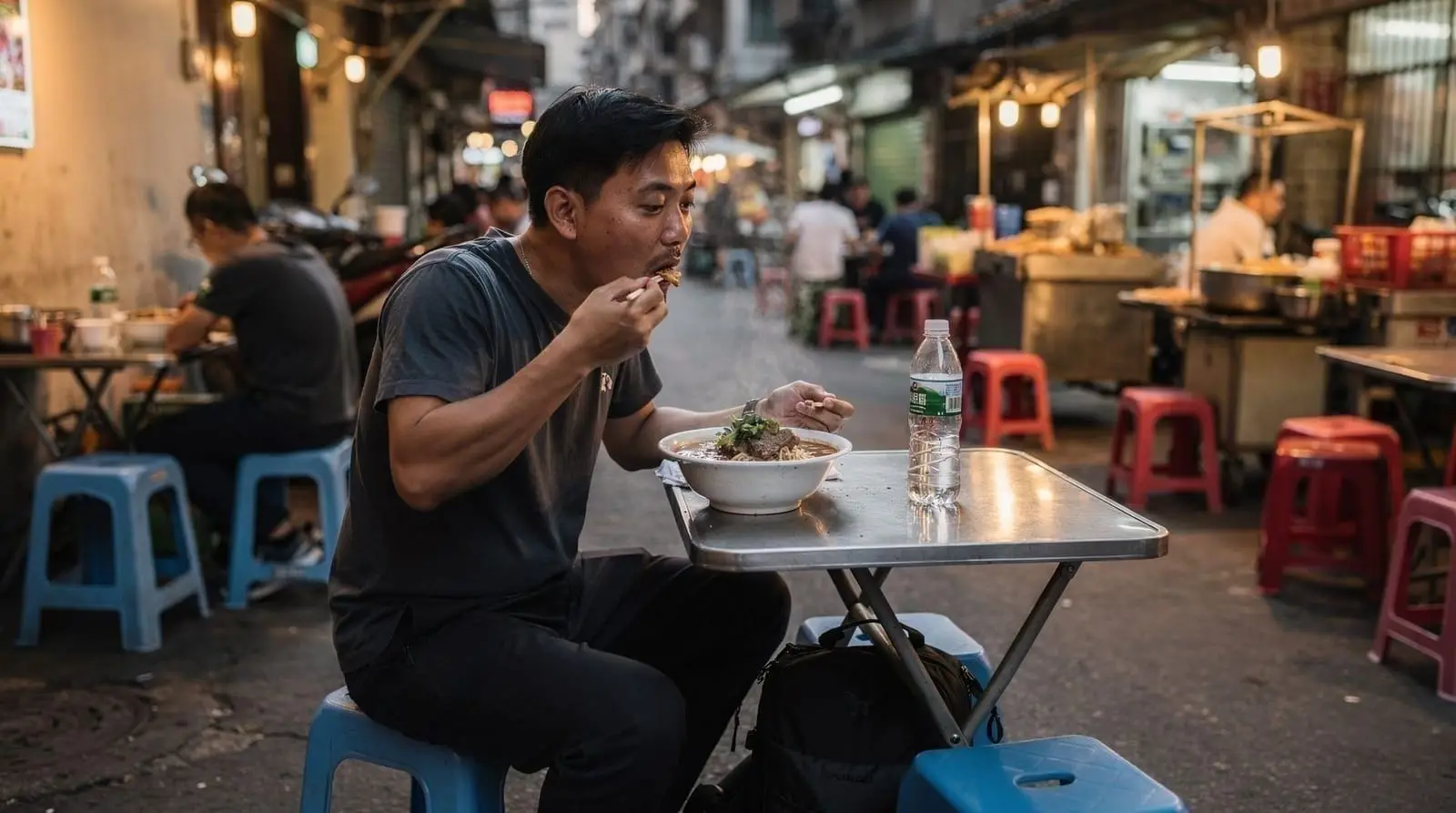
Shenzhen on a budget: spending ¥200/day or less
| Where | Luohu, Longhua, Futian, Nanshan-Shekou, Dapeng Peninsula |
| Cost | ¥465–635/US$65–89 for 3 days, excl. accommodation |
| Time needed | 3 days |
| Getting there | Futian Checkpoint pedestrian crossing from Hong Kong, metro fares only |
| Best time | Any season; free attractions are all outdoor/indoor mix, best October–April for comfortable walking |
Shenzhen is an unusually affordable city for its size and quality of infrastructure. The metro is cheap (¥2–8/trip), many of the best experiences are free or under ¥20, and the competition among restaurants — in a city of 18 million people with a working-class majority — keeps street food and canteen prices low. This plan covers 3 days on a daily budget of ¥150–200/US$21–28, including food, transport and attractions, without staying in a hostel dormitory.
The free attractions in Shenzhen are not consolation prizes. Lianhuashan Park, Shenzhen Bay Park, the Shenzhen Museum, OCT-LOFT (partial), Dapeng Ancient Town and Dafen Village are all free entry and among the most interesting places in the city. The theme parks (Window of the World, Splendid China, Happy Valley) charge ¥220–290/US$30–40 and are the only items on this list that will break the budget if substituted in.
Budget accommodation
Best budget hotel zones: Luohu (closest to HK border, oldest area, cheapest), Longhua (northern Shenzhen, newer district, budget-friendly for longer stays), Futian (central, slightly more expensive but good metro access).
Recommended budget hotels (2026 prices):
- Home Inn Select, Huaqiangbei (如家精选酒店, Huaqiangbei branch): from ¥180/US$25/night, en suite, clean, 5-minute walk to the electronics market.
- Hanting Express Luohu (汉庭快捷酒店): from ¥160/US$22/night, 10-minute walk from Luohu border crossing.
- Ibis Shenzhen Longhua: from ¥200/US$28/night, newer building, large rooms by budget hotel standards, metro adjacent.
Most hostels in Shenzhen charge ¥80–120/US$11–17 for a dorm bed — viable but less comfortable than a budget hotel at ¥160–200.
Budget transport logistics
A Shenzhen Tong transit card (¥50/US$7 deposit, rechargeable) reduces metro fares by 5–10% and eliminates queuing at ticket machines. The metro covers everything in this plan. Didi ride-hailing is cheap by international standards (¥15–40/US$2–5.5 for most in-city trips) and useful for the occasional gap — but this plan avoids it to keep the budget honest.
Total metro spend for 3 days: approximately ¥40–60/US$5.5–8.
Day 1: free Shenzhen — museums, parks and street food
Morning — Shenzhen Museum (free)
Start at the Shenzhen Museum at Civic Center (Line 1, Civic Center exit B). Free entry, English labels, excellent permanent collection covering the SEZ transformation from 1979 to the present. The contrast between the 1979 population figure (30,000 people) and today’s (18 million) is presented with enough primary material — photographs, personal testimonies, industrial artefacts — to be genuinely moving. Allow 90 minutes.
The adjacent library complex has free WiFi and a reading room that opens at 09:00 — useful for planning or work if needed.
Midday — Lianhuashan Park (free)
Walk north from Civic Center to Lianhuashan Park. Free entry. The hilltop panorama over the Futian CBD is one of the best urban views in Guangdong — Ping An Finance Centre (599 m) dominates the skyline. The park has benches, shaded walking paths and a Deng Xiaoping statue at the summit. Locals fly kites here on weekends.
Budget lunch: the park entrance has several cheap noodle and rice shops — lamian (pulled noodles with broth) or rice with char siu for ¥20–30/US$3–4.
Alternatively: the Futian district’s street food lanes around Jintian Road have knife-cut noodles (刀削面) for ¥18–25/US$2.5–3.5 and Sichuan dan dan mian for ¥20–28/US$3–4.
Afternoon — Dafen Oil Painting Village (free to enter)
Metro Line 3 to Dafen station (20 minutes from Futian). Dafen Village charges no entry fee. Walk through the 800 studios, watch artists at work — copying Van Gogh’s Sunflowers to order is as technically demanding as the original was compositionally innovative. The studios are open from 09:00–18:00. You can buy: small framed oil paintings from ¥80–200/US$11–28, postcards and prints from ¥15–30/US$2–4.
The village’s independent galleries on the south side show original contemporary work by Dafen-based artists who have moved beyond copying — worth browsing.
Evening — Dongmen night market (cheap eats)
Metro Line 1 to Laojie station. The Dongmen area around the Dongmen pedestrian street is Luohu district’s eating heart. Street food stalls from 18:00: Hakka stuffed tofu (¥20–30/US$3–4 per plate), clay-pot rice (¥25–35/US$3.5–5), Xinjiang lamb skewers (¥5–8/US$0.7–1 each), soy milk and red bean ice (¥10–15/US$1.4–2). A full dinner tour costs ¥50–80/US$7–11.
Day 1 total: ¥120–170/US$17–24 (including lunch, dinner, metro, no paid attractions).
Day 2: OCT-LOFT, Shekou waterfront and the Shenzhen Bay
Morning — OCT-LOFT creative district (mostly free)
Metro Line 1 to Huaqiaocheng. OCT-LOFT (华侨城创意文化园) charges no general admission — you pay only for specific gallery shows (OCAT is ¥0–15/US$0–2 depending on the exhibition). Walk the design studios, the converted factory halls, the independent bookshops and the ceramics workshop courtyard. On weekends, outdoor installations and pop-up markets are common.
Breakfast in OCT-LOFT: the smaller cafés in the south campus charge ¥20–35/US$3–5 for filter coffee and pastries. Street window vendors in the adjacent lanes do jianbing (Chinese egg crêpe with sauce and pickles) for ¥12–15/US$1.7–2.
Midday — He Xiangning Art Museum (¥20/US$3)
Adjacent to OCT-LOFT, the He Xiangning Art Museum runs rotating exhibitions of ink painting, woodblock prints and contemporary Chinese art. Entry ¥20/US$3 (free on the 15th of each month). The building’s 2003 Rem Koolhaas interior extension is notable for a visitor who notices architecture. Allow 60 minutes.
Lunch: the OCT area street food stalls near Huaqiaocheng station do Cantonese beef ball noodle soup (¥25–35/US$3.5–5) and braised pork rice boxes (¥20–28/US$3–4).
Afternoon — Shenzhen Bay Park (free)
Take Line 2 west to Shenzhen Bay Park station or Line 1 to Window of the World then taxi/Didi (¥15/US$2). Shenzhen Bay Park (深圳湾公园) is a 15 km paved waterfront park along the coast facing Hong Kong’s Deep Bay. Free entry. The mangrove wetland section (central park) is a migratory bird habitat — egrets, black-faced spoonbills (October–April), kingfishers — and a legitimate birdwatching destination without any admission. The bike rental stations (¥1–5/US$0.1–0.7 per hour via Meituan Bike app) allow a 10 km coastal ride.
Evening — Nanshan-Shekou budget dinner
The Shekou market building near Gongye Road has a cheap-eats basement: Sichuan malatang (customise your spicy soup, ¥25–40/US$3.5–5.5), Yunnan noodles (¥22–30/US$3–4), and roast meat rice (¥30–45/US$4.2–6.5). The Shekou night market on Gongchang Road runs from 18:00 and has similar options.
Day 2 total: ¥130–180/US$18–25.
Day 3: Dapeng Peninsula (the budget highlight)
Dapeng Peninsula is the most cost-effective full-day excursion in Shenzhen. Entry to the main historical site (Dapeng Ancient Town) is free. Transport is cheap. Food at the village is inexpensive. The beach is free (chairs/umbrellas optional).
Getting to Dapeng (cheap route)
Metro Line 3 to Jikeng station (终点站, the easternmost station, ¥10/US$1.4 from central Shenzhen). Then Bus 833 toward Dapeng (大鹏半岛, ¥12/US$1.7, runs every 10–15 minutes from 06:30–21:30, 45-minute journey). Total one-way: ¥22/US$3.1.
Dapeng Ancient Town (free)
Ming dynasty fortress walls, original stone gates, cannon placements, and the inner village of stone-lane houses now occupied by family restaurants and small guesthouses. The Dapeng Fortress Museum (大鹏古城博物馆) inside the walls charges ¥20/US$3 and covers the coastal defence history well.
Hakka lunch at a family-run restaurant inside the town: salt-baked chicken (盐焗鸡, half bird ¥45–55/US$6.3–7.7), tofu casserole (¥25–35/US$3.5–5), rice (¥3/US$0.4). A proper lunch for one: ¥60–80/US$8.4–11.
Xichong Beach (¥5 minibus)
Minibus from Dapeng to Xichong Beach (西涌, ¥5/US$0.7, 20 minutes). The beach has paid sun loungers (¥30–50/US$4.2–7) and umbrellas (¥20/US$3) but no entrance fee. Bring your own water (buy at the convenience store in Dapeng). The beach café sells coconut water (¥15/US$2) and grilled corn (¥8/US$1.1). Swimming is safe June–October; the rest of the year is for walking the sand.
Return and final budget dinner
Bus 833 back to Jikeng, metro to central Shenzhen. For the final dinner, the canteen-style restaurant near Luohu border (useful if you are crossing to Hong Kong tomorrow morning) at Renmin South Road does Cantonese roast duck rice (¥35–45/US$5–6.5) and seafood congee (¥25–35/US$3.5–5) in generous portions.
Day 3 total: ¥160–200/US$22–28 (including transport, Dapeng Museum, beach, lunch and dinner).
3-day budget summary
| Category | 3-day total |
|---|---|
| Metro | ¥60–80/US$8–11 |
| Food (3 meals/day, mostly street food and canteen) | ¥300–450/US$42–63 |
| Paid attractions (Dafen ¥0, OCAT ¥15, He Xiangning ¥20, Dapeng Museum ¥20) | ¥55/US$7.7 |
| Incidentals | ¥50/US$7 |
| Total (excl. accommodation) | ¥465–635/US$65–89 |
Accommodation (budget hotel): ¥480–600/US$67–84 for 3 nights.
Full 3-day all-in: ¥945–1,235/US$132–173 — cheaper than a single night in a mid-range Hong Kong hotel.
Budget hacks specific to Shenzhen
Eat where factory workers eat: the districts around Huaqiangbei and Longhua have worker canteens (员工食堂) where a full meal (rice, two dishes, soup) costs ¥15–22/US$2–3. Look for signs reading 员工食堂 or simply follow the crowd at lunchtime from nearby factories.
Free museum days: the He Xiangning Art Museum is free on the 15th of each month. Shenzhen Museum is always free. The Shenzhen Technology Museum (¥30/US$4 normally) has free entry on Tuesdays.
Afternoon parks: Lianhuashan, Shenzhen Bay Park, Meilin Reservoir Park (梅林水库, free, excellent for morning walking) are all free. They are not backup activities — they are the city’s best public spaces.
Buy from chains not tourists traps: the milk tea chains (Mixue Ice Cream — 蜜雪冰城, ¥4–8/US$0.6–1.1; Chabaidao — ¥10–16/US$1.4–2.2) offer better quality at a fifth of the price of the tourist-facing bubble tea shops near border crossings. Every metro station has at least one Mixue within 100 metres.
Skip the border shopping malls: the commercial malls immediately at the Luohu and Futian crossings target Hong Kong visitors with inflated “special” prices. Everything sold there is available cheaper three metro stops deeper into the city.
For full itinerary ideas that go beyond the budget tier, see Shenzhen in 3 days or the Shenzhen weekend 48-hour plan. Budget logistics for crossing to Hong Kong are covered in the border crossing guide.
Visa costs: the hidden budget line
Most budget planning focuses on food and transport, but the visa question can add far more to your trip cost than anything on this itinerary if you get it wrong. Many nationalities qualify for the 144-hour visa-free transit or the Greater Bay Area visa-on-arrival scheme, both of which cost nothing beyond the standard border processing — but if your passport does not qualify and you need a standard tourist visa, budget an additional US$30–140 depending on nationality and processing speed. Check the China visa and 240-hour transit guide before booking anything, since it directly affects whether this 3-day budget plan is even the cheapest way to see Shenzhen versus a shorter transit-exempt stay.
Is a longer budget trip more cost-effective?
Per-day costs actually drop the longer you stay, because fixed costs (the Shenzhen Tong deposit, getting oriented, finding the cheap canteens) are one-time. A 5-day version of this same budget approach — using the Shenzhen and Hong Kong 5 days itinerary’s Shenzhen half as a template but swapping in this guide’s budget hotels and street food — typically averages ¥140–170/US$20–24 per day rather than the ¥155–212/US$22–28 average across this 3-day plan, simply because you are not paying for orientation twice.
Frequently asked questions about budget travel in Shenzhen
What is the cheapest way to get from Hong Kong to Shenzhen?
The pedestrian Futian Checkpoint crossing (Hong Kong MTR to Lok Ma Chau, walk across, Shenzhen Metro on the other side) costs only metro fares — roughly HK$10/US$1.3 on the Hong Kong side and ¥4/US$0.6 on the Shenzhen side. Total transit: under ¥20/HK$22/US$2.7 each way.
Can you eat well in Shenzhen for under ¥50/day?
Yes. A breakfast (congee or noodles, ¥15–20), lunch (rice and two dishes at a canteen, ¥20–30) and dinner (street food at Dongmen, ¥25–40) totals ¥60–90/US$8.4–12.5 per day. Under ¥50 requires skipping one meal or eating from the cheapest stalls only.
Are there free things to do in Shenzhen?
Many. Lianhuashan Park, Shenzhen Bay Park, Shenzhen Museum, OCT-LOFT (general admission), Dafen Village (no entry fee), Dapeng Ancient Town, and the waterfront promenade in Shekou are all free. The city has more quality free public space per square kilometre than most comparably sized cities.
Is Shenzhen cheaper than Hong Kong?
Substantially. Street food in Shenzhen costs 30–50% of Hong Kong prices. Metro is 50–70% cheaper. Budget hotels are 40–60% cheaper. The only category where prices converge is branded goods in malls — import duties on luxury goods mean the price difference is minimal for items like electronics and branded clothing. The Shenzhen vs Hong Kong comparison guide breaks the cost gap down by category if you are deciding how to split a limited budget between the two cities.
Top-rated things to do in Shenzhen
Verified deep-linked GetYourGuide tours. Book through these links and we earn a small commission at no cost to you.