Crossing the HZMB: how the Hong Kong–Zhuhai–Macau Bridge actually works
The Hong Kong–Zhuhai–Macau Bridge (HZMB, 港珠澳大橋) is genuinely impressive as an engineering project: 55 kilometres of bridge and undersea tunnel linking three different jurisdictions across the Pearl River estuary. It is also, once you understand the logistics, a useful and relatively comfortable way to move between Hong Kong and Macau or Zhuhai. This guide covers how it actually works, what it costs, and when it’s worth using versus the alternatives.
| Where | Lantau (HK) ↔ Zhuhai or Macau, via three artificial islands |
| Cost | Around HKD 100–120 one-way by shuttle bus |
| Time needed | About 90–120 minutes door-to-door from central Hong Kong |
| Getting there | Bus B4 from Tung Chung MTR to HKBCF |
| Best for | Airport connections, adding Zhuhai, or the scenery |
For the shorter step-by-step version of this route, see the HZMB bridge guide; for the full set of Hong Kong–mainland crossing options, see Hong Kong–Shenzhen border crossings.
What the bridge is and how it’s structured
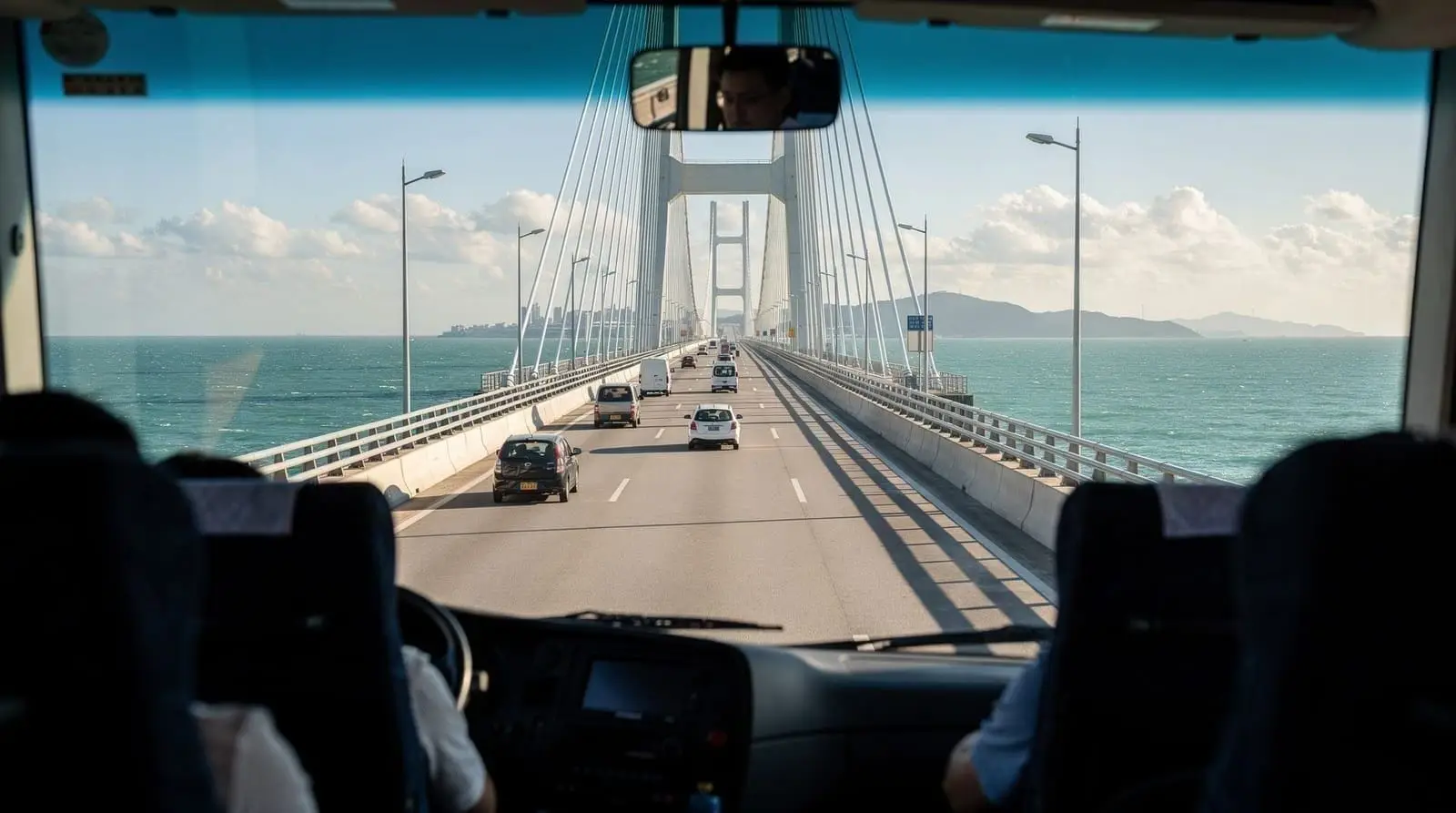
The HZMB consists of a series of cable-stayed bridge spans and a 6.7km undersea tunnel in the middle (to allow large container ships to pass). It took nine years to build and opened in 2018. There are three artificial islands at the tunnel portals and at the Hong Kong end.
Crucially: the bridge itself is not publicly accessible except by designated shuttle buses or private vehicles with special permits. You cannot drive your own car across unless you hold one of the limited Hong Kong-registered vehicle cross-boundary permits, which are primarily held by freight and authorised personal vehicle operators. Individual tourists use the shuttle bus service.
The three terminals and how to use them
Hong Kong Boundary Crossing Facilities (HKBCF): Located on a reclaimed island in Lantau, accessible by bus or taxi from Tung Chung or the Airport. This is where you clear Hong Kong exit immigration. From here, shuttle buses depart to either the Zhuhai or Macau Passenger Ferry Terminals.
Getting to HKBCF from Hong Kong:
- Bus B4 from Tung Chung MTR: approximately 15 minutes, HKD 8. Most practical.
- Bus A11 from Hong Kong Airport: approximately 15 minutes if you’re connecting from a flight.
- Taxi from Tung Chung: approximately 10–15 minutes, HKD 30–50 metered.
Zhuhai Gongbei Port / Zhuhai Passenger Crossing: The mainland China end, in Zhuhai. Connected to Gongbei, which is adjacent to Macau. You clear Chinese entry immigration here.
Macau Outer Harbour / Taipa Ferry Terminal: The Macau end. Note that there are two entry points for Macau — one at the bridge landing (near Taipa), one in the older city area. The bridge lands at Taipa.
The shuttle bus process
The shuttle buses are operated by three concessionaires and run 24 hours in both directions. They depart every 10–15 minutes during peak times, less frequently at night.
Ticketing: Available at the terminal (cash or credit card), or pre-booked through the HZMB official app or Trip.com. During peak periods (Chinese New Year, National Day, summer weekends), pre-booking is advisable to guarantee a departure time. Walk-up tickets are usually available but add queuing time.
Current shuttle bus fares (2026 approximate):
- HK ↔ Zhuhai: HKD 100–120 (~USD 13–15) one-way per person.
- HK ↔ Macau: HKD 100–120 (~USD 13–15) one-way per person. The bus drops you at the Macau terminal where you complete Macau entry immigration.
Journey time on the bus: The crossing itself takes about 40–45 minutes from HKBCF to the Macau or Zhuhai terminal. Add 15–20 minutes on each end for immigration. Total realistic door-to-door time from central Hong Kong to central Macau via the HZMB: approximately 90–120 minutes.
Immigration clearance: You clear Hong Kong exit immigration at HKBCF before boarding. You clear Macau (or mainland China) entry immigration at the destination terminal after disembarking. Bring your passport; the process is straightforward and relatively fast except at peak times.
HZMB vs the ferry: which is better?
The high-speed ferry from Hong Kong (Macau Ferry Terminal in Sheung Wan, or Tuen Mun Ferry Terminal) to Macau Outer Harbour or Taipa runs approximately every 30 minutes and takes 55–70 minutes. Current ferry prices: HKD 170–200 one-way during peak; HKD 140–170 off-peak.
HZMB is better when:
- You are starting your journey from the Airport (HKBCF is directly adjacent).
- You want to stop in Zhuhai as well as Macau.
- The ferry terminals are inconvenient from your Hong Kong location.
- You want the experience of crossing the bridge (genuinely interesting visually from the bus).
Ferry is better when:
- You are coming from Kowloon, Central, or Sheung Wan — the ferry terminals are more central.
- The bus schedule does not match your timing.
- You prefer a direct point-to-point journey without the artificial island transit.
- You find ferries more comfortable than air-conditioned coaches.
For most visitors staying in Kowloon or Hong Kong Island, the ferry is faster and more convenient door-to-door, despite the longer crossing time, simply because the terminal location matters. If your route is Hong Kong to Shenzhen rather than Macau, the high-speed rail is usually the better comparison — see the Greater Bay Area high-speed rail guide and the broader Shenzhen vs Hong Kong comparison for that decision.
Private transfers via the HZMB
The HZMB does allow private vehicle transfers if the vehicle holds a cross-boundary permit. Several transfer companies operate cross-boundary vehicles — these can be useful for groups, for people with significant luggage, or for connecting HK Airport to Macau or Zhuhai hotels.
Book a private limo transfer via the HZMB between Hong Kong, Zhuhai, and Macau — worth considering for airport connections or if you’re travelling with more than two bags.
Typical pricing for a private transfer: HKD 600–1,200 (~USD 77–154) per vehicle (not per person), depending on destination and vehicle type. Compare this to the shuttle bus per-person cost only if you’re travelling as a group.
Zhuhai: worth a stop?
Zhuhai sits immediately adjacent to the HZMB landing on the mainland side, and right next to Macau via the Gongbei border crossing. Many visitors who cross via the bridge add a Zhuhai component — the Chimelong Ocean Kingdom or Chimelong Resort are in Zhuhai and are among the most visited theme parks in China.
From the HZMB Zhuhai terminal, it’s approximately 15–20 minutes by taxi or DiDi to Gongbei (for Macau entry) or 30–40 minutes to Chimelong in Hengqin.
If you have a day to add Zhuhai: Zhuhai’s coastal boulevard (lover’s road, 情侣路) is a pleasant stretch, the city is noticeably cleaner and less dense than Guangzhou or Shenzhen, and the fishing-village atmosphere in the northern districts is intact in a way that has been erased in most of the PRD. The full Zhuhai travel guide covers where to eat and what else to see if you decide to stay the night rather than pass through.
For travellers building a longer route across the region, the Hong Kong–Macau 4 days itinerary uses the HZMB as one of its connecting legs.
Timing and crowd management
Peak times on the HZMB shuttle buses:
- Friday afternoon and Sunday evening (Hong Kong residents going to and returning from Macau)
- Chinese New Year and National Day weeks
- Summer weekends (July–August)
Off-peak smooth: weekday mornings and early afternoons. The 07:00–10:00 departure window is frequently uncrowded.
If you are crossing during a peak period and have a fixed time constraint, pre-book the shuttle bus and factor an extra 20–30 minutes at the terminal for immigration queuing.
What to bring
- Passport (mandatory at both ends of the border crossing).
- HKD for the shuttle bus if not pre-booked (MOP or RMB not accepted at HKBCF).
- A travel card for Macau (Macau Pass) if you’re staying several days — buy at 7-Eleven in Macau.
- Mainland China currency (CNY) if you’re continuing to Zhuhai; Macau accepts both MOP and HKD, and increasingly WeChat Pay.
Visa and payment rules for mainland China change often enough that it’s worth checking current requirements before you travel — see the Shenzhen 2026 visa and payment update for the latest on transit exemptions and mobile payment setup.
Frequently asked questions about the HZMB
Do I need a special visa to cross the HZMB?
No special visa — the same visa requirements apply as at any other Hong Kong, Macau, or mainland China border crossing. Most Western passport holders enter Hong Kong and Macau visa-free. For mainland China (Zhuhai), a Chinese visa or qualifying transit exemption is needed.
Can I walk or cycle across the bridge?
No. The bridge is only accessible by authorised shuttle buses and permitted private vehicles. There are no pedestrian or cycling facilities.
Is the bridge scenic?
Yes. The cable-stayed spans are impressive and the view across the Pearl River estuary from the bus window is unlike anything else in the region — you can see the edges of Hong Kong, Macau, and Zhuhai simultaneously on clear days.
How early should I arrive at HKBCF?
Allow 30 minutes before your intended shuttle bus departure for a smooth day-of purchase and border clearance. During peak periods, 45–60 minutes.
Is there a direct bus from Hong Kong hotels to the HZMB terminal?
Several hotel bus services in Tung Chung connect to HKBCF. From other parts of Hong Kong, take MTR to Tung Chung and then Bus B4. There is also a direct coach service from Hong Kong Coach Terminal at the China Ferry Terminal (Tsim Sha Tsui) — check current schedules.
Can I use the HZMB to reach Shenzhen instead of Zhuhai or Macau?
Not directly — the bridge only lands in Zhuhai and Macau, not Shenzhen. To reach Shenzhen from Hong Kong, use the direct MTR/KTT rail link or one of the land border crossings covered in the Hong Kong–Shenzhen border crossings guide; the HZMB is purely for the Macau/Zhuhai side of the Greater Bay Area.
Top-rated things to do in Shenzhen
Verified deep-linked GetYourGuide tours. Book through these links and we earn a small commission at no cost to you.