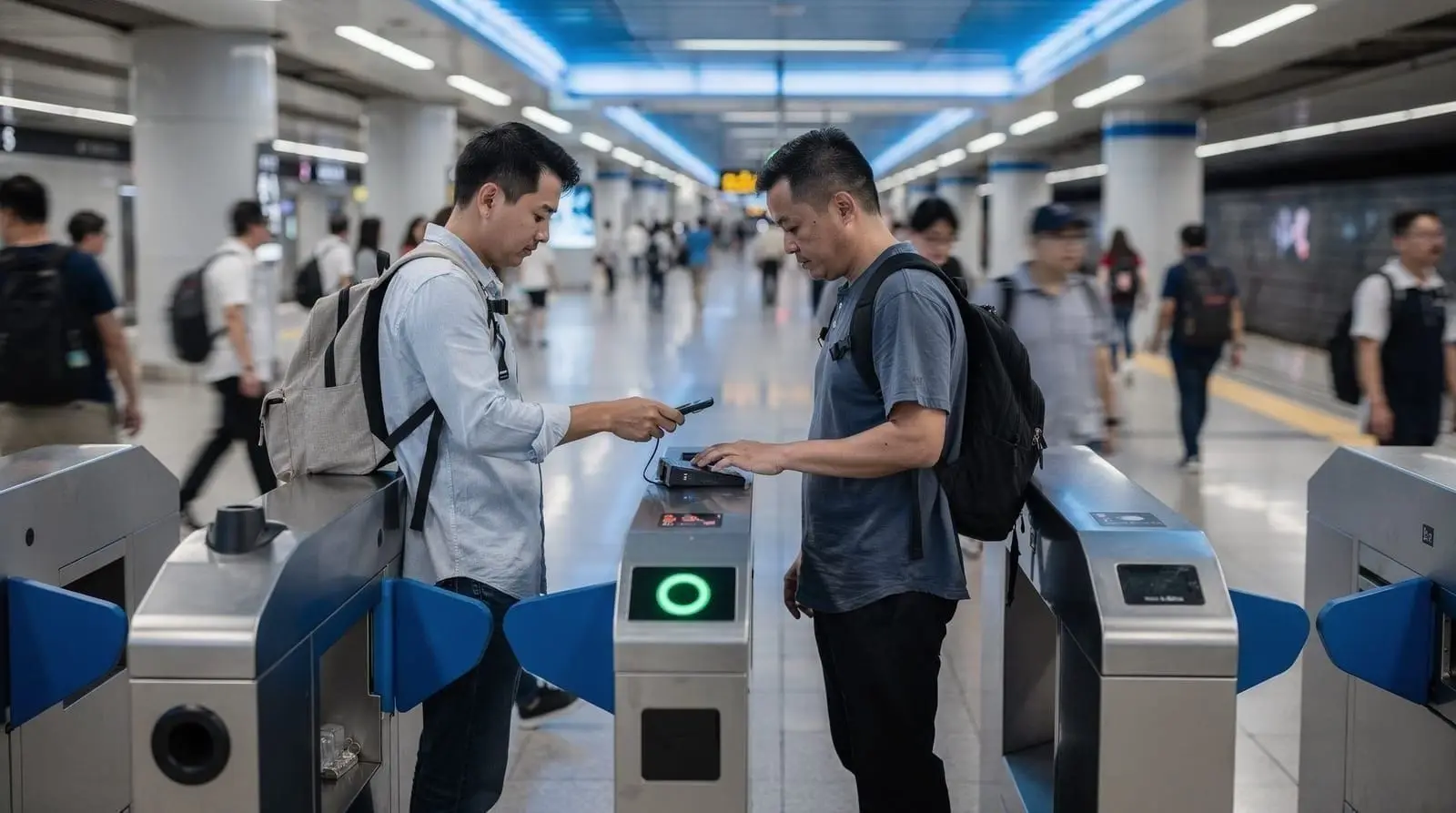
Shenzhen 2026: visa rules, payments, and border crossings — what's actually changed
If you last visited Shenzhen (or planned to) a few years ago, the entry and payment landscape has shifted considerably. China has quietly made some genuinely useful changes for international travellers in 2024–2026: expanded visa-free access, a proper foreign-card lane in mobile payment apps, and smoother border operations. Here is what those changes actually mean on the ground — without the press-release spin.
| Entry | 240-hour visa-free transit for 50+ nationalities, or standard L-visa |
| Payments | WeChat Pay/Alipay linked to a foreign card, plus CNY 500–800 cash |
| Fastest border | Futian/Lok Ma Chau via Metro Line 4 |
| VPN | Install before entering China, not after |
For the fuller mechanics of the 240-hour rule specifically, see the China visa and 240-hour transit guide, and for the underlying border-crossing options, the Hong Kong–Shenzhen border crossings guide.
What the 240-hour transit exemption really covers
China’s 240-hour (10-day) visa-free transit policy covers citizens of most Western European countries, the US, Canada, Australia, New Zealand, Japan, South Korea, and a growing list of others — currently over 50 nationalities qualify. The transit must be genuine: you need an onward international ticket (to a third country, not back to Hong Kong) confirmed before arrival.
The catch that trips people up: the 10-day clock starts from midnight of the day you enter, not from the exact hour of arrival. Enter at 11 pm on a Monday, and day 1 is already ticking. You must exit mainland China to a third country before the 240 hours expire — re-entering Hong Kong or Macau does not reset the clock; HK and Macau are treated as separate jurisdictions, but your next destination after China must be abroad.
For the Greater Bay Area specifically, you can enter at Shenzhen Bao’an Airport (SZX), cross at any of the Shenzhen–Hong Kong land borders, or arrive at Guangzhou Baiyun Airport — all covered by the same exemption. What has changed in 2026: the Futian checkpoint now operates a dedicated lane for 240-hour transit arrivals, which meaningfully cuts queue time versus the old combined queue.
If your passport nationality is not on the 240-hour list, you have two remaining practical options: apply for a standard tourist L-visa at a Chinese embassy or consulate before travel (typically processed in 4–7 business days), or check whether the Greater Bay Area visa-on-arrival applies to you. See the Shenzhen planning guide for a nationality-by-nationality breakdown.
The Greater Bay Area visa-on-arrival: narrower than it sounds
The GBA visa-on-arrival has been extended and expanded in 2025–2026, but it still only applies to travellers arriving via Hong Kong or Macau on specific routes — generally, entering Shenzhen via designated ports while holding a valid HK entry permit or SAR document. It is primarily designed for business visitors and is not a general tourist waiver. If you are arriving directly into Shenzhen by air from outside China, this route does not apply.
The honest summary: for most Western travellers, the 240-hour transit exemption is the fastest legal option for a short Shenzhen visit. For anything longer than 10 days, or if your nationality is excluded, the standard L-visa remains the right path.
Read the detailed breakdown in our China visa and transit guide.
Mobile payments: the foreigner situation in 2026
This is where things have genuinely improved. For years, Shenzhen was effectively a cashless city that excluded foreign bank cards. WeChat Pay and Alipay — which handle somewhere above 90% of transactions in the city — required a Chinese bank account. Foreign Visa or Mastercard could be added, but acceptance was spotty and merchant limits applied.
As of late 2024 into 2026, both apps have overhauled their international card integration:
WeChat Pay: You can now link a foreign Visa, Mastercard, or JCB directly through the International Payments feature. Top-up limits have increased (roughly CNY 6,500 / ~USD 900 per top-up, with a monthly ceiling). Acceptance is now broad enough that you can use it at wet markets, small restaurants, and transit machines — the places that previously had no card option at all.
Alipay: The “Alipay+ International Edition” or “Global Alipay” effectively merged the experience. Add your foreign card, and you transact in CNY but get charged in your home currency at real-time rates. Note: the exchange rate applied by your card issuer may add 1–3% on top of the mid-market rate — check your card’s foreign transaction fee structure before relying on it.
What still does not work reliably: some government-owned kiosks (especially in parks and certain museums), small street vendors who have only one QR code tied to a bank, and certain bus routes on older validators. Carry CNY 500–800 in cash for the gaps. ATMs accepting foreign cards exist at HSBC, Citibank, and most Bank of China branches; withdrawal fees vary. For the fuller setup walkthrough with screenshots-level detail, see the WeChat Pay and Alipay for foreigners guide.
Which border crossing to use
Shenzhen has six main crossings with Hong Kong. They vary significantly in crowd levels and opening hours.
Futian / Lok Ma Chau (MTR): The most efficient for most visitors. Both the Hong Kong MTR East Rail Line and Shenzhen Metro Line 4 serve the crossing directly. Immigration halls are modern, and the dedicated 240-hour transit lane (opened 2026) makes this the fastest option for transit arrivals from HK. Opens 06:30–24:00.
Lo Wu: Historically the busiest crossing — convenient for the East Rail Line, but the HK-side immigration hall is older and crowds peak severely on weekends and public holidays. Still useful for East Kowloon/NT travellers. Opens 06:30–24:00.
Huanggang: Open 24 hours, which makes it uniquely useful for late-night arrivals or departures. Less convenient by public transit (requires bus connection on both sides), but good for taxi or private car. Lorry and cargo traffic mean longer waits at peak freight hours (08:00–10:00).
Shenzhen Bay: Connects to Hong Kong’s New Territories (bus to/from Tsuen Wan MTR). The crossing is in Shenzhen’s Nanshan district — convenient if you are heading straight to Shekou or Nanshan. Immigration clears on the HK side before exiting into Shenzhen, which is unusual. Opens 06:30–21:00.
Man Kam To / Sha Tau Kok: Limited pedestrian access; primarily used for cargo and certain permit-holders. Not practical for most tourists.
For the HZMB (Hong Kong–Zhuhai–Macau Bridge), see our dedicated guide on crossing the HZMB bridge. If your route is a same-day round trip rather than a longer stay, the Hong Kong from Shenzhen day trip guide walks through which crossing suits a single-day itinerary best.
What this means for your budget
None of these 2026 changes affect day-to-day prices directly, but they remove friction costs that used to eat into a trip budget — fewer emergency currency exchanges at poor rates, fewer taxi rides caused by getting stuck without cash, and less time lost queuing at the wrong border crossing. If you’re planning a tight budget trip, the Shenzhen on a budget guide assumes the payment setup described here is already sorted, since it materially affects how far your cash stretches.
Practical checklist for 2026
- Confirm your nationality qualifies for 240-hour transit at the official China National Immigration Administration portal before booking flights.
- Book an onward international flight before entering mainland China — border officers do check.
- Download WeChat and/or Alipay and link your foreign card before you land; doing it inside mainland China is technically possible but sometimes blocked.
- If you need Google Maps navigation inside China, either use Apple Maps (which works), the Baidu Maps international version, or route data downloaded offline beforehand. Google does not work without a VPN.
- Install a VPN on your devices before entering China — the App Store and Play Store are inaccessible from inside the Great Firewall, and VPN apps themselves cannot be downloaded once inside.
- Carry physical ID; digital ID is not accepted at most mainland China checkpoints.
If you are planning to loop between Shenzhen, Hong Kong, Macau, and Guangzhou, the Greater Bay Area on the high-speed rail article covers rail ticketing and border technicalities in detail.
Book a private Shenzhen city orientation with a local guide — useful on a first trip when the payment and navigation learning curve is steepest.
Frequently asked questions about visiting Shenzhen in 2026
Can I enter Shenzhen without a Chinese visa?
Citizens of 54+ countries can use the 240-hour (10-day) visa-free transit exemption if they have a valid onward international ticket. Others need an L-visa obtained in advance, or may qualify for the Greater Bay Area visa-on-arrival if arriving via Hong Kong.
Does the 240-hour clock reset when I cross to Hong Kong?
No. Going from Shenzhen to Hong Kong and back to Shenzhen does not restart the 240-hour period. You must exit to a third country (not HK or Macau) before the 240 hours expire.
Can I use my Visa card in Shenzhen shops?
Physical Visa/Mastercard acceptance is limited. Link your foreign card to WeChat Pay or Alipay instead — that gives you access to nearly everywhere in the city. Keep some CNY cash for the remaining gaps (small vendors, certain government venues).
Which border crossing is fastest between Hong Kong and Shenzhen?
Futian checkpoint via Metro Line 4 / East Rail is fastest on weekdays. Avoid Lo Wu on weekends and public holidays — queues can exceed 90 minutes. Huanggang is the only 24-hour crossing for very late arrivals.
Do I need a VPN in Shenzhen?
You will need a VPN to access Google, WhatsApp, Instagram, Facebook, and many other services. Install and test your VPN before entering China — it cannot be downloaded from inside the firewall.
Is Shenzhen safe for solo travellers?
Shenzhen has a low violent crime rate and reasonable public safety standards. The main risks are pickpocketing in very crowded areas (Dongmen, Huaqiangbei markets) and various commercial scams (see our honest planner guide for the specific traps to avoid).
How long should I allow at the border crossing?
At Futian during off-peak hours (weekday mid-morning or mid-afternoon), 20–40 minutes is typical. At Lo Wu on a weekend holiday, budget 90–120 minutes. Huanggang mid-day on a weekday: 30–45 minutes.
Has the 240-hour transit list of eligible nationalities changed recently?
Yes, incrementally — the list has been expanded several times since it launched, most recently adding a handful of additional countries in 2025–2026. Always check the current official list on the China National Immigration Administration portal close to your travel date rather than relying on an older article, since eligibility can change between when you book and when you fly.
Top-rated things to do in Shenzhen
Verified deep-linked GetYourGuide tours. Book through these links and we earn a small commission at no cost to you.