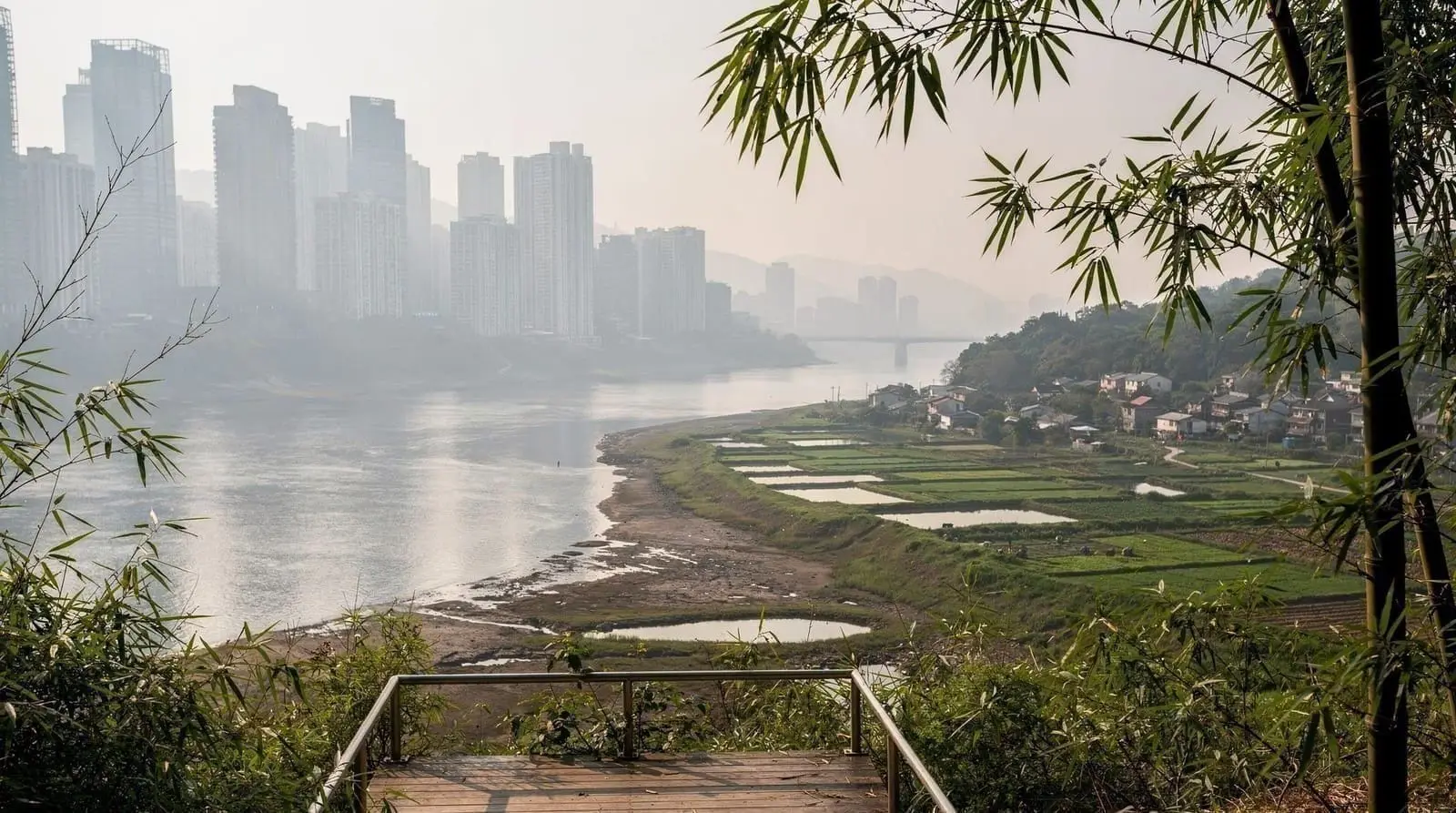
Shenzhen vs Hong Kong: which city should you visit?
Should I visit Shenzhen or Hong Kong?
Do both if time allows — they are 14–24 minutes apart by high-speed rail. Shenzhen wins on price, tech culture, and local diversity; Hong Kong wins on nature, nightlife, English ease, and international dining. Neither is a substitute for the other.
Shenzhen and Hong Kong sit 30 kilometres apart, connected by the world’s busiest cross-border rail link. Most visitors treat Hong Kong as the destination and Shenzhen as a quick day trip — if they visit it at all. That framing underserves Shenzhen badly, and it also misunderstands what makes the two cities worth comparing.
They are not rivals offering the same thing at different price points. They are genuinely different cities with different histories, different governments, different currencies, and different strengths. The question is not which is better — it is which fits what you are actually looking for.
| Distance apart | 30km, 14–24 min by high-speed rail |
| Currency | CNY/RMB (Shenzhen) vs HKD (Hong Kong) |
| Visa | Shenzhen usually needs one; Hong Kong is visa-free for most |
| Cheaper base | Shenzhen, by roughly 2x |
| Better nature/nightlife | Hong Kong |
| Ideal time for both | 5–7 days combined, split unevenly toward Hong Kong |
What kind of city each one is
Hong Kong is a former British colony turned Chinese Special Administrative Region. Its identity was built on trade, finance, and a port culture that has absorbed Chinese, British, and Southeast Asian influences over 150 years. The result is a city that still feels international by default: English is co-official, Cantonese is the street language, and the financial district looks like any major global city while the fishing villages on Lantau Island look like anywhere but.
Shenzhen was a farming town of roughly 30,000 people in 1979. It became China’s first Special Economic Zone in 1980, and within a generation grew into a metropolis of around 18 million. It has no colonial legacy and no centuries-old cultural accumulation. What it has is ambition built into its DNA, a migrant population from every province in China, a technology industry (Huawei, Tencent, BYD, and hundreds of smaller firms all have headquarters or major campuses here), and a willingness to build things that have not been built before.
This matters for travellers because the atmosphere is fundamentally different. Hong Kong feels established; Shenzhen still feels like it is becoming something.
Cost comparison
This is where Shenzhen wins decisively. Hong Kong is one of Asia’s most expensive cities. Shenzhen is significantly cheaper across every category.
| Category | Shenzhen | Hong Kong |
|---|---|---|
| Budget hotel (decent location) | CNY 250–400/night | HKD 500–900/night |
| Mid-range hotel | CNY 500–900/night | HKD 1,000–2,000/night |
| Budget meal (local restaurant) | CNY 25–50 | HKD 60–100 |
| Mid-range dinner (per person) | CNY 80–150 | HKD 200–400 |
| Metro single journey | CNY 2–9 | HKD 5–15 |
| Beer at a bar | CNY 20–45 | HKD 60–100 |
| Daily budget (budget traveller) | CNY 300–600 | HKD 600–1,200 |
The daily budget gap is roughly 2x in Shenzhen’s favour, sometimes more. If you are counting money carefully, Shenzhen extends your trip considerably. If you are not counting money but want to spend it on experiences rather than accommodation markup, Shenzhen still makes sense as a base for part of your time in the region.
For help modelling costs in both cities, the budget tool on this site lets you adjust for accommodation type and eating style.
Visas and entry
This is the single most important practical difference between the two cities.
Hong Kong operates as a separate territory for immigration purposes. Most nationalities — including UK, US, EU, Australian, and Canadian passport holders — can enter Hong Kong visa-free for 90 or 180 days. There is no separate application, no cost, and no paperwork beyond your passport.
Shenzhen is mainland China. Entry requires a Chinese visa for most nationalities, obtained from a Chinese consulate before travel. However, there are two significant exceptions that make Shenzhen much more accessible than people assume:
The 144-hour (6-day) transit visa exemption allows travellers arriving from and departing to different countries via certain mainland ports to stay in a designated region — including Guangdong province — without a pre-arranged visa. You must be transiting, not ending your trip in China. Full details, conditions, and which airports qualify are in the China visa and 240-hour transit guide.
The Greater Bay Area visa on arrival is a newer scheme allowing visitors to enter mainland GBA cities from Hong Kong under specific conditions. See the Greater Bay Area visa on arrival guide for current eligibility.
If neither exemption applies to you, a standard tourist visa (L visa) is required and must be arranged in advance. Budget 1–2 weeks for processing through a Chinese consulate.
Internet access
Hong Kong: unrestricted internet. Google, YouTube, WhatsApp, Instagram, and everything else works without any configuration.
Shenzhen: the Great Firewall. Google, Gmail, YouTube, WhatsApp, Instagram, Facebook, and most Western services are blocked. You need either a working VPN installed before you arrive (many VPN apps are unavailable inside China) or a foreign eSIM that routes traffic through a non-Chinese network.
The eSIM and VPN in China guide covers the practical options in detail. The short version: buy a foreign eSIM before you travel, keep it on your phone, and use it for anything that hits the firewall.
Payment
Hong Kong uses HKD and a mix of Octopus card (for transport and many retail payments), credit cards (widely accepted), and mobile payments. Most travellers find Hong Kong easy to pay in with a foreign card.
Shenzhen runs on WeChat Pay and Alipay. Cash is technically accepted but increasingly invisible in everyday life; many local restaurants and street food stalls actively prefer mobile payment. Foreign credit cards are accepted at hotels and international chains, but you will struggle at markets, small restaurants, and transport vending machines without a Chinese payment app set up.
Setting up WeChat Pay or Alipay for a foreign bank card is now possible for most visitors; the WeChat Pay and Alipay for foreigners guide explains the current process. Currency exchange is covered in the currency tool.
Language
Hong Kong: Cantonese is the primary street language, English is co-official and widely spoken in hospitality, transport, and business. Signage is bilingual throughout. English speakers navigate with ease.
Shenzhen: Mandarin is the lingua franca (the large migrant workforce made Cantonese largely irrelevant here, unlike in Guangzhou). English is uncommon outside international hotels and major shopping malls. Google Translate’s camera mode — pointed at menus, signs, and maps — is genuinely useful. The Shenzhen metro app is available in English, which helps considerably.
Food
Hong Kong is a Cantonese culinary capital with a serious restaurant culture accumulated over generations. The dim sum is excellent and deeply embedded in daily life (yum cha is a social institution, not a tourist activity). The city also has a strong international fine dining scene, excellent Southeast Asian food from its Filipino, Thai, and Indonesian communities, and the best wonton noodle soup on the planet, full stop. The Hong Kong Star Ferry guide links to several harbour-side eating options worth timing your visit around.
Shenzhen’s food scene is different in character: it reflects a migrant city. Because Shenzhen’s population came from every province in China, you find serious regional Chinese cooking that is rare in Hong Kong — Chaoshan (Teochew) seafood and beef hotpot, Hunanese chilli cooking, Hakka braised pork and tofu, Sichuanese hot pot, Yunnan mushroom dishes, and Cantonese roast meat shops all coexisting within blocks of each other. The Shenzhen Chaoshan cuisine guide and dim sum guide cover the regional cooking in more depth.
For international fine dining, Hong Kong is the clear winner. For mainland Chinese regional diversity, Shenzhen is the better city.
Shopping
Shenzhen’s most distinctive shopping is in electronics. Huaqiangbei in the Futian district is the world’s largest electronics market — six or seven multi-storey buildings packed with components, assembled phones, drones, audio gear, cables, and everything adjacent to electronics. It is also where you find factory-surplus and refurbished goods. You do not need to be a tech buyer to find it interesting; the density and scale of the place is remarkable on its own terms.
Shenzhen also has large modern malls (MixC, Coco Park, K11 Musea at OCT) and factory-direct goods in the Dongmen wholesale district. The Dongmen street food guide is set in the same neighbourhood and covers both eating and browsing.
Hong Kong’s shopping strength is luxury brands and international retail, particularly in Tsim Sha Tsui and Causeway Bay. The Mong Kok markets (Ladies Market, Temple Street) offer the Hong Kong street market experience. For purchasing fake goods, Hong Kong is strictly enforced; for grey-market electronics, Shenzhen is more varied.
Nature and outdoor activities
Hong Kong wins this comparison without contest. The country parks system covers roughly 40% of Hong Kong’s land area and is genuinely good: Dragon’s Back ridge hike (a serious trail with harbour views), the islands of Lantau, Lamma, and Cheung Chau, multiple beaches, and bay kayaking. The density of good outdoor experiences relative to the city centre is unusual for a major metropolis.
Shenzhen has Wutong Mountain — a proper 943-metre peak with trails — and the Dapeng Peninsula, which has some of Guangdong’s best beaches and a well-preserved Ming dynasty fort town. But accessing these from central Shenzhen takes an hour or more by public transport, and neither competes with Hong Kong’s country park network in sheer variety.
If hiking, beaches, or island-hopping are central to your trip, base yourself in Hong Kong.
Attractions and things to do
Hong Kong’s landmark attractions are well known: Victoria Peak, the Star Ferry, Tian Tan Buddha on Lantau Island, Disneyland, Ocean Park, and the Temple Street Night Market. These are all worth doing; they became famous for reasons.
Take the Star Ferry harbour cruise from Tsim Sha TsuiShenzhen’s attractions are more unusual and less internationally famous, which is partly the point. The theme park cluster in Nanshan — Window of the World and Splendid China Folk Village — is a specifically Chinese approach to tourism that rewards curiosity rather than box-ticking. OCT-LOFT is a converted factory complex with serious contemporary art galleries and independent restaurants. The Ping An Finance Centre observation deck sits at 555 metres and offers one of the cleanest city panoramas in China.
Book Window of the World tickets in advanceFor a day-by-day itinerary in Shenzhen, the 3-day Shenzhen itinerary or the 5-day Shenzhen and Hong Kong itinerary covers the highlights.
Nightlife
Hong Kong has a more developed bar and club scene. Lan Kwai Fong in Central and Wan Chai are the traditional nightlife districts — they operate late and span everything from Irish bars to rooftop cocktail lounges. The expat community means the scene is linguistically accessible.
Shenzhen’s nightlife is less international and less prominent but not absent. Shekou’s bar street (around Haishang Shijie) has a neighbourhood feel with outdoor tables and local craft beer. The OCT Harbour area has newer rooftop options. The scene tends to run earlier and quieter than Hong Kong. If nightlife is a priority, Hong Kong serves it better.
How many days each city deserves
A single day in Shenzhen is not enough — which is the central argument this site makes. Two full days lets you cover the main districts and one or two attractions properly. Three days gives you room to move between Nanshan, Futian, Luohu, and OCT without rushing. See the Shenzhen on a budget itinerary for ideas on compressing Shenzhen into less time without sacrificing the good parts.
Hong Kong realistically needs three to four days to cover the main sights, eat well, and do one island or hike day. Five days is comfortable.
The 5-day Shenzhen and Hong Kong itinerary splits time between both cities as a paired trip, using the HSR connection or border crossing by metro.
Getting between them
High-speed rail from West Kowloon Station (Hong Kong) to Futian or Shenzhen North takes 14–24 minutes. This is the fastest and most comfortable option. Book tickets through the MTR app or at the station.
By metro: the existing border crossings at Lo Wu and Lok Ma Chau connect to Shenzhen’s metro network. The journey from Mong Kok to Luohu takes about 50 minutes and costs less than HKD 50 — slower than the HSR but convenient if you are already in East Kowloon. The border crossings guide covers all options and current wait times.
Who should prioritise which city
Visit Shenzhen first if: you want to understand mainland China as it actually operates today, your budget is limited, you are interested in technology and manufacturing culture, or you are looking for regional Chinese food you cannot get easily in Hong Kong or elsewhere.
Visit Hong Kong first if: you want international ease (language, payment, internet), your primary interest is nature and hiking, nightlife is important, or you want the widest range of fine dining.
If you have time for both: the Pearl River Delta grand loop itinerary takes in Shenzhen, Hong Kong, Macau, Guangzhou, and Zhuhai in sequence, using the rail and ferry connections between them. It is the most efficient way to see the Greater Bay Area as a coherent region rather than a collection of separate city visits.
Weather and best time to visit each city
Both cities share a subtropical climate, but the comfort window is nearly identical, so timing a combined trip is simple.
| Season | Shenzhen & Hong Kong | Notes |
|---|---|---|
| Oct–Dec | Warm, dry, low humidity | Best window for both — pleasant for walking, hiking and outdoor markets |
| Jan–Feb | Cool, occasional grey drizzle | Coolest months; light jacket useful, still workable for city sightseeing |
| Mar–Apr | Warming, rising humidity | Good but increasingly muggy; pack layers |
| May–Sep | Hot, humid, typhoon season | Sudden downpours and occasional typhoon closures; indoor attractions and malls help |
If your trip is flexible, aim for October to December in either city — it is the single best stretch for combining Hong Kong hiking with a couple of Shenzhen days. Typhoon season (roughly June to September) can disrupt both the HSR crossing and ferry links to Macau, so build in a spare day if you are travelling then.
Etiquette, tipping and everyday manners
Tipping is not expected in either city: mainland Chinese restaurants generally do not tip at all, and Hong Kong only adds a discretionary 10% service charge at some sit-down restaurants — you are not expected to add more on top. Queuing culture differs more than people expect: Hong Kong queues are orderly by habit, while Shenzhen crowds at metro doors and market stalls can feel pushier, especially during rush hour on the Shenzhen metro. Neither is rude by local standards — it is simply a different density of people moving through a smaller footprint. In both cities, quiet, patient persistence gets better service than raised voices.
SIM cards, phone numbers and staying reachable
A Hong Kong SIM or eSIM does not work once you cross into Shenzhen, and vice versa — they are on entirely separate telecom networks regulated by different governments. Most travellers doing both cities buy one regional eSIM that covers mainland China and Hong Kong together, activated before departure, rather than swapping physical SIMs at the border. This also sidesteps the awkward reality that setting up a mainland Chinese number as a short-term visitor is difficult. The eSIM and VPN in China guide walks through providers that cover both sides of the border on one plan.
Which city suits a shorter stopover
If you only have two or three spare days between flights, Hong Kong is the easier stopover: visa-free entry, English signage, and a compact core mean you can land, sightsee, and leave without friction. Shenzhen is a better stopover only if you already hold a visa or qualify for the transit exemption, since the paperwork overhead is not worth it for a single day. For a packed but realistic single day in Shenzhen specifically, see the Shenzhen in 1 day itinerary; for pairing a short Hong Kong stay with a Shenzhen day trip across the border, the Hong Kong to Shenzhen day trip guide covers logistics both directions.
Frequently asked questions about Shenzhen vs Hong Kong
Do I need a visa for both cities?
Most Western nationalities enter Hong Kong visa-free for 90 days. Mainland China — including Shenzhen — requires a Chinese visa unless you qualify for the 144-hour transit exemption or the Greater Bay Area visa on arrival scheme. Check the visa tool for your nationality, and read the China visa guide for the transit exemption details.
Can I use the same currency in both cities?
No. Hong Kong uses Hong Kong Dollars (HKD); Shenzhen uses Chinese Yuan (CNY/RMB). They are separate currencies at different exchange rates. Some Shenzhen shops near the border crossings accept HKD, but at poor rates. Use CNY in Shenzhen and HKD in Hong Kong.
Is English spoken in Shenzhen?
Rarely outside international hotels and large malls. English is co-official in Hong Kong and widely spoken there. In Shenzhen, Google Translate’s camera mode (pointed at menus) is helpful, and the metro app has an English interface. Basic Mandarin phrases or a translation app make Shenzhen considerably easier.
Is Shenzhen safe for tourists?
Yes. Shenzhen has low violent crime rates by international standards. Petty theft occurs in crowded areas as in any large city, but the main Shenzhen tourist areas are well-policed and generally safe at night. The is Shenzhen safe guide covers this in more detail.
Which city is better for families with children?
Both work well with children. Shenzhen’s theme park cluster — Window of the World, Splendid China, Happy Valley — is purpose-built for families and significantly cheaper than Hong Kong Disneyland or Ocean Park. Hong Kong’s country parks and island ferry trips offer more outdoor variety. The Shenzhen with kids guide has a dedicated family itinerary.
How do I connect to the internet in Shenzhen?
You need a foreign eSIM or a working VPN installed before you enter China. Services like Google, WhatsApp, and Instagram are blocked in Shenzhen. Hong Kong has no such restrictions. See the eSIM and VPN guide for specific product recommendations and setup steps.
Is one day in Shenzhen enough from Hong Kong?
A day trip is better than no visit, but Shenzhen deserves more. In one day you can cover Huaqiangbei electronics market and Futian district, or Window of the World plus Splendid China in Nanshan, or OCT-LOFT plus a Hakka lunch. Two or three days covers the city properly. A one-day visit tends to leave people feeling they only saw the surface — which is true.
Which city is cheaper overall?
Shenzhen is significantly cheaper. A budget traveller can manage comfortably on CNY 300–450 per day in Shenzhen; the equivalent in Hong Kong runs HKD 600–900. Mid-range travel sees a similar 2x gap. Accommodation and food are the biggest cost drivers in both cities.
Do I need separate SIM cards for Shenzhen and Hong Kong?
Yes, in most cases — the two cities sit on separate telecom networks under separate regulators, so a Hong Kong SIM will not work once you cross into Shenzhen. The simplest fix is a regional eSIM that explicitly covers mainland China and Hong Kong on one plan, activated before you travel. See the eSIM and VPN guide for providers that cover both sides.
Is tipping expected in either city?
No. Mainland Chinese restaurants, including in Shenzhen, generally do not expect tips at all. Hong Kong sometimes adds a discretionary 10% service charge at sit-down restaurants, but adding extra on top is not customary. Save your cash for the meal itself rather than a tip.
Top-rated things to do in Shenzhen
Verified deep-linked GetYourGuide tours. Book through these links and we earn a small commission at no cost to you.