Shenzhen on a budget 2026: real costs and how to stretch them
Shenzhen is one of the most affordable major cities in East Asia for international visitors, and it gets more affordable the longer you stay. The steep part of the learning curve is the first day — getting the metro card, setting up mobile payment, understanding the neighbourhood geography. Once you’ve navigated that, daily costs drop meaningfully.
| Budget traveller | CNY 280–380/day (~USD 39–53) |
| Mid-range traveller | CNY 550–800/day (~USD 77–112) |
| Comfortable traveller | CNY 1,100–1,800/day (~USD 154–252) |
| Biggest lever | Where you eat, not where you sleep |
| Setup needed | WeChat Pay/Alipay linked to a foreign card |
For the payment setup this budget assumes, see the 2026 visa and payment update; for first-time orientation, see first time in Shenzhen.
This is a factual breakdown, not the “from $X per day possible if you do everything perfectly” version that no one actually achieves.
Accommodation costs (2026 actuals)
Budget (under CNY 300/night, ~USD 42): The mainland Chinese budget hotel market is genuinely better than most visitors expect. For CNY 180–280 (~USD 25–39), you get a clean private room with an en-suite bathroom, air conditioning, decent wifi, and usually a kettle and TV, in major chains like Ibis (宜必思), Hanting (汉庭), and Jinjiang Inn (锦江之星). These are not hostels — they are low-frills business hotels popular with domestic travellers.
Good budget locations: Futian (close to metro and Huaqiangbei), Luohu (very close to the Lo Wu border crossing — useful if you’re day-tripping to/from HK). Nanshan budget hotels tend to run slightly higher due to tech district demand. The where to stay in Shenzhen guide and the best neighbourhoods in Shenzhen guide go deeper on which district suits which budget and priority.
Actual hostel dorms exist but are less common in Shenzhen than in Beijing or Shanghai. Expect to pay CNY 80–120 per dorm bed at places like Youth Hostel Shenzhen (Luohu) and Cocoon Hostel (Futian).
Mid-range (CNY 350–700/night, ~USD 49–98): Solid 3-to-4-star hotels. The Novotel Shenzhen Watergate (Futian, ~CNY 550–700), the Holiday Inn Shenzhen Donghua (Luohu, ~CNY 400–550), and the Crowne Plaza Shenzhen Longgang (Nanshan, ~CNY 450–620) represent reliable choices at this tier. All major hotel booking platforms (Booking.com, Trip.com, Agoda) are usable; prices are similar across platforms, though Trip.com sometimes has Shenzhen-specific loyalty discounts.
Comfortable (CNY 800–1,500/night, ~USD 112–210): Properties like the Futian Shangri-La, JW Marriott Shenzhen, and Kerry Hotel sit in this range and represent genuinely excellent value by global luxury hotel standards.
Food costs: the honest breakdown
Shenzhen’s food is where the city shines economically.
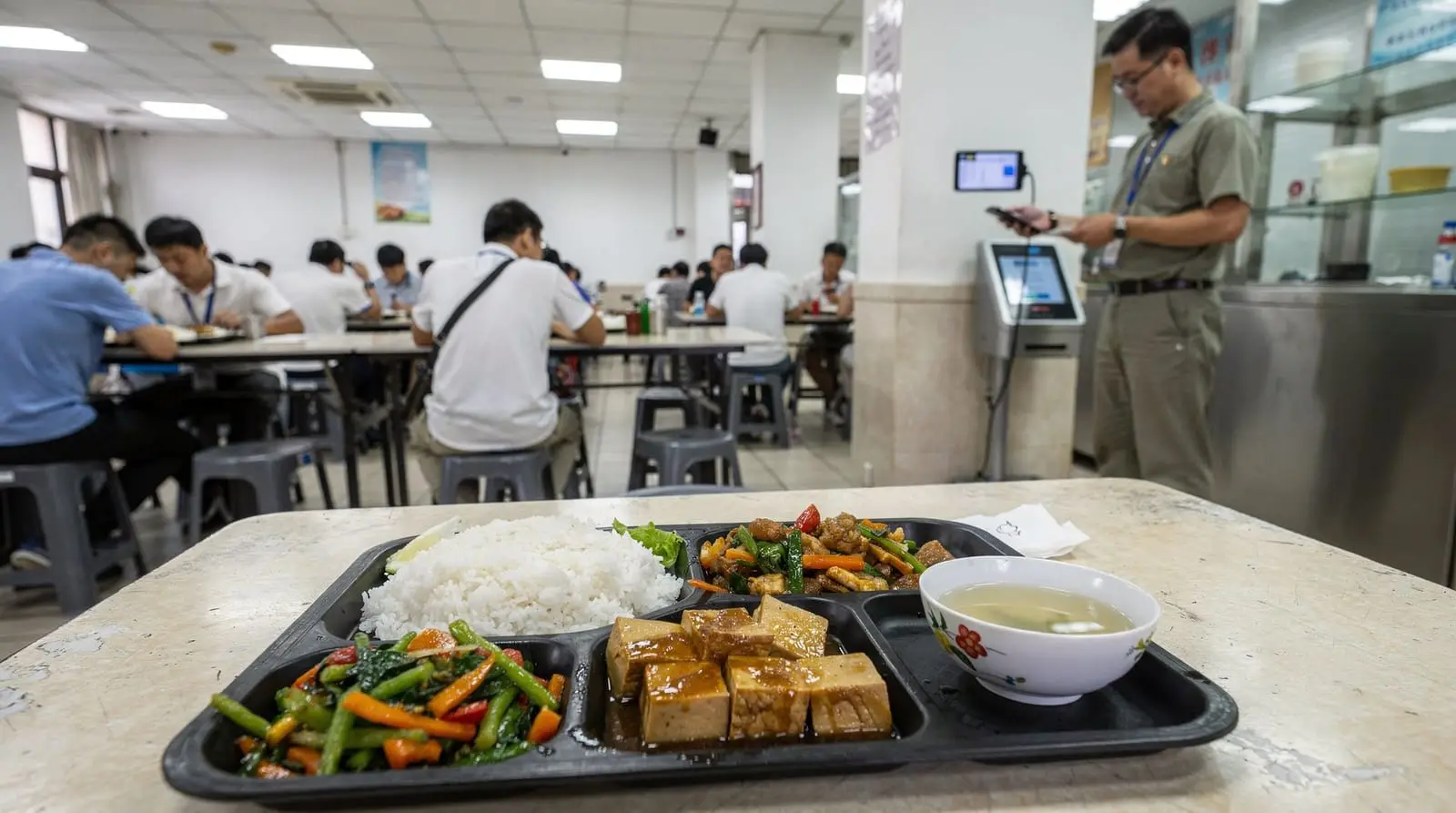
Basic local eating (CNY 20–50/day, ~USD 3–7): A breakfast of steamed buns (baozi) from a street stall and soy milk costs CNY 8–12. A rice and dish combo at a canteen-style Chinese restaurant at lunch is CNY 18–30. An evening bowl of noodles or fried rice is CNY 15–25. This level of eating is genuinely good — not just budget compromises.
Normal local restaurants (CNY 50–120/day, ~USD 7–17): A sit-down lunch at a neighbourhood restaurant with two dishes and rice: CNY 35–60. A proper dinner at a casual restaurant with one or two other people: CNY 80–120 per person, including beer. At this spend level, you can eat very well — Chaoshan seafood, Hakka braised dishes, decent dim sum.
Mid-range dining (CNY 150–300/day, ~USD 21–42): Good restaurant quality — the kind of place locals take out-of-town visitors. Craft beer adds CNY 40–60 per drink. A meal at one of Shekou’s better restaurants plus beers: CNY 200–350 per person.
Where to eat cheaply and well:
- University canteens near Shenzhen University in Nanshan (some are accessible to non-students; worth a try)
- Wet market food halls — most large wet markets have an upper-floor cooked food area with local cooking at CNY 15–30 per dish
- Noodle shops (面館) of every regional style — look for ones with hand-written signs and a full house at lunchtime
Transport costs: very cheap
Shenzhen Metro fares: CNY 2–12 per journey, depending on distance. A cross-city journey from Baoan (airport area) to Luohu is about CNY 10–12. For a full day of sightseeing using only the metro, budget CNY 20–35. The Shenzhen metro guide covers the full line map and which stations serve which sights.
Shenzhen Tong transit card: Buy one at any station service desk — CNY 50 (CNY 30 refundable deposit + CNY 20 credit). Reload at machines or via WeChat Pay. The card gives a small fare discount over single-journey tickets.
DiDi (ride-hailing): A 5km trip in the city costs approximately CNY 12–20 (~USD 1.70–2.80). Longer cross-city trips (airport to Futian): approximately CNY 75–95.
Airport connection: Metro Line 11 from Bao’an Airport Terminal 3 to Futian, approximately 35 minutes, CNY 18. Significantly cheaper than taxi.
Bikes: Hello Bike and Meituan Bike shared bicycles cost CNY 1.50 per 30 minutes or a CNY 25 monthly pass. Good for flat areas (Futian Bay, OCT, Nanshan Bay).
Activities: more free than you’d expect
A significant number of Shenzhen’s attractions cost nothing or very little:
Free:
- Shenzhen Museum (two locations in Futian — civic history and ancient art) — free
- Shenzhen Bay Park (15km seafront, pelicans in winter) — free
- Lianhuashan Park (hilltop park with city views, site of famous Deng Xiaoping statue) — free
- OCT-LOFT public areas and gallery browsing — free
- Dafen Oil Painting Village (Longgang) — free to walk and browse
- Huaqiangbei electronics district — free to explore
Low cost (CNY 20–80):
- Shenzhen Window of the World: CNY 240 full entry, but the park entrance areas and exterior are viewable for free. Inside entry is CNY 240 per adult.
- Splendid China folk village: CNY 240 similar pricing for full entry.
- OCT-LOFT exhibitions: CNY 20–50 per exhibition space.
- Gankeng Hakka town (Longgang): free to walk; some attractions within charge CNY 30–60.
For the major theme parks (Window of the World, Splendid China, Happy Valley), factor CNY 200–250 (~USD 28–35) per entry. These are the main “expensive” items in a Shenzhen budget — if you’re only doing one, the Window of the World vs Splendid China comparison helps decide which gives better value for your interests.
Book a Window of the World full-day ticket in advanceThree realistic daily budgets
Budget traveller: CNY 280–380/day (~USD 39–53)
- Hostel dorm: CNY 100
- Meals: CNY 60–90 (street food, canteens, noodle shops)
- Transport: CNY 25–35
- 1 paid activity: CNY 50–80
- Miscellaneous: CNY 30
Mid-range traveller: CNY 550–800/day (~USD 77–112)
- Budget hotel (Ibis/Hanting): CNY 220–280
- Meals: CNY 120–180 (mix of local restaurants and occasional nicer dinner)
- Transport: CNY 35–50 (metro + occasional DiDi)
- Activities: CNY 80–150
- Coffee + small purchases: CNY 60
Comfortable traveller: CNY 1,100–1,800/day (~USD 154–252)
- Mid-range hotel (Holiday Inn / Novotel): CNY 450–700
- Meals: CNY 300–450 (good restaurants, craft beer)
- Transport: CNY 60–100 (metro + DiDi)
- Activities / shopping: CNY 200–400
| Category | Budget | Mid-range | Comfortable |
|---|---|---|---|
| Accommodation | CNY 100 (dorm) | CNY 220–280 | CNY 450–700 |
| Meals | CNY 60–90 | CNY 120–180 | CNY 300–450 |
| Transport | CNY 25–35 | CNY 35–50 | CNY 60–100 |
| Activities | CNY 50–80 | CNY 80–150 | CNY 200–400 |
| Daily total | CNY 280–380 | CNY 550–800 | CNY 1,100–1,800 |
Money-saving specifics
Eat where locals eat: The best indicator of a reliable, affordable local restaurant is a full room at 12:00 and 18:30. If it’s empty at meal times, it is either overpriced, not good, or both.
Avoid tourist-facing restaurants near major attractions: The restaurants immediately adjacent to Window of the World and Splendid China are priced for tourists and quality is lower. Walk 10 minutes in any direction.
Use metro, not taxi, for almost everything: The metro is fast, reliable, and a fraction of taxi cost. DiDi is appropriate for distances that don’t have direct metro connections or late-night travel.
Buy water at convenience stores, not hotels: Hotel bottled water is CNY 8–15. 7-Eleven or FamilyMart prices are CNY 2–4. You will drink a lot of water in Shenzhen, especially in summer.
Hotel negotiation: Mid-range hotels often have walk-in rates lower than listed online for mid-week arrivals. Worth asking at the desk for a current rate, particularly in the Luohu and Longhua areas.
For itinerary planning on a budget, the Shenzhen on a budget itinerary maps a 5-day route that covers the major sites for CNY 1,500–2,000 total including accommodation. For a curated eating route that fits the “normal local restaurants” tier above, see a weekend eating through Shenzhen.
Avoid the common scams that cost budget travellers unnecessarily: touts near Lo Wu offering “copy watch tours” or currency exchange, and pressure-sold electronics in back rooms at Huaqiangbei. See the Shenzhen tourist traps guide for the full list — avoiding these protects your budget as much as any of the tips above.
Frequently asked questions about Shenzhen costs
Is Shenzhen cheaper than Hong Kong?
Significantly. Accommodation is 40–60% cheaper. Food is 50–70% cheaper. Transport is 60–80% cheaper. Activities at equivalent quality are comparable or cheaper. The only exception is some international brand retail, which is often similarly priced to HK.
Do I need to carry a lot of cash?
You need some CNY cash for small vendors who only take cash. CNY 300–500 should cover a few days of gap purchases. Most spending can be handled via WeChat Pay or Alipay linked to a foreign card.
Are there ATMs in Shenzhen that take foreign cards?
Yes — HSBC, Citibank, and Bank of China ATMs reliably accept Visa and Mastercard. Some local bank ATMs work, some don’t. Withdrawal limits and fees vary; your home bank’s foreign transaction fee and ATM fee will apply.
How much should I budget for shopping at Huaqiangbei?
Depends entirely on what you’re buying. Cables and small accessories: CNY 50–200. A phone case or accessory bundle: CNY 100–300. Electronics: budgeted separately based on specific items. Set a firm budget before you enter — the variety is designed to erode it.
Can I get by on CNY 200/day in Shenzhen?
Comfortably, if staying in a dorm hostel, eating street food and canteens, and using the metro exclusively. This is a genuinely viable travel budget, not an austerity exercise.
Is Huaqiangbei a good place to save money on electronics?
For accessories and commodities from reputable vendors, yes — prices are 20–40% below European retail. For anything “branded” at suspiciously low prices, no — see the Huaqiangbei electronics market guide for which categories are genuine bargains and which are counterfeit risks.
Top-rated things to do in Shenzhen
Verified deep-linked GetYourGuide tours. Book through these links and we earn a small commission at no cost to you.