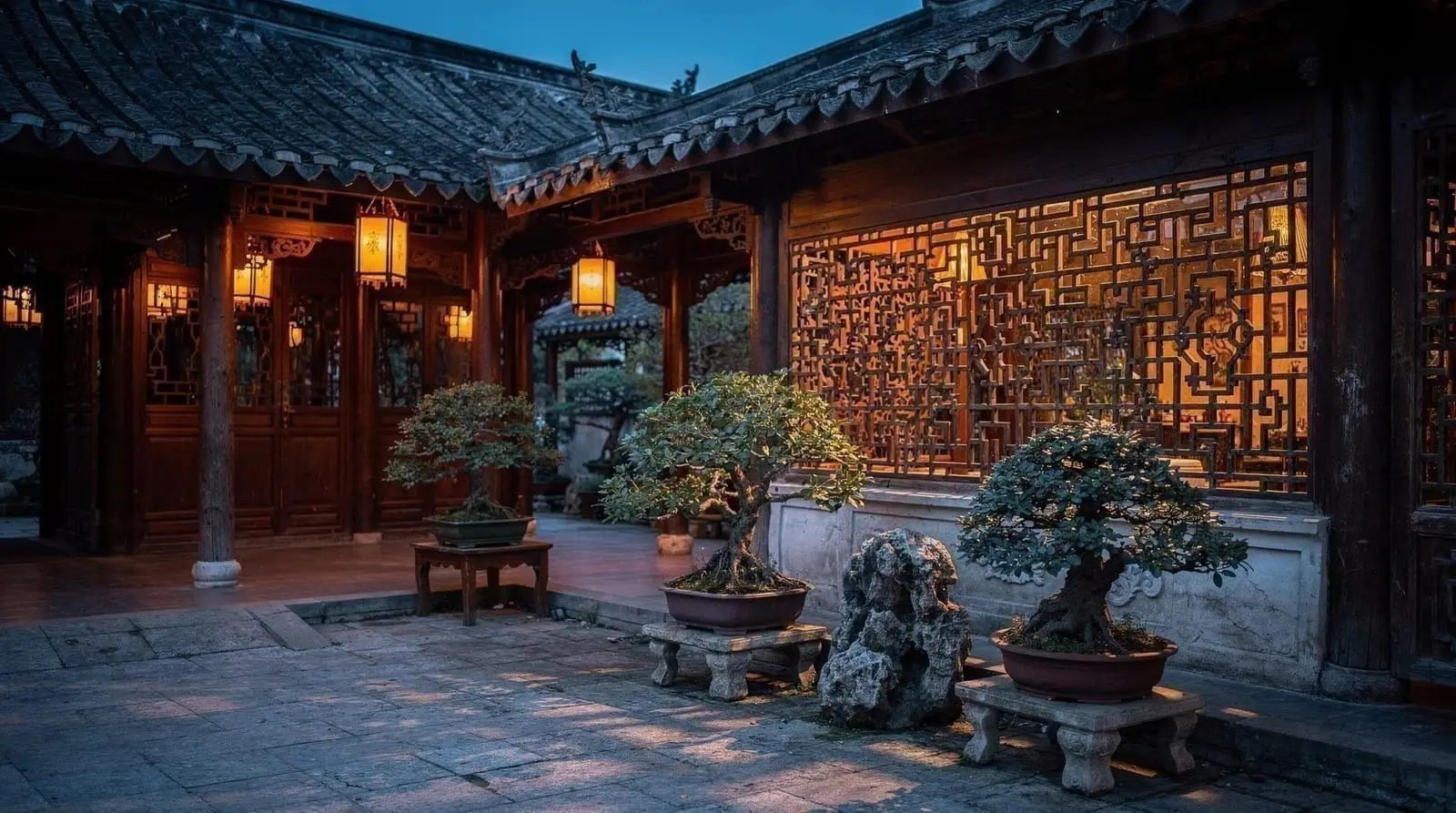
Dongguan travel guide: manufacturing city with surprising depth
Is Dongguan worth visiting as a day trip from Shenzhen?
Yes, for curious travellers interested in factory culture, Hakka heritage, or basketball (Dongguan is China's most basketball-obsessed city). It is 45–60 minutes from Shenzhen North by high-speed rail and has underrated wetland parks and Lingnan village sites.
Dongguan is the city that made the world’s trainers, circuit boards, and furniture — and has spent the last decade figuring out what to do with its identity now that much of that manufacturing has migrated to Vietnam and inland China. What has emerged is a city with legitimate tourist interest if you know where to look: Hakka walled villages, a wetland estuary reserve, a genuinely obsessive basketball culture, and a cluster of factory-outlet markets that would interest electronics buyers or textile traders. It is not a major sightseeing destination on its own, but as a half-day extension to a Shenzhen or Guangzhou trip, it offers something honest and different.
| Where | Between Shenzhen and Guangzhou, Pearl River Delta |
| Getting there | HSR from Shenzhen North, 35–45 min, CNY 30–55 |
| Cost | Most sites CNY 20–25; museum entries free or low-cost |
| Time needed | Half-day to full day |
| Best for | Opium War history, Hakka heritage, basketball culture |
Getting to Dongguan
From Shenzhen
High-speed rail: Shenzhen North → Dongguan West station: 35–45 minutes, CNY 30–55. Trains run every 15–20 minutes throughout the day. This is the easiest option.
Bus: Several cross-city coaches run Shenzhen (Longhua, Luohu) → Dongguan: 60–90 minutes depending on traffic, CNY 25–40.
Metro (experimental): Shenzhen–Dongguan intercity rail (Line I) opened in 2023, connecting Shenzhen’s Longhua district with Dongguan Humen (the southern part of the city). Fare CNY 12–18, journey ~45 minutes. Most convenient for southeast Dongguan.
From Guangzhou
High-speed rail: Guangzhou South → Dongguan South: 15–20 minutes, CNY 25–40.
Metro: The Guangzhou–Dongguan–Shenzhen urban rail (Guangshen intercity) runs from Guangzhou East station through Dongguan East and Humen, terminating in Shenzhen. Convenient for the eastern districts of the city.
What to see in Dongguan
Kengzi Hakka Village (also spelled Kengzi Ancient Village)
About 30 minutes southeast of Dongguan city centre by taxi, Kengzi is one of the best-preserved Hakka walled villages in the Pearl River Delta. Unlike the more famous Fujian tulou (circular earthen buildings), this is a rectangular granite-and-brick fortress with an inner courtyard, ancestral hall, and 260 rooms arranged in a grid. Built in 1791 during the Qing dynasty, it still has descendants of the original clan living inside. Entry CNY 20. The custodian usually offers a brief walk-through explanation in Cantonese; bring a translation app.
Dongguan Wetland Park (Dalingshan Lake area)
A 10 km² nature reserve in the Dalingshan district, the wetland park has walking trails, birdwatching platforms (migratory egrets, herons, and kingfishers October–March), and a decent lake circuit of about 90 minutes. Entry free. Best early morning; weekend afternoons see local families. No English signage, but the main loop is straightforward.
Humen Town and the Opium War sites
Humen (25 minutes south of the city by intercity rail) was the site of Commissioner Lin Zexu’s destruction of British opium stocks in 1839 — the act that precipitated the First Opium War. The Humen Opium War Museum (entry CNY 20, open 09:00–17:00) is a surprisingly thorough and nuanced account of the war from the Chinese perspective, with English panels throughout. The stone pools where the opium was dissolved are preserved in a small park adjacent to the museum. The Beilun Fort (entry CNY 25), a restored Qing coastal battery, overlooks the Pearl River estuary with views toward Hong Kong’s northern islands on clear days.
Basketball and Dongguan’s sports culture
Dongguan is the basketball capital of China. The city has produced more CBA (Chinese Basketball Association) players than any other; the local team, the Dongguan Bank Leopards, plays at the Dongguan Stadium and draws serious fans. Games run October–April; tickets CNY 80–300 depending on seat. Street courts are active across the city at dawn and dusk — the municipal parks near Dongguan East station have open-air courts worth watching informally.
Factory outlets and wholesale markets
The Humen garment wholesale market (around Fucheng Road in Humen) is one of Guangdong’s largest clothing wholesale districts: three enormous multi-storey buildings selling everything from fast fashion to workwear at prices 40–70% below retail. Not a tourist attraction in the conventional sense, but it gives a visceral sense of how Pearl River Delta manufacturing actually works. Most stalls require minimum orders of 3–10 pieces; a few retail single items. Go on a weekday morning.
Where to eat
Dongguan has a distinctive food culture blending Cantonese, Hakka, and Chaoshan traditions.
Dongguan beef offal soup: A signature local breakfast — slow-braised beef tendon, tripe, and balls in a clear anise-spiced broth. CNY 20–35 per bowl at any local canteen near the bus station. Laogangji (老港记) on Humen Avenue is a reliable chain.
Hakka stewed pork: Dongpo-style pork belly braised with dried tofu and preserved vegetables. Most Hakka restaurants serve it; the Kengzi village canteen (informal, tables outside the main gate) does a decent version.
Seafood in Humen: Humen’s Pearl River location means fresh seafood is available at Xihu Road night market — salt-baked shrimp, clams in XO sauce, steamed grouper. CNY 80–150 for two people.
Day-trip planning from Shenzhen
A focused Dongguan day from Shenzhen:
- 07:30 HSR Shenzhen North → Dongguan West (35 min)
- 09:00 Kengzi Hakka Village (90 min)
- 11:00 Taxi to Dongguan East area for offal soup breakfast (CNY 20)
- 12:30 Humen intercity rail or taxi (30 min)
- 13:30 Opium War Museum and Beilun Fort (3 hours)
- 17:00 Return HSR from Humen to Shenzhen (Longhua or Shenzhen North)
This covers the two strongest sites. The wetland park suits a different day with more leisure time.
See the day trips from Shenzhen guide for comparative transport times and rankings across PRD cities. For nearby history, Kaiping diaolou watchtowers and Foshan kung-fu and Lingnan culture extend the cultural loop.
Honest context
Dongguan carries some baggage in the Western press — it was infamous during its factory-boom peak for industrial pollution and (in the 2000s) a large commercial sex industry that was largely shut down in a 2014 crackdown. Today it is a mid-income industrial city undergoing the same transition as dozens of PRD cities: upgrading factories, building parks, and developing cultural assets. Crime rates are unremarkable. The wetland park and historic sites are genuinely pleasant. Visitors should simply approach it as an honest industrial city with specific highlights rather than a polished tourist destination.
Links: Shenzhen travel guide — Guangzhou — Culture and heritage — Day trips & border hops — Pearl River Delta grand loop: 10 days through the Greater Bay Area.
Dongguan’s furniture and manufacturing heritage
Dongguan is the world’s single largest furniture manufacturing hub — an estimated 30% of China’s furniture exports originate here, concentrated in the Houjie and Longjiang districts. For buyers or designers, the Dongguan International Furniture Fair (held annually in March) is one of Asia’s largest trade shows. Even outside fair season, the Longjiang furniture market cluster — over 200 showrooms across 3 km of road — gives a visceral sense of the scale of Guangdong’s manufacturing economy. Most showrooms accept walk-in visitors but are oriented toward wholesale buyers.
The electronics manufacturing zone around Changping district supplied circuit boards, cable assemblies, and electronic sub-components to factories in Shenzhen during the export boom years. Many plants have shifted to Vietnam or inland China, but the supply-chain ecosystem remains and has partially pivoted to EV components, battery packs, and automation hardware.
Songshanhu Science and Technology Park
Built on a scenic lake in the southern part of the city, Songshanhu (松山湖) is Dongguan’s bid to become the Greater Bay Area’s third tech cluster after Shenzhen and Guangzhou. The park hosts Huawei’s sprawling pseudo-European campus (a 1.5 km² facility modelled on multiple European architectural styles, opened 2019), a science museum, and a growing cluster of EV and robotics firms.
The Huawei Ox Horn Campus can be visited on a shuttle bus from the Songshanhu park entrance — the campus itself is not open to unaccompanied visitors, but the shuttle passes the main architectural set pieces. Huawei issues visitor passes for the entrance zone; check the current procedure via their official Chinese social media. Entry to Songshanhu lakeside park itself is free; a cycling loop covers 15 km of lakeside scenery.
Humen’s role in the First Opium War
The First Opium War (1839–42) effectively began at Humen when Qing Commissioner Lin Zexu ordered the confiscation and destruction of 21,306 chests of British-owned opium — approximately 1,270 tonnes — surrendered by British merchants and East India Company agents. The destruction took 23 days, using sea water and lime. Lin Zexu’s memorials to the Emperor describing this action became famous documents; his subsequent dismissal and exile when the British military response proved overwhelming made him a tragic figure in Chinese history.
The Humen Opium War Museum covers this in considerable detail. Exhibits include reproduction documents, weapons, ship models, and — most affecting — a reconstruction of the stone dissolution pools, some of which are preserved in the adjacent park. The museum takes a firmly anti-colonial perspective while providing enough historical detail to be genuinely educational. English translation throughout is above average for mainland China museums.
The nearby Beilun Fort (虎门炮台, literally “Tiger Gate Battery”) was the principal Qing military position guarding the Pearl River mouth. British forces under Admiral Sir James Bremer destroyed these forts during the war. The restored cannons, earthworks, and underground galleries are intact; climbing the earthworks gives views across the estuary that make the strategic importance of the site immediately obvious.
Where to stay in Dongguan
Dongguan is rarely used as a base for leisure tourism — most visitors come for business or day trips from Shenzhen or Guangzhou. That said, the city has competent business hotels at competitive prices:
Crowne Plaza Dongguan (Nancheng CBD): CNY 600–900/night. Central, good business facilities, English-speaking staff. Convenient for the main city sights.
Holiday Inn Dongguan Shilong: CNY 400–600/night. Near Shilong station on the intercity rail line. Practical if doing the Humen sites the next morning.
Budget options: The cluster of local hotels around Dongguan East station charge CNY 150–300/night and are entirely adequate for a night.
Dongguan food beyond the basics
Quanjude Roast Duck outpost: One of Beijing’s famous duck brands has a branch in Dongguan — better than you might expect, and popular with visiting business travellers. CNY 150–200 per person.
Cantonese clay-pot rice: Dongguan’s colder winter evenings (November–February) make clay-pot rice (煲仔饭) a local winter staple. The best versions come from roadside restaurants in the Guancheng (old city) district: preserved meat, chicken, and lap cheong sausage slow-cooked over charcoal. CNY 30–50 per pot.
Dongguan sausage (东莞腊肠): Dongguan is known across Guangdong for its air-dried sweet-salty sausages. Markets in the Dongcheng area sell them for CNY 60–80 per jin; they make excellent edible souvenirs if you are returning to Shenzhen or Hong Kong (no restrictions on cooked/cured meat within China; check rules for international travel).
Getting around inside Dongguan
Dongguan’s metro system has 3 lines (as of 2026) covering the main districts. Line 2 runs east–west through the city centre; Line 1 connects Humen in the south to Changping in the north; the Shenzhen–Dongguan intercity rail (Line I) connects with Shenzhen’s Longhua district.
Didi works throughout Dongguan and is the most practical option for sites not on the metro (Kengzi Village, Songshanhu). Taxi meters start at CNY 10; flag down on main roads.
See Pearl River Delta grand loop: 10 days through the Greater Bay Area for how Dongguan fits into a multi-city PRD trip, and Shenzhen travel guide for base logistics.
Dongguan for visitors interested in the Shenzhen tech and manufacturing story
For travellers who’ve spent time in Shenzhen’s electronics markets or read about the city’s manufacturing origins, Dongguan fills in a missing piece of the same story. Much of the supply chain that fed Shenzhen’s export boom — circuit boards, connectors, casings — was actually manufactured in Dongguan’s factory zones, with Shenzhen handling final assembly, branding, and export logistics.
Visiting the Changping electronics manufacturing zone or simply understanding this relationship adds useful context to a Shenzhen trip that otherwise treats the city’s tech identity in isolation. It’s not a formal museum experience, but for anyone curious about how the Pearl River Delta’s manufacturing economy actually works end to end, Dongguan is the honest, unpolished half of the picture that Shenzhen’s shinier tech districts don’t show.
When to visit Dongguan
Dongguan shares the same subtropical climate as the rest of the Pearl River Delta, so the seasonal advice in the best time to visit Shenzhen guide applies directly here too. October–November and March–April are the most comfortable windows for the outdoor sections of a Dongguan day — the Dongguan Wetland Park’s birdwatching platforms and the walk around Kengzi village are both far more pleasant outside the peak heat and humidity of June–August. Winter (December–February) is dry and mild, making it a good season for the indoor Opium War Museum and clay-pot rice season simultaneously.
Combining Dongguan with the wider Guangzhou–Shenzhen corridor
Dongguan’s position directly between Shenzhen and Guangzhou on the Greater Bay Area high-speed rail line makes it a natural stopover rather than a dedicated round trip. A traveller heading from Shenzhen to Guangzhou (or vice versa) can break the journey at Dongguan West or Dongguan South station, spend 4–5 hours seeing the Humen Opium War sites or Kengzi village, then continue onward — turning a transit day into two destinations for the transport cost of one. This works particularly well as part of the wider Pearl River Delta grand loop, where Dongguan otherwise risks being skipped entirely in favour of the bigger-name stops.
Frequently asked questions about visiting Dongguan
Is Dongguan safe for tourists?
Yes. Dongguan is a typical Guangdong industrial city with normal urban safety levels. Standard precautions apply (watch bags in crowded markets, use official taxis or Didi). The former reputation for vice tourism is largely historical; the city has invested heavily in its public image since 2014.
What is Dongguan famous for?
Manufacturing (electronics, furniture, footwear), basketball (more CBA players per capita than any Chinese city), and the Opium War history at Humen. The Hakka walled villages are less famous but architecturally significant.
How does Dongguan compare to Foshan for a day trip from Shenzhen?
Foshan is richer for cultural tourism (kung-fu, ceramics, temple architecture) and closer to Guangzhou. Dongguan suits visitors interested in industrial heritage, sports culture, or the Opium War. They appeal to different interests.
Can I combine Dongguan and Shenzhen in one day?
Easily — the 35-minute HSR makes it a genuine morning/afternoon split. Spend the morning in Dongguan (Humen Opium War Museum) and return to Shenzhen for the afternoon or evening.
Does Dongguan have direct transport to Hong Kong?
No direct rail or ferry link. The standard route is Dongguan → Shenzhen (HSR or metro) → Hong Kong border crossing. Journey total: ~2 hours.
Do I need a special visa to visit Dongguan as a day trip?
No special visa beyond your standard China entry. Dongguan is mainland Guangdong and falls within the 240-hour visa-free transit zone for eligible nationalities already in China on that policy — a Dongguan day trip requires no extra paperwork if you qualify.
Will my phone work normally in Dongguan?
No differently than anywhere else on the mainland — Dongguan sits behind the Great Firewall like Shenzhen and Guangzhou. Set up your eSIM or VPN before you leave Shenzhen; there’s no separate connectivity workaround needed once you’ve solved it for the mainland generally.
Pearl River Delta experiences on GetYourGuide
Verified deep-linked GetYourGuide tours. Book through these links and we earn a small commission at no cost to you.